DZ47-63 Miniature Circuit Breaker for Household Electrical Protection
Official Store Deal
Expert Analysis Overview
The DZ47-63 Miniature Circuit Breaker is a fundamental electrical safety device engineered for robust protection within residential and light commercial AC electrical systems. This device is specifically designed to prevent electrical hazards.
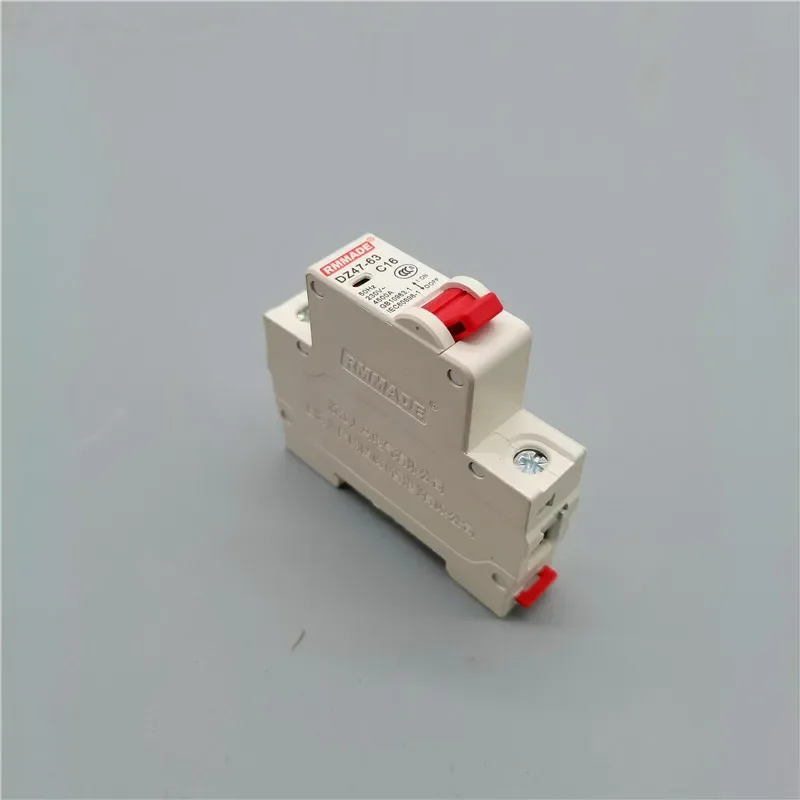
The device presents a standard miniature circuit breaker form factor, characterized by its off-white plastic housing and a prominent red toggle switch. This switch serves as the primary interface for manual operation and visual status indication, clearly showing the ON or OFF state. The compact design is immediately apparent, making it suitable for space-constrained electrical panels. Its streamlined profile ensures efficient use of enclosure space.
This visual simplicity belies its critical function: safeguarding electrical circuits from damage caused by overcurrents and short circuits. Overcurrents, often resulting from too many appliances on a single circuit, can lead to wire overheating and insulation degradation. Short circuits, a more severe fault, involve an unintended low-resistance path for current, causing extremely high currents that can instantly melt wires or ignite fires. The breaker's rapid response is essential. Its presence ensures the integrity of wiring and connected appliances, preventing costly repairs and potential safety risks. A tripped breaker prevents catastrophic failures, acting as a crucial first line of defense.
Unlike traditional fuses, which require replacement after a fault, miniature circuit breakers offer a resettable solution. This provides a significant advantage in terms of convenience and operational continuity, as power can be restored quickly once the fault is cleared. Fuses are a single-use protection, demanding a stock of replacements and the time to install them. The resettable nature of an MCB reduces downtime and simplifies troubleshooting for homeowners and electricians alike. This represents a substantial upgrade in user experience.
The product label clearly indicates a rated voltage range of AC220V-400V and a frequency of 50Hz. This broad voltage compatibility makes the DZ47-63 suitable for a wide array of electrical installations across different regions. A breaking capacity of 4500A is specified, a critical safety parameter. Compliance with GB10963.1 and IEC60898-1 standards is also noted, signifying adherence to recognized electrical safety benchmarks.
These specifications confirm the breaker's suitability for common European and Asian residential and light industrial electrical grids, where 220V-240V single-phase and 380V-400V three-phase systems are prevalent. The 4500A breaking capacity signifies its ability to safely interrupt significant fault currents without sustaining damage or failing to operate. This prevents arc flash hazards and ensures the device itself does not become a source of danger during a fault. It protects both equipment and personnel. In a scenario where a severe short circuit occurs, the breaker must reliably open the circuit.
Adherence to international standards like IEC60898-1 is paramount for electrical safety devices. This standard dictates performance requirements for circuit breakers used in household and similar installations, covering aspects such as tripping characteristics, temperature rise, and mechanical endurance. It ensures a baseline of reliability and safety, giving users confidence in the device's protective capabilities. Without such certifications, the performance and safety of an electrical component would be questionable. This compliance is not merely a label; it is a guarantee of tested performance.
The images reveal a design optimized for DIN rail mounting, a widely adopted standard in modern electrical panels and consumer units. A DIN rail is a metal rail of a standard type widely used for mounting circuit breakers and industrial control equipment inside equipment racks and electrical enclosures. Terminal screws are visible, indicating a direct wire connection method, typically accommodating solid or stranded copper conductors. The rear shows the robust clip mechanism for secure attachment.
DIN rail compatibility streamlines the installation process, allowing for quick and secure integration into existing or new consumer units and distribution boards. Electricians can simply snap the breaker onto the rail, significantly reducing installation time compared to screw-in or proprietary mounting systems. Proper terminal tightening is crucial for preventing loose connections, which can lead to increased resistance, heat buildup, and potential fire hazards. This minimizes resistance and heat buildup, ensuring efficient power transfer. The terminals are designed for secure wire clamping.
Older electrical installations often relied on fuse boxes or proprietary mounting systems, making upgrades cumbersome and time-consuming. The universal nature of DIN rail mounting simplifies panel construction and maintenance, promoting modularity and ease of expansion. If an existing breaker needs replacement or an additional circuit is required, the process is straightforward. It offers modularity, allowing for flexible panel configurations. This standardization benefits both installers and end-users.
The product title lists a broad spectrum of available current ratings, including 6A, 10A, 16A, 20A, 25A, 32A, 40A, 50A, and 125A. This comprehensive selection indicates a versatile product line capable of addressing diverse electrical protection needs. The availability of both 1P (single-pole) and 2P (double-pole, as implied by the title) configurations further enhances its adaptability. A 1P breaker, as shown in the images, protects a single live conductor, commonly used for lighting or standard outlet circuits in a 220V single-phase system. A 2P breaker, on the other hand, would protect two live conductors simultaneously, essential for 2-phase or split-phase applications, or for isolating both live and neutral conductors in certain single-phase systems where required by local codes. This distinction is crucial for proper system design.
This extensive range allows electricians to select the precise breaker rating required for various circuits within a building, ensuring optimal protection without nuisance tripping. For instance, a 6A breaker might protect a low-power lighting circuit, safeguarding delicate LED fixtures and their wiring. A 10A or 16A unit is common for general-purpose outlets, handling typical loads from small appliances. A 20A breaker could be designated for kitchen counter outlets, which often see higher demand. Larger appliances like electric water heaters, ovens, or air conditioning units might require 25A, 32A, or even 40A breakers, depending on their power consumption. The 50A and 125A options cater to main service entrances or sub-panel feeds in larger residential or light commercial setups. Correct sizing is vital for both safety and operational efficiency, preventing both under-protection and unnecessary interruptions.
Mismatched breaker ratings can lead to either nuisance tripping (if the rating is too low for the normal operating load, causing frequent power outages) or, more dangerously, inadequate protection (if the rating is too high, allowing wires to overheat and potentially ignite before the breaker trips). The availability of multiple ratings ensures optimal circuit design and safety, aligning the breaker's protection characteristics with the specific demands of the connected load and the installed wire gauge. It prevents wire damage and ensures compliance with electrical codes, which are designed to prevent hazards. This flexibility is a key advantage for diverse applications, from a simple bedroom light circuit to a robust workshop power supply. The ability to precisely match the breaker to the circuit's needs is a hallmark of professional electrical installation.
The housing material appears to be a robust, non-conductive plastic, engineered to withstand the rigors of an electrical environment. The red toggle switch provides a clear visual cue for the breaker's operational status, making it easy to identify whether a circuit is active or tripped. A green indicator is also visible when the switch is in the ON position, offering unambiguous feedback.
The choice of flame-retardant plastic for the housing is a critical safety feature, designed to contain any internal arcing or overheating that might occur during a fault. This material prevents the spread of fire in the event of a severe electrical fault, protecting the surrounding electrical panel and building structure. It protects the surrounding environment from potential ignition. This material selection is a testament to its safety-first design.
Electrical fires are a serious concern, and the use of high-quality, fire-resistant materials in circuit protection devices is non-negotiable. Inferior materials could melt or ignite, exacerbating a fault condition and posing a significant threat to property and life. This is a fundamental safety requirement, ensuring the breaker itself does not become a fire hazard. The visible material quality suggests a commitment to these safety standards.
The overall construction appears solid and functional, with visible screw terminals designed for secure wire connections. The mechanism for the toggle switch seems straightforward and robust, suggesting reliable operation over many cycles. The external casing shows no obvious weak points.
The robust build suggests a durable device capable of withstanding repeated tripping and resetting cycles over its operational lifespan. In a typical household, a breaker might trip infrequently, but its ability to perform reliably when needed is paramount. Proper installation, including correct torque on terminal screws, and periodic inspection of terminal tightness contribute significantly to its longevity. This ensures consistent performance and reduces the likelihood of premature failure. Regular checks are advised.
While circuit breakers are generally low-maintenance, regular checks for signs of wear, discoloration, or loose connections are prudent. Discoloration could indicate overheating, signaling an underlying issue with the circuit or the breaker itself. Unlike older, less robust designs, modern MCBs are built for extended service, offering peace of mind and reducing the need for frequent replacements. They offer peace of mind through their design. Adhering to these simple preventative measures can extend the life of the entire electrical system.
The DZ47-63 employs a sophisticated thermal-magnetic tripping mechanism, providing a dual layer of protection against different types of electrical faults. The thermal component, typically a bimetallic strip, responds to sustained overcurrents by heating up and bending. This bending action then mechanically triggers the breaker to trip, opening the circuit. This mechanism is designed to protect against prolonged overloads, such as those caused by too many appliances drawing power simultaneously. It prevents wire insulation from degrading due to excessive heat.
The magnetic component, a solenoid, reacts instantaneously to sudden, high-magnitude currents, such as those caused by a short circuit. When a short circuit occurs, the sudden surge of current creates a strong magnetic field in the solenoid, which rapidly pulls a plunger, tripping the breaker almost instantly. This rapid response is crucial for preventing severe damage to wiring and equipment during a catastrophic fault. This dual action provides comprehensive protection, addressing both slow-developing overloads and sudden, dangerous short circuits. Understanding this mechanism is key to appreciating the breaker's effectiveness.
This combination of thermal and magnetic protection is standard for miniature circuit breakers and is essential for ensuring complete circuit safety. Without both components, a breaker would either be too slow to react to short circuits or too sensitive to momentary inrush currents. The synergy between the two mechanisms ensures that the circuit is protected under a wide range of fault conditions. It offers balanced and effective protection. This engineering choice reflects best practices in electrical safety design.
Selecting the correct amperage rating for a circuit breaker is inextricably linked to the wire gauge used in the circuit and the expected electrical load. Using a breaker with too high an amperage rating for a given wire gauge can result in the wire overheating and potentially causing a fire before the breaker trips. Conversely, a breaker with too low an amperage rating will lead to nuisance tripping, interrupting power unnecessarily. This balance is crucial.
Electricians meticulously calculate the maximum safe current for each wire gauge based on national and local electrical codes. For example, a 14-gauge copper wire is typically rated for 15 amps, while a 12-gauge wire can handle 20 amps. The circuit breaker's rating must never exceed the wire's ampacity. This ensures the wire is the weakest link in a controlled manner. The breaker protects the wire.
Furthermore, the total expected load on a circuit must be considered. If a circuit is designed to power a specific set of appliances, the sum of their current draws should be less than the breaker's rating, with a safety margin. Overloading a circuit consistently will eventually lead to breaker trips, indicating a need to redistribute loads or install additional circuits. This prevents system stress. Proper load matching extends the life of both the wiring and the appliances.
The mention of GB10963.1 and IEC60898-1 standards on the product label is not merely a formality; it signifies that the DZ47-63 has undergone rigorous testing to meet specific performance and safety criteria. GB10963.1 is the Chinese national standard for miniature circuit breakers, while IEC60898-1 is the international equivalent. These standards cover aspects such as breaking capacity, tripping characteristics, insulation resistance, and mechanical endurance.
For consumers and electricians, these certifications provide assurance that the product is manufactured to a recognized quality level and will perform as expected under fault conditions. Without such certifications, the reliability and safety of an electrical component would be questionable, potentially leading to dangerous situations. It builds user confidence. Choosing certified products is a fundamental principle of safe electrical practice.
These standards also define the specific "C" curve tripping characteristic, which is visible as "C16" on the label for the 16A model. A "C" curve breaker is designed for general-purpose applications, tripping between 5 and 10 times its rated current for instantaneous magnetic trips. This characteristic makes it suitable for protecting circuits with moderate inrush currents, such as those found in residential and light commercial settings. It ensures appropriate response times. Understanding these markings helps in selecting the right breaker for the job.
The DZ47-63 Miniature Circuit Breaker, with its robust construction, adherence to international standards, and wide range of available current ratings, positions itself as a reliable choice for essential electrical circuit protection. Its DIN rail compatibility simplifies installation, making it a practical component for modern electrical panels. The thermal-magnetic trip mechanism offers comprehensive defense against both overloads and short circuits, critical for preventing electrical fires and equipment damage. This device is a cornerstone of a safe electrical system.
Imagine the peace of mind that comes from knowing your home's electrical system is protected by a device engineered to respond instantly to faults, preventing potential hazards before they escalate. Envision a future where electrical safety is not a concern, but a given, allowing you to power your life with confidence and security. This breaker provides that foundational layer of protection, ensuring the longevity of your appliances and the safety of your living or working environment.
The Core of Circuit Protection: Safeguarding Electrical Integrity
The device presents a standard miniature circuit breaker form factor, characterized by its off-white plastic housing and a prominent red toggle switch. This switch serves as the primary interface for manual operation and visual status indication, clearly showing the ON or OFF state. The compact design is immediately apparent, making it suitable for space-constrained electrical panels. Its streamlined profile ensures efficient use of enclosure space.
This visual simplicity belies its critical function: safeguarding electrical circuits from damage caused by overcurrents and short circuits. Overcurrents, often resulting from too many appliances on a single circuit, can lead to wire overheating and insulation degradation. Short circuits, a more severe fault, involve an unintended low-resistance path for current, causing extremely high currents that can instantly melt wires or ignite fires. The breaker's rapid response is essential. Its presence ensures the integrity of wiring and connected appliances, preventing costly repairs and potential safety risks. A tripped breaker prevents catastrophic failures, acting as a crucial first line of defense.
Unlike traditional fuses, which require replacement after a fault, miniature circuit breakers offer a resettable solution. This provides a significant advantage in terms of convenience and operational continuity, as power can be restored quickly once the fault is cleared. Fuses are a single-use protection, demanding a stock of replacements and the time to install them. The resettable nature of an MCB reduces downtime and simplifies troubleshooting for homeowners and electricians alike. This represents a substantial upgrade in user experience.
Technical Foundations and Compliance: Ensuring Reliable Performance
The product label clearly indicates a rated voltage range of AC220V-400V and a frequency of 50Hz. This broad voltage compatibility makes the DZ47-63 suitable for a wide array of electrical installations across different regions. A breaking capacity of 4500A is specified, a critical safety parameter. Compliance with GB10963.1 and IEC60898-1 standards is also noted, signifying adherence to recognized electrical safety benchmarks.
These specifications confirm the breaker's suitability for common European and Asian residential and light industrial electrical grids, where 220V-240V single-phase and 380V-400V three-phase systems are prevalent. The 4500A breaking capacity signifies its ability to safely interrupt significant fault currents without sustaining damage or failing to operate. This prevents arc flash hazards and ensures the device itself does not become a source of danger during a fault. It protects both equipment and personnel. In a scenario where a severe short circuit occurs, the breaker must reliably open the circuit.
Adherence to international standards like IEC60898-1 is paramount for electrical safety devices. This standard dictates performance requirements for circuit breakers used in household and similar installations, covering aspects such as tripping characteristics, temperature rise, and mechanical endurance. It ensures a baseline of reliability and safety, giving users confidence in the device's protective capabilities. Without such certifications, the performance and safety of an electrical component would be questionable. This compliance is not merely a label; it is a guarantee of tested performance.
Installation and Operational Mechanics: Streamlined Integration
The images reveal a design optimized for DIN rail mounting, a widely adopted standard in modern electrical panels and consumer units. A DIN rail is a metal rail of a standard type widely used for mounting circuit breakers and industrial control equipment inside equipment racks and electrical enclosures. Terminal screws are visible, indicating a direct wire connection method, typically accommodating solid or stranded copper conductors. The rear shows the robust clip mechanism for secure attachment.
DIN rail compatibility streamlines the installation process, allowing for quick and secure integration into existing or new consumer units and distribution boards. Electricians can simply snap the breaker onto the rail, significantly reducing installation time compared to screw-in or proprietary mounting systems. Proper terminal tightening is crucial for preventing loose connections, which can lead to increased resistance, heat buildup, and potential fire hazards. This minimizes resistance and heat buildup, ensuring efficient power transfer. The terminals are designed for secure wire clamping.
Older electrical installations often relied on fuse boxes or proprietary mounting systems, making upgrades cumbersome and time-consuming. The universal nature of DIN rail mounting simplifies panel construction and maintenance, promoting modularity and ease of expansion. If an existing breaker needs replacement or an additional circuit is required, the process is straightforward. It offers modularity, allowing for flexible panel configurations. This standardization benefits both installers and end-users.
Amperage Versatility and Application Scope: Tailored Circuit Protection
The product title lists a broad spectrum of available current ratings, including 6A, 10A, 16A, 20A, 25A, 32A, 40A, 50A, and 125A. This comprehensive selection indicates a versatile product line capable of addressing diverse electrical protection needs. The availability of both 1P (single-pole) and 2P (double-pole, as implied by the title) configurations further enhances its adaptability. A 1P breaker, as shown in the images, protects a single live conductor, commonly used for lighting or standard outlet circuits in a 220V single-phase system. A 2P breaker, on the other hand, would protect two live conductors simultaneously, essential for 2-phase or split-phase applications, or for isolating both live and neutral conductors in certain single-phase systems where required by local codes. This distinction is crucial for proper system design.
This extensive range allows electricians to select the precise breaker rating required for various circuits within a building, ensuring optimal protection without nuisance tripping. For instance, a 6A breaker might protect a low-power lighting circuit, safeguarding delicate LED fixtures and their wiring. A 10A or 16A unit is common for general-purpose outlets, handling typical loads from small appliances. A 20A breaker could be designated for kitchen counter outlets, which often see higher demand. Larger appliances like electric water heaters, ovens, or air conditioning units might require 25A, 32A, or even 40A breakers, depending on their power consumption. The 50A and 125A options cater to main service entrances or sub-panel feeds in larger residential or light commercial setups. Correct sizing is vital for both safety and operational efficiency, preventing both under-protection and unnecessary interruptions.
Mismatched breaker ratings can lead to either nuisance tripping (if the rating is too low for the normal operating load, causing frequent power outages) or, more dangerously, inadequate protection (if the rating is too high, allowing wires to overheat and potentially ignite before the breaker trips). The availability of multiple ratings ensures optimal circuit design and safety, aligning the breaker's protection characteristics with the specific demands of the connected load and the installed wire gauge. It prevents wire damage and ensures compliance with electrical codes, which are designed to prevent hazards. This flexibility is a key advantage for diverse applications, from a simple bedroom light circuit to a robust workshop power supply. The ability to precisely match the breaker to the circuit's needs is a hallmark of professional electrical installation.
Safety Protocols and Material Integrity: Beyond Basic Protection
The housing material appears to be a robust, non-conductive plastic, engineered to withstand the rigors of an electrical environment. The red toggle switch provides a clear visual cue for the breaker's operational status, making it easy to identify whether a circuit is active or tripped. A green indicator is also visible when the switch is in the ON position, offering unambiguous feedback.
The choice of flame-retardant plastic for the housing is a critical safety feature, designed to contain any internal arcing or overheating that might occur during a fault. This material prevents the spread of fire in the event of a severe electrical fault, protecting the surrounding electrical panel and building structure. It protects the surrounding environment from potential ignition. This material selection is a testament to its safety-first design.
Electrical fires are a serious concern, and the use of high-quality, fire-resistant materials in circuit protection devices is non-negotiable. Inferior materials could melt or ignite, exacerbating a fault condition and posing a significant threat to property and life. This is a fundamental safety requirement, ensuring the breaker itself does not become a fire hazard. The visible material quality suggests a commitment to these safety standards.
Longevity and Maintenance Considerations: Sustained Performance
The overall construction appears solid and functional, with visible screw terminals designed for secure wire connections. The mechanism for the toggle switch seems straightforward and robust, suggesting reliable operation over many cycles. The external casing shows no obvious weak points.
The robust build suggests a durable device capable of withstanding repeated tripping and resetting cycles over its operational lifespan. In a typical household, a breaker might trip infrequently, but its ability to perform reliably when needed is paramount. Proper installation, including correct torque on terminal screws, and periodic inspection of terminal tightness contribute significantly to its longevity. This ensures consistent performance and reduces the likelihood of premature failure. Regular checks are advised.
While circuit breakers are generally low-maintenance, regular checks for signs of wear, discoloration, or loose connections are prudent. Discoloration could indicate overheating, signaling an underlying issue with the circuit or the breaker itself. Unlike older, less robust designs, modern MCBs are built for extended service, offering peace of mind and reducing the need for frequent replacements. They offer peace of mind through their design. Adhering to these simple preventative measures can extend the life of the entire electrical system.
The Thermal-Magnetic Tripping Mechanism: Dual-Layered Defense
The DZ47-63 employs a sophisticated thermal-magnetic tripping mechanism, providing a dual layer of protection against different types of electrical faults. The thermal component, typically a bimetallic strip, responds to sustained overcurrents by heating up and bending. This bending action then mechanically triggers the breaker to trip, opening the circuit. This mechanism is designed to protect against prolonged overloads, such as those caused by too many appliances drawing power simultaneously. It prevents wire insulation from degrading due to excessive heat.
The magnetic component, a solenoid, reacts instantaneously to sudden, high-magnitude currents, such as those caused by a short circuit. When a short circuit occurs, the sudden surge of current creates a strong magnetic field in the solenoid, which rapidly pulls a plunger, tripping the breaker almost instantly. This rapid response is crucial for preventing severe damage to wiring and equipment during a catastrophic fault. This dual action provides comprehensive protection, addressing both slow-developing overloads and sudden, dangerous short circuits. Understanding this mechanism is key to appreciating the breaker's effectiveness.
This combination of thermal and magnetic protection is standard for miniature circuit breakers and is essential for ensuring complete circuit safety. Without both components, a breaker would either be too slow to react to short circuits or too sensitive to momentary inrush currents. The synergy between the two mechanisms ensures that the circuit is protected under a wide range of fault conditions. It offers balanced and effective protection. This engineering choice reflects best practices in electrical safety design.
The Importance of Wire Gauge and Load Matching: A Critical Safety Factor
Selecting the correct amperage rating for a circuit breaker is inextricably linked to the wire gauge used in the circuit and the expected electrical load. Using a breaker with too high an amperage rating for a given wire gauge can result in the wire overheating and potentially causing a fire before the breaker trips. Conversely, a breaker with too low an amperage rating will lead to nuisance tripping, interrupting power unnecessarily. This balance is crucial.
Electricians meticulously calculate the maximum safe current for each wire gauge based on national and local electrical codes. For example, a 14-gauge copper wire is typically rated for 15 amps, while a 12-gauge wire can handle 20 amps. The circuit breaker's rating must never exceed the wire's ampacity. This ensures the wire is the weakest link in a controlled manner. The breaker protects the wire.
Furthermore, the total expected load on a circuit must be considered. If a circuit is designed to power a specific set of appliances, the sum of their current draws should be less than the breaker's rating, with a safety margin. Overloading a circuit consistently will eventually lead to breaker trips, indicating a need to redistribute loads or install additional circuits. This prevents system stress. Proper load matching extends the life of both the wiring and the appliances.
The Role of Certifications: A Mark of Trust
The mention of GB10963.1 and IEC60898-1 standards on the product label is not merely a formality; it signifies that the DZ47-63 has undergone rigorous testing to meet specific performance and safety criteria. GB10963.1 is the Chinese national standard for miniature circuit breakers, while IEC60898-1 is the international equivalent. These standards cover aspects such as breaking capacity, tripping characteristics, insulation resistance, and mechanical endurance.
For consumers and electricians, these certifications provide assurance that the product is manufactured to a recognized quality level and will perform as expected under fault conditions. Without such certifications, the reliability and safety of an electrical component would be questionable, potentially leading to dangerous situations. It builds user confidence. Choosing certified products is a fundamental principle of safe electrical practice.
These standards also define the specific "C" curve tripping characteristic, which is visible as "C16" on the label for the 16A model. A "C" curve breaker is designed for general-purpose applications, tripping between 5 and 10 times its rated current for instantaneous magnetic trips. This characteristic makes it suitable for protecting circuits with moderate inrush currents, such as those found in residential and light commercial settings. It ensures appropriate response times. Understanding these markings helps in selecting the right breaker for the job.
Final Assessment: A Foundation for Electrical Safety
The DZ47-63 Miniature Circuit Breaker, with its robust construction, adherence to international standards, and wide range of available current ratings, positions itself as a reliable choice for essential electrical circuit protection. Its DIN rail compatibility simplifies installation, making it a practical component for modern electrical panels. The thermal-magnetic trip mechanism offers comprehensive defense against both overloads and short circuits, critical for preventing electrical fires and equipment damage. This device is a cornerstone of a safe electrical system.
Imagine the peace of mind that comes from knowing your home's electrical system is protected by a device engineered to respond instantly to faults, preventing potential hazards before they escalate. Envision a future where electrical safety is not a concern, but a given, allowing you to power your life with confidence and security. This breaker provides that foundational layer of protection, ensuring the longevity of your appliances and the safety of your living or working environment.