DIY Drill Dust Collector for PET Bottles
Official Store Deal
Expert Analysis Overview
The DIY Drill Dust Collector is a thrifty, functional accessory designed for the budget-conscious homeowner or DIY enthusiast who prioritizes clean workspaces and tool longevity. This simple plastic attachment converts a standard PET bottle into an effective dust capture system, mitigating the mess and potential hazards associated with drilling.
Drilling, whether into plaster, wood, or masonry, invariably generates a significant amount of dust. This airborne particulate matter is not merely an aesthetic nuisance; it poses several practical and health challenges. Fine dust can infiltrate electronic components, shortening the lifespan of power tools. It settles on surfaces, requiring extensive cleanup. More critically, inhaling these particles can irritate respiratory systems, making proper dust management a concern for personal well-being.
Typical solutions involve expensive shop vacuums with specialized attachments or complex dust shrouds. These often represent a substantial investment, particularly for individuals who only undertake occasional drilling tasks. A simple solution is often better.
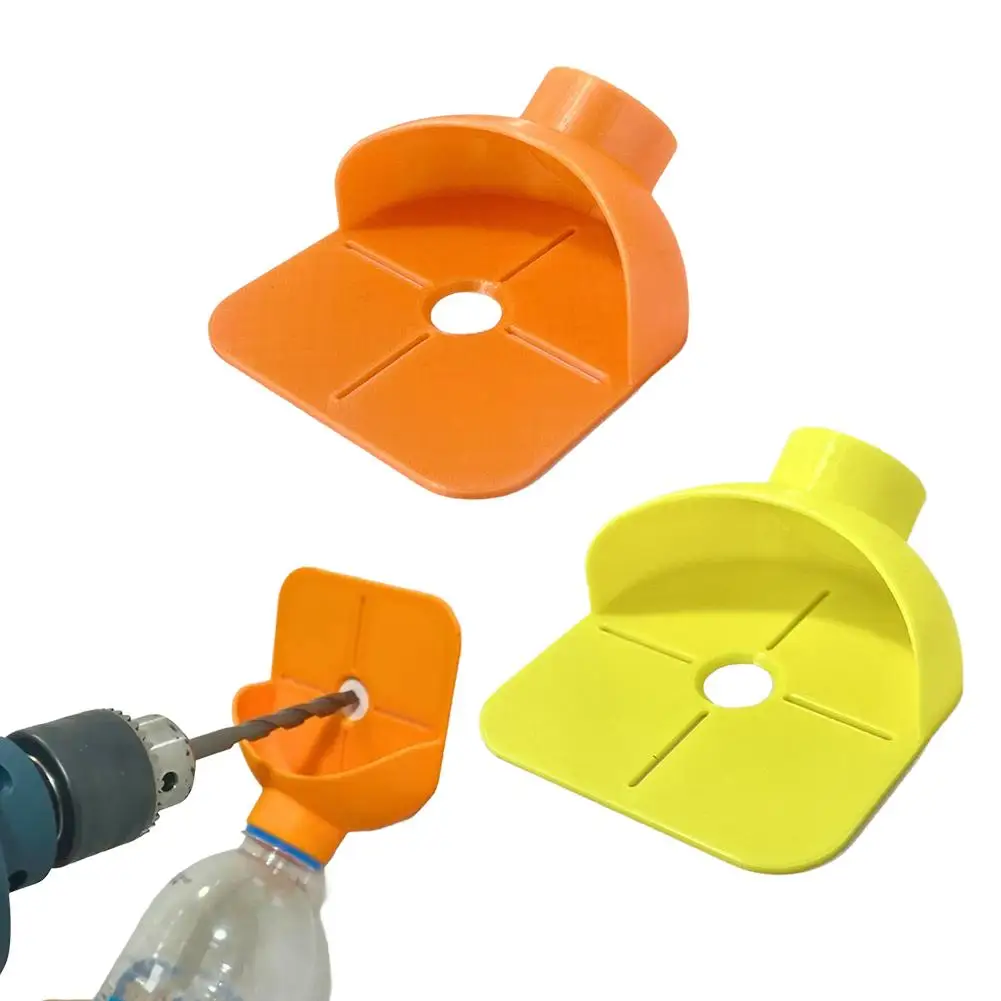
This dust collector operates on a straightforward, passive collection principle. Its design incorporates a central aperture through which the drill bit passes, and a funnel-shaped body that directs debris downwards. The bottom of the unit features a threaded neck, allowing it to securely attach to the opening of a standard PET plastic bottle. This bottle then acts as the primary collection reservoir.
As the drill bit penetrates the surface, the generated dust and debris are channeled into the funnel. Gravity, combined with the enclosed space, guides these particles directly into the attached bottle. The system relies on the user to hold the bottle and collector firmly against the drilling surface, creating a localized containment zone for the dust.
This method contrasts sharply with relying on a second person to hold a vacuum hose, which is often cumbersome and inefficient. It offers a self-contained, one-person operation for basic dust control.
Visually, the dust collector is constructed from a brightly colored plastic, available in orange and yellow. This material appears to be a common thermoplastic, likely polypropylene (PP) or high-density polyethylene (HDPE), chosen for its balance of rigidity, light weight, and cost-effectiveness. The visible thickness of the plastic suggests it is robust enough for its intended purpose.
Polypropylene, if used, offers good impact resistance, meaning it can withstand minor bumps and knocks common in a workshop environment. It is also chemically resistant to many common household cleaning agents, simplifying maintenance. The plastic construction ensures the unit is non-conductive, an important safety consideration when working with electric drills, though it does not replace proper electrical safety practices.
Compared to more elaborate, motorized dust collection systems, this plastic unit represents a minimal investment in materials. Its simplicity translates directly to durability, as there are no moving parts to wear out or electronic components to fail. This is a tool that lasts.
The central drill bit aperture appears to be designed to accommodate a range of common drill bit diameters, typically up to around 10-12mm (0.4-0.5 inches). This universal fitment is a critical aspect, as users rarely stick to a single drill bit size for all their projects. The internal diameter of the hole is sufficiently wide to prevent friction with the drill bit, allowing smooth operation.
Crucially, the threaded attachment point is engineered to mate with the standard neck size of most commercially available PET plastic beverage bottles. This widespread compatibility means users can easily source a collection container from their recycling bin, eliminating the need to purchase specialized bags or proprietary receptacles. This adaptability is a key selling point for budget-conscious users.
In contrast, many professional dust collection systems require specific hose diameters or brand-locked attachments, adding to the overall cost and complexity. The reliance on readily available, often recycled, bottles makes this solution exceptionally accessible. It is a smart reuse of materials.
Setting up this dust collector is remarkably straightforward, requiring no tools or complex assembly. The user simply screws a clean, empty PET bottle onto the collector's threaded base. The drill bit is then inserted through the central hole. Finally, the entire assembly – drill, collector, and bottle – is positioned against the drilling surface.
Operation is manual. The user applies gentle pressure to hold the collector flush against the wall or workpiece while drilling. The suction created by the drilling action, combined with the physical barrier of the collector, directs dust into the bottle. Emptying is equally simple: unscrew the bottle, dispose of the collected dust, and reattach for the next task. This is pure convenience.
This manual approach eliminates the need for power sources, batteries, or vacuum hoses, making it ideal for quick jobs or locations without immediate access to electricity. It streamlines the drilling process by integrating dust collection directly at the source, preventing dust from spreading throughout the workspace.
For a modest investment, this drill dust collector delivers significant value by addressing several pain points without breaking the bank. Its primary benefit is the dramatic reduction in post-drilling cleanup time. Instead of sweeping, vacuuming, and wiping down surfaces, the majority of the dust is contained within the bottle.
Furthermore, by capturing dust at the source, it helps to protect the drill itself. Fine dust can clog vents, accumulate in motors, and abrade internal components, leading to premature wear and failure. Extending the life of a power tool, even by a few months, represents tangible savings for the user. This is a smart way to keep tools running cheaply.
Consider the alternative: letting dust fly freely. This necessitates more frequent cleaning of the workspace, potential damage to electronics, and increased exposure to airborne particles. The small cost of this collector is easily offset by the time saved and the extended life of other tools. It's an investment in efficiency and longevity.
When positioned against professional-grade dust extraction systems, this DIY collector offers a distinct advantage in terms of cost and simplicity. High-end systems often feature powerful motors, HEPA filters, and specialized hoses, making them indispensable for heavy-duty construction or professional workshops. However, their price point and bulk are prohibitive for casual users.
This collector is not designed to replace industrial solutions but rather to provide a 'good enough' replacement for light to medium-duty tasks. It fills the gap between no dust collection at all and an expensive, oversized system. For someone drilling a few holes to hang pictures or shelves, it is perfectly adequate.
Unlike simply holding a vacuum cleaner nozzle near the drill, which often requires two hands or awkward maneuvering, this attachment integrates directly with the collection vessel. It creates a more focused and efficient capture zone, minimizing scatter. The convenience of a self-contained unit is undeniable. This is a practical upgrade.
The design's reliance on discarded PET bottles also taps into an element of environmental resourcefulness. By repurposing plastic bottles that would otherwise enter the waste stream, the product encourages a small but meaningful act of recycling. This aligns with a thrifty mindset, turning waste into a functional component of a tool setup.
This approach stands in contrast to systems that require proprietary bags or filters, which contribute to ongoing consumption and waste. The ability to simply swap out a full bottle for an empty one, then dispose of the dust and bottle responsibly, simplifies the entire process. It's a small step towards sustainability in the workshop.
The DIY Drill Dust Collector is a prime example of a low-cost, high-impact tool accessory. Its straightforward design belies its effectiveness in maintaining a cleaner, safer work environment. The compatibility with common PET bottles makes it an accessible solution for virtually anyone with a drill. It is an essential item for anyone looking to minimize mess without a significant financial outlay.
Imagine finishing a drilling task, unthreading a bottle full of dust, and seeing a virtually clean wall. No more dust plumes, no more extensive cleanup, just a tidy job site ready for the next step. This simple accessory transforms a messy chore into a contained operation, allowing more focus on the project at hand and less on the aftermath. It's about working smarter, not harder, and keeping money in your pocket.
The Unseen Cost of Drilling
Drilling, whether into plaster, wood, or masonry, invariably generates a significant amount of dust. This airborne particulate matter is not merely an aesthetic nuisance; it poses several practical and health challenges. Fine dust can infiltrate electronic components, shortening the lifespan of power tools. It settles on surfaces, requiring extensive cleanup. More critically, inhaling these particles can irritate respiratory systems, making proper dust management a concern for personal well-being.
Typical solutions involve expensive shop vacuums with specialized attachments or complex dust shrouds. These often represent a substantial investment, particularly for individuals who only undertake occasional drilling tasks. A simple solution is often better.
Ingenious Dust Capture Mechanism
This dust collector operates on a straightforward, passive collection principle. Its design incorporates a central aperture through which the drill bit passes, and a funnel-shaped body that directs debris downwards. The bottom of the unit features a threaded neck, allowing it to securely attach to the opening of a standard PET plastic bottle. This bottle then acts as the primary collection reservoir.
As the drill bit penetrates the surface, the generated dust and debris are channeled into the funnel. Gravity, combined with the enclosed space, guides these particles directly into the attached bottle. The system relies on the user to hold the bottle and collector firmly against the drilling surface, creating a localized containment zone for the dust.
This method contrasts sharply with relying on a second person to hold a vacuum hose, which is often cumbersome and inefficient. It offers a self-contained, one-person operation for basic dust control.
Material and Durability Assessment
Visually, the dust collector is constructed from a brightly colored plastic, available in orange and yellow. This material appears to be a common thermoplastic, likely polypropylene (PP) or high-density polyethylene (HDPE), chosen for its balance of rigidity, light weight, and cost-effectiveness. The visible thickness of the plastic suggests it is robust enough for its intended purpose.
Polypropylene, if used, offers good impact resistance, meaning it can withstand minor bumps and knocks common in a workshop environment. It is also chemically resistant to many common household cleaning agents, simplifying maintenance. The plastic construction ensures the unit is non-conductive, an important safety consideration when working with electric drills, though it does not replace proper electrical safety practices.
Compared to more elaborate, motorized dust collection systems, this plastic unit represents a minimal investment in materials. Its simplicity translates directly to durability, as there are no moving parts to wear out or electronic components to fail. This is a tool that lasts.
Universal Compatibility and Fitment
The central drill bit aperture appears to be designed to accommodate a range of common drill bit diameters, typically up to around 10-12mm (0.4-0.5 inches). This universal fitment is a critical aspect, as users rarely stick to a single drill bit size for all their projects. The internal diameter of the hole is sufficiently wide to prevent friction with the drill bit, allowing smooth operation.
Crucially, the threaded attachment point is engineered to mate with the standard neck size of most commercially available PET plastic beverage bottles. This widespread compatibility means users can easily source a collection container from their recycling bin, eliminating the need to purchase specialized bags or proprietary receptacles. This adaptability is a key selling point for budget-conscious users.
In contrast, many professional dust collection systems require specific hose diameters or brand-locked attachments, adding to the overall cost and complexity. The reliance on readily available, often recycled, bottles makes this solution exceptionally accessible. It is a smart reuse of materials.
Effortless Setup and Operation
Setting up this dust collector is remarkably straightforward, requiring no tools or complex assembly. The user simply screws a clean, empty PET bottle onto the collector's threaded base. The drill bit is then inserted through the central hole. Finally, the entire assembly – drill, collector, and bottle – is positioned against the drilling surface.
Operation is manual. The user applies gentle pressure to hold the collector flush against the wall or workpiece while drilling. The suction created by the drilling action, combined with the physical barrier of the collector, directs dust into the bottle. Emptying is equally simple: unscrew the bottle, dispose of the collected dust, and reattach for the next task. This is pure convenience.
This manual approach eliminates the need for power sources, batteries, or vacuum hoses, making it ideal for quick jobs or locations without immediate access to electricity. It streamlines the drilling process by integrating dust collection directly at the source, preventing dust from spreading throughout the workspace.
The Budget Fixer's Advantage: Value Proposition
For a modest investment, this drill dust collector delivers significant value by addressing several pain points without breaking the bank. Its primary benefit is the dramatic reduction in post-drilling cleanup time. Instead of sweeping, vacuuming, and wiping down surfaces, the majority of the dust is contained within the bottle.
Furthermore, by capturing dust at the source, it helps to protect the drill itself. Fine dust can clog vents, accumulate in motors, and abrade internal components, leading to premature wear and failure. Extending the life of a power tool, even by a few months, represents tangible savings for the user. This is a smart way to keep tools running cheaply.
Consider the alternative: letting dust fly freely. This necessitates more frequent cleaning of the workspace, potential damage to electronics, and increased exposure to airborne particles. The small cost of this collector is easily offset by the time saved and the extended life of other tools. It's an investment in efficiency and longevity.
Comparing Against Alternatives
When positioned against professional-grade dust extraction systems, this DIY collector offers a distinct advantage in terms of cost and simplicity. High-end systems often feature powerful motors, HEPA filters, and specialized hoses, making them indispensable for heavy-duty construction or professional workshops. However, their price point and bulk are prohibitive for casual users.
This collector is not designed to replace industrial solutions but rather to provide a 'good enough' replacement for light to medium-duty tasks. It fills the gap between no dust collection at all and an expensive, oversized system. For someone drilling a few holes to hang pictures or shelves, it is perfectly adequate.
Unlike simply holding a vacuum cleaner nozzle near the drill, which often requires two hands or awkward maneuvering, this attachment integrates directly with the collection vessel. It creates a more focused and efficient capture zone, minimizing scatter. The convenience of a self-contained unit is undeniable. This is a practical upgrade.
Environmental Aspect and Resourcefulness
The design's reliance on discarded PET bottles also taps into an element of environmental resourcefulness. By repurposing plastic bottles that would otherwise enter the waste stream, the product encourages a small but meaningful act of recycling. This aligns with a thrifty mindset, turning waste into a functional component of a tool setup.
This approach stands in contrast to systems that require proprietary bags or filters, which contribute to ongoing consumption and waste. The ability to simply swap out a full bottle for an empty one, then dispose of the dust and bottle responsibly, simplifies the entire process. It's a small step towards sustainability in the workshop.
Final Considerations for the Savvy DIYer
The DIY Drill Dust Collector is a prime example of a low-cost, high-impact tool accessory. Its straightforward design belies its effectiveness in maintaining a cleaner, safer work environment. The compatibility with common PET bottles makes it an accessible solution for virtually anyone with a drill. It is an essential item for anyone looking to minimize mess without a significant financial outlay.
Imagine finishing a drilling task, unthreading a bottle full of dust, and seeing a virtually clean wall. No more dust plumes, no more extensive cleanup, just a tidy job site ready for the next step. This simple accessory transforms a messy chore into a contained operation, allowing more focus on the project at hand and less on the aftermath. It's about working smarter, not harder, and keeping money in your pocket.