DelightFire SM LED Strip Connectors
Official Store Deal
Expert Analysis Overview
The DelightFire SM LED Strip Connectors are a practical solution for integrating low-voltage lighting into diverse electrical systems, particularly for solar energy hobbyists seeking modularity and efficiency. These connectors, available in 2-pin to 6-pin configurations, offer a straightforward method for extending or connecting LED strips, crucial for custom solar-powered illumination projects.
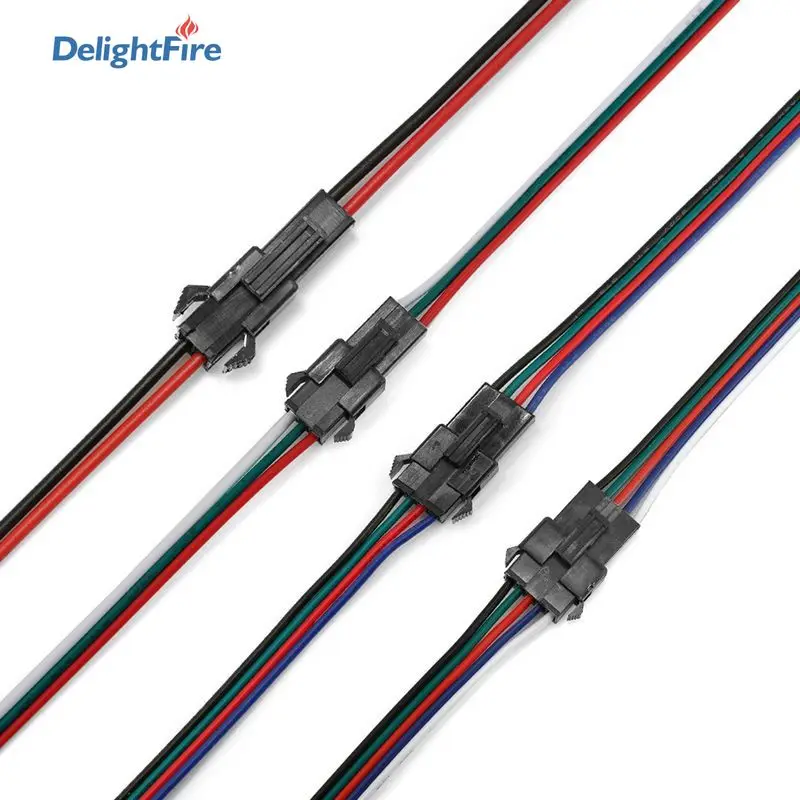
These connectors are designed to bridge the gap between various LED strip types and power sources. Their utility extends beyond simple lighting, enabling more complex, distributed low-voltage networks. The visual evidence confirms a range of pin counts, from 2-pin for monochromatic strips to 6-pin for advanced RGBWW or CCT applications.
For a solar enthusiast, the ability to select the precise pin configuration is paramount. It ensures compatibility with a wide array of LED strips, from basic accent lighting to more sophisticated tunable white or full-color spectrum setups. This adaptability minimizes the need for custom wiring, streamlining project assembly.
Unlike generic, un-terminated wire segments that demand intricate soldering for every connection, these pre-assembled male and female connectors offer a plug-and-play experience. This significantly reduces installation time and the potential for wiring errors, a common frustration in DIY electrical work. Efficiency in setup is key.
The product description highlights both "Pure copper" as a raw material and "Copper clad aluminum" (CCA) for the wires. This distinction is critical for understanding performance characteristics. Pure copper contacts within the connector housing would ensure excellent localized conductivity.
However, if the wire itself is CCA, this implies a trade-off. While CCA is lighter and less expensive than pure copper, it exhibits higher electrical resistance. In low-voltage DC applications, particularly those powered by solar, increased resistance translates directly to voltage drop and power loss over distance. This can diminish the brightness of LED strips or reduce the overall efficiency of the system.
Solar energy systems are inherently designed for maximum energy harvesting and minimal waste. Therefore, any component that introduces avoidable resistance warrants careful consideration. For short runs, the impact of CCA might be negligible, but for longer segments, the cumulative voltage drop could be substantial, requiring thicker gauge wires or shorter runs to maintain optimal performance. Understanding this material choice is vital for system design.
The provision of male and female connectors in pairs facilitates modular design. This is invaluable for off-grid solar installations where components often need to be easily connected, disconnected, or replaced. The robust plastic housing visible in the images suggests a degree of durability suitable for repeated handling.
Imagine a scenario where a solar-powered garden lighting system needs seasonal adjustments or troubleshooting. With these modular connectors, individual LED strip segments can be quickly swapped out without rewiring the entire circuit. This capability enhances the maintainability and longevity of a self-sustaining energy system.
Compared to permanent soldered connections, which can be time-consuming to modify or repair, these connectors offer superior flexibility. They allow for rapid prototyping and iterative design, essential for hobbyists experimenting with different lighting layouts or power configurations. The ease of disconnection also aids in fault isolation.
The specified wire gauges, 22 AWG and 20 AWG, are suitable for the low current draws typical of LED strips. However, the choice of gauge directly impacts the maximum current capacity and acceptable length of the wire before significant voltage drop occurs. Thinner 22 AWG wires are best for very short runs or extremely low-power LEDs.
When designing a solar-powered lighting circuit, precise calculation of efficiency losses is non-negotiable. Using a 20 AWG wire instead of 22 AWG, for example, can reduce resistance and improve power delivery, especially if multiple LED strips are daisy-chained or if the total wire length exceeds a few meters. This seemingly small difference can accumulate into noticeable performance variations.
Standard electrical practices for DC circuits emphasize minimizing voltage drop to preserve efficiency. While these connectors provide the physical interface, the overall wire length and gauge selection remain critical design parameters that the installer must optimize. This ensures the LED strips receive adequate voltage and current for their rated performance, preventing dimming or premature failure.
The connectors are described as suitable for "convenient welding" for 2.54mm single-head tinned male and female connectors. This indicates that while they are primarily plug-and-play, they also offer the option for a more permanent, soldered connection if desired. This dual functionality adds to their versatility.
For projects requiring a highly secure connection that is resistant to vibration or environmental factors, the option to solder the wire ends into the connector terminals provides an extra layer of reliability. This is particularly relevant for outdoor solar installations where exposure to elements necessitates robust electrical integrity.
Unlike connectors that are purely crimp-based or rely solely on friction, the design implies a degree of adaptability for various installation preferences. This caters to both beginners seeking simplicity and experienced users who might prefer the absolute security of a soldered joint for critical connections. It's a thoughtful design choice.
While the connectors themselves are not explicitly rated for outdoor use, their application in LED strip installations often implies exposure to varied environments. The plastic housing appears to offer basic protection, but additional weatherproofing would be necessary for direct outdoor solar applications.
In a solar setup, components are frequently exposed to temperature fluctuations, humidity, and dust. The integrity of these connections is paramount to system reliability. Enclosing these connectors in waterproof junction boxes or using heat-shrink tubing would be a prudent step to ensure long-term performance in challenging conditions.
Compared to industrial-grade waterproof connectors, these are designed for general-purpose use. However, with appropriate supplementary protection, they can be effectively integrated into semi-exposed or sheltered outdoor solar lighting projects. This adaptability through additional measures makes them a viable option for many hobbyist applications.
These connectors are explicitly designed for 3528 and 5050 RGB/RGBW LED strips, which are common low-voltage lighting components. Verifying compatibility with existing solar setups involves matching the voltage requirements of the LED strips (typically 12V or 24V DC) with the output of the solar charge controller or battery bank.
The pin configurations directly correspond to the wiring requirements of different LED strip types. A 2-pin connector is for single-color strips, 3-pin for older RGB strips (common anode/cathode + R, G, B), 4-pin for standard RGB (common + R, G, B), 5-pin for RGBW (common + R, G, B, W), and 6-pin for RGBWW/CCT (common + R, G, B, W1, W2). This ensures correct electrical interfacing.
Unlike universal connectors that might require manual wiring adjustments, these specific pin counts simplify the connection process for their intended LED strip types. This reduces the risk of incorrect polarity or channel assignment, which can damage LED strips or prevent proper functionality. Proper matching is essential for optimal performance.
Investing in a set of these connectors offers long-term value by facilitating easy expansion, modification, and repair of low-voltage DC lighting systems. Their low cost per pair makes them an economical choice for stocking up on essential components for future projects.
For a solar energy hobbyist, having a ready supply of these connectors means less downtime waiting for parts and more time building and experimenting. The ability to quickly create custom cable lengths or repair damaged sections without extensive re-wiring contributes significantly to project efficiency and overall satisfaction.
This approach contrasts sharply with relying on proprietary or hard-wired solutions that limit flexibility and increase replacement costs. These connectors empower the user to maintain and evolve their solar-powered lighting infrastructure with minimal effort and expense. They are a staple for any DIY electrical toolkit.
Imagine the satisfaction of seamlessly expanding your off-grid cabin's accent lighting or effortlessly reconfiguring your solar-powered greenhouse grow lights. With these versatile connectors, your creative vision for a self-sustaining energy system becomes a tangible reality, offering reliable and adaptable illumination wherever you need it.
The Foundation of Flexible Illumination
These connectors are designed to bridge the gap between various LED strip types and power sources. Their utility extends beyond simple lighting, enabling more complex, distributed low-voltage networks. The visual evidence confirms a range of pin counts, from 2-pin for monochromatic strips to 6-pin for advanced RGBWW or CCT applications.
For a solar enthusiast, the ability to select the precise pin configuration is paramount. It ensures compatibility with a wide array of LED strips, from basic accent lighting to more sophisticated tunable white or full-color spectrum setups. This adaptability minimizes the need for custom wiring, streamlining project assembly.
Unlike generic, un-terminated wire segments that demand intricate soldering for every connection, these pre-assembled male and female connectors offer a plug-and-play experience. This significantly reduces installation time and the potential for wiring errors, a common frustration in DIY electrical work. Efficiency in setup is key.
Material Science and Current Flow
The product description highlights both "Pure copper" as a raw material and "Copper clad aluminum" (CCA) for the wires. This distinction is critical for understanding performance characteristics. Pure copper contacts within the connector housing would ensure excellent localized conductivity.
However, if the wire itself is CCA, this implies a trade-off. While CCA is lighter and less expensive than pure copper, it exhibits higher electrical resistance. In low-voltage DC applications, particularly those powered by solar, increased resistance translates directly to voltage drop and power loss over distance. This can diminish the brightness of LED strips or reduce the overall efficiency of the system.
Solar energy systems are inherently designed for maximum energy harvesting and minimal waste. Therefore, any component that introduces avoidable resistance warrants careful consideration. For short runs, the impact of CCA might be negligible, but for longer segments, the cumulative voltage drop could be substantial, requiring thicker gauge wires or shorter runs to maintain optimal performance. Understanding this material choice is vital for system design.
Modularity for Off-Grid Systems
The provision of male and female connectors in pairs facilitates modular design. This is invaluable for off-grid solar installations where components often need to be easily connected, disconnected, or replaced. The robust plastic housing visible in the images suggests a degree of durability suitable for repeated handling.
Imagine a scenario where a solar-powered garden lighting system needs seasonal adjustments or troubleshooting. With these modular connectors, individual LED strip segments can be quickly swapped out without rewiring the entire circuit. This capability enhances the maintainability and longevity of a self-sustaining energy system.
Compared to permanent soldered connections, which can be time-consuming to modify or repair, these connectors offer superior flexibility. They allow for rapid prototyping and iterative design, essential for hobbyists experimenting with different lighting layouts or power configurations. The ease of disconnection also aids in fault isolation.
Wiring Integrity and Gauge Considerations
The specified wire gauges, 22 AWG and 20 AWG, are suitable for the low current draws typical of LED strips. However, the choice of gauge directly impacts the maximum current capacity and acceptable length of the wire before significant voltage drop occurs. Thinner 22 AWG wires are best for very short runs or extremely low-power LEDs.
When designing a solar-powered lighting circuit, precise calculation of efficiency losses is non-negotiable. Using a 20 AWG wire instead of 22 AWG, for example, can reduce resistance and improve power delivery, especially if multiple LED strips are daisy-chained or if the total wire length exceeds a few meters. This seemingly small difference can accumulate into noticeable performance variations.
Standard electrical practices for DC circuits emphasize minimizing voltage drop to preserve efficiency. While these connectors provide the physical interface, the overall wire length and gauge selection remain critical design parameters that the installer must optimize. This ensures the LED strips receive adequate voltage and current for their rated performance, preventing dimming or premature failure.
Installation Versatility
The connectors are described as suitable for "convenient welding" for 2.54mm single-head tinned male and female connectors. This indicates that while they are primarily plug-and-play, they also offer the option for a more permanent, soldered connection if desired. This dual functionality adds to their versatility.
For projects requiring a highly secure connection that is resistant to vibration or environmental factors, the option to solder the wire ends into the connector terminals provides an extra layer of reliability. This is particularly relevant for outdoor solar installations where exposure to elements necessitates robust electrical integrity.
Unlike connectors that are purely crimp-based or rely solely on friction, the design implies a degree of adaptability for various installation preferences. This caters to both beginners seeking simplicity and experienced users who might prefer the absolute security of a soldered joint for critical connections. It's a thoughtful design choice.
Environmental Adaptability
While the connectors themselves are not explicitly rated for outdoor use, their application in LED strip installations often implies exposure to varied environments. The plastic housing appears to offer basic protection, but additional weatherproofing would be necessary for direct outdoor solar applications.
In a solar setup, components are frequently exposed to temperature fluctuations, humidity, and dust. The integrity of these connections is paramount to system reliability. Enclosing these connectors in waterproof junction boxes or using heat-shrink tubing would be a prudent step to ensure long-term performance in challenging conditions.
Compared to industrial-grade waterproof connectors, these are designed for general-purpose use. However, with appropriate supplementary protection, they can be effectively integrated into semi-exposed or sheltered outdoor solar lighting projects. This adaptability through additional measures makes them a viable option for many hobbyist applications.
Verifying System Compatibility
These connectors are explicitly designed for 3528 and 5050 RGB/RGBW LED strips, which are common low-voltage lighting components. Verifying compatibility with existing solar setups involves matching the voltage requirements of the LED strips (typically 12V or 24V DC) with the output of the solar charge controller or battery bank.
The pin configurations directly correspond to the wiring requirements of different LED strip types. A 2-pin connector is for single-color strips, 3-pin for older RGB strips (common anode/cathode + R, G, B), 4-pin for standard RGB (common + R, G, B), 5-pin for RGBW (common + R, G, B, W), and 6-pin for RGBWW/CCT (common + R, G, B, W1, W2). This ensures correct electrical interfacing.
Unlike universal connectors that might require manual wiring adjustments, these specific pin counts simplify the connection process for their intended LED strip types. This reduces the risk of incorrect polarity or channel assignment, which can damage LED strips or prevent proper functionality. Proper matching is essential for optimal performance.
Long-Term Value in DIY Projects
Investing in a set of these connectors offers long-term value by facilitating easy expansion, modification, and repair of low-voltage DC lighting systems. Their low cost per pair makes them an economical choice for stocking up on essential components for future projects.
For a solar energy hobbyist, having a ready supply of these connectors means less downtime waiting for parts and more time building and experimenting. The ability to quickly create custom cable lengths or repair damaged sections without extensive re-wiring contributes significantly to project efficiency and overall satisfaction.
This approach contrasts sharply with relying on proprietary or hard-wired solutions that limit flexibility and increase replacement costs. These connectors empower the user to maintain and evolve their solar-powered lighting infrastructure with minimal effort and expense. They are a staple for any DIY electrical toolkit.
Imagine the satisfaction of seamlessly expanding your off-grid cabin's accent lighting or effortlessly reconfiguring your solar-powered greenhouse grow lights. With these versatile connectors, your creative vision for a self-sustaining energy system becomes a tangible reality, offering reliable and adaptable illumination wherever you need it.