Deli DL0305A Precision Diagonal Cutters
Official Store Deal
Expert Analysis Overview
The Edge of Precision: Deli DL0305A Diagonal Cutters
The Deli DL0305A Diagonal Cutters are a no-nonsense, hardened steel cutting tool built for precise work in tight spots. This isn't some cheap plastic junk; this is a tool designed to handle the daily grind of electronics repair, intricate model making, and general household electrical tasks without flinching. It's for the tradesman or serious hobbyist who understands that a clean cut saves time and prevents headaches.
Material Science for the Shop Floor
The visible construction of these cutters immediately points to a focus on durability and performance. The primary material for the cutting head is specified as 55# Carbon steel. This isn't just any steel; 55# carbon steel is a medium carbon steel known for its good balance of strength, hardness, and wear resistance after heat treatment. It's the kind of material you want in a cutting tool, providing the backbone for a reliable edge.
Using carbon steel in a tool like this means it's built to withstand repeated stress. Cheap tools often use softer alloys that deform or dull quickly, leading to frustrating work and damaged components. This material choice suggests the manufacturer understands the demands placed on diagonal cutters, especially when dealing with various wire gauges and plastic components found in electronics or models.
Compared to the flimsy, stamped metal snips often found in bargain bins, the use of 55# carbon steel positions these Deli cutters as a significant upgrade. It implies a tool that won't give out after a few tough cuts, offering a longer service life and consistent performance that generic alternatives simply cannot match. It's a foundational choice for a tool meant for real work.
The Hard Truth About Cutting Edges
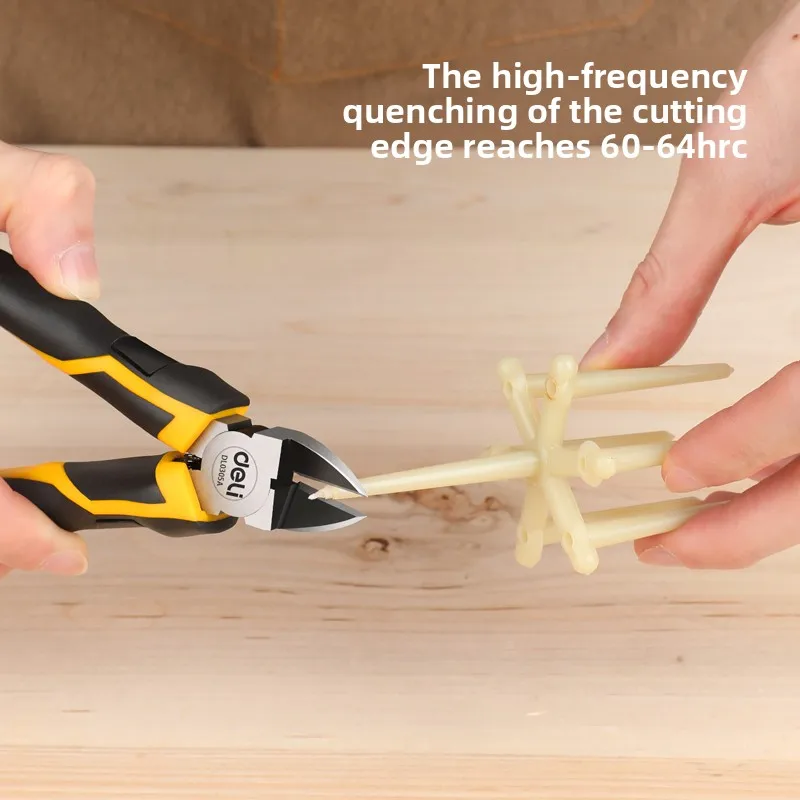
One of the most critical aspects of any cutting tool is the hardness of its edge. The Deli DL0305A boasts a cutting edge that reaches 60-64 HRC (Rockwell Hardness C scale) due to high-frequency quenching. This is a serious number for a hand tool.
To put 60-64 HRC into perspective, many high-end knife blades and industrial cutting tools operate in this range. This extreme hardness means the cutting edge will hold its sharpness for an extended period, resisting dulling even after countless cuts through copper wire, plastic sprue, or small cables. A dull edge doesn't cut; it crushes, leading to frayed wires and imprecise work, which is unacceptable in electronics or model making.
This level of edge hardness directly translates to cleaner, more efficient cuts. Imagine trying to snip a delicate component with a soft-edged tool; it's a recipe for disaster. With a 60-64 HRC edge, the user can expect crisp, clean separations, reducing the risk of damaging surrounding parts or leaving burrs that require additional cleanup. This is a precision instrument.
Ergonomics for the Long Haul
The handles of the Deli DL0305A are constructed from TPR (Thermoplastic Rubber), a material chosen for its grip and comfort properties. The black and yellow design isn't just for show; it's a practical choice for visibility and tactile feedback. Good grip matters.
TPR offers excellent slip resistance, even if hands are slightly oily or sweaty, which is a common occurrence in a workshop environment. The ergonomic shape, visible in the images, suggests a design that fits comfortably in the hand, reducing fatigue during prolonged use. This is crucial for tasks requiring repetitive cutting, like wiring a control panel or assembling a complex model kit.
Unlike hard plastic or bare metal handles that can cause blisters and discomfort, the TPR material provides a cushioned, secure hold. This thoughtful design element ensures that the tool remains comfortable and controllable, allowing for more precise work over longer periods without the user having to constantly adjust their grip or take breaks due to hand strain. It's a small detail that makes a big difference in productivity.
The Rebound Mechanism: Efficiency in Every Snip
These diagonal cutters feature a reset spring design for quick rebound, directly translating to improved efficiency. The internal spring mechanism, clearly shown in the product visuals, automatically opens the jaws after each cut.
This auto-rebound feature is more than just a convenience; it's a significant ergonomic advantage. It eliminates the need for the user to manually open the pliers after every cut, which can be surprisingly fatiguing during repetitive tasks. For electricians or model makers who make hundreds of cuts in a session, this spring mechanism drastically reduces hand strain and speeds up the workflow.
Compared to non-spring-loaded pliers, which require constant muscle engagement to both close and open the jaws, the Deli DL0305A's design allows for a smoother, more rhythmic operation. This not only saves energy but also contributes to greater precision, as the user can focus solely on positioning the cutting edge rather than fighting the tool's mechanics. It's a smart design choice for high-volume work.
Versatility Across the Bench
The stated scope of application for these cutters is broad: electricians, construction sites, household use, crafts, electronics repair, and model making. This wide range indicates a tool designed for general utility but with enough precision for specialized tasks.
For electricians, the ability to make clean cuts on various wire types without fraying is paramount. In electronics repair, the fine tips and sharp edges are essential for snipping leads on circuit boards or trimming component legs without damaging adjacent parts. For model makers, the precision allows for clean removal of plastic parts from sprues, minimizing the need for filing and sanding.
This versatility means the tool isn't confined to a single niche. Instead of needing multiple specialized cutters, a user can rely on the Deli DL0305A for a multitude of tasks, from stripping small household wires to intricate hobby work. It's a workhorse that doesn't compromise on the finesse required for delicate operations, making it a valuable addition to any toolkit.
The Geometry of a Clean Cut
Diagonal cutters are inherently designed for flush cutting, and the geometry of the Deli DL0305A's jaws appears optimized for this purpose. The angled head allows access into tight spaces, a common requirement in electronics and small assembly work. The cutting action is direct.
The precise alignment of the cutting edges ensures a clean shear, rather than a crushing action. This is critical for maintaining the integrity of the material being cut, whether it's a delicate wire strand or a brittle plastic component. Poorly aligned jaws lead to uneven cuts, burrs, and potential damage to the workpiece.
This specific jaw design, combined with the hardened steel, allows the tool to make precise cuts without damaging surrounding components or fraying wires, a common frustration with lesser tools. It's the kind of reliable performance that prevents rework and ensures a professional finish on any project. The tool is built to perform consistently.
Maintenance and Longevity
Maintaining a tool like the Deli DL0305A is straightforward, contributing to its potential longevity. The TPR handles are easy to wipe clean, and the carbon steel jaws, while robust, benefit from occasional lubrication to prevent corrosion, especially if exposed to moisture or corrosive materials.
Regular cleaning and a light coat of oil on the pivot point and cutting edges will ensure the spring mechanism operates smoothly and the blades remain free from rust. This minimal maintenance regimen helps preserve the tool's precision and extends its working life, protecting the investment made in a quality cutting instrument.
Unlike tools with complex mechanisms or delicate finishes that require specialized care, these cutters are designed for practical, everyday use in demanding environments. Their robust construction means they can take a beating and still perform, provided basic care is observed. This simplicity of maintenance is a key factor in a tool's long-term value, ensuring it remains a reliable part of the kit for years to come.
Imagine the satisfaction of reaching for a tool that consistently delivers clean, precise cuts, project after project. Envision the efficiency gained from a comfortable grip and a spring-loaded mechanism that reduces hand fatigue, allowing you to focus on the task at hand rather than wrestling with your equipment. Picture the durability of hardened carbon steel, holding its edge when lesser tools have long since dulled. This isn't just a pair of cutters; it's an investment in reliable performance and a smoother workflow for all your intricate cutting needs.