DC 5.5*2.5 Interface Power Tester
Official Store Deal
Expert Analysis Overview
The DC 5.5*2.5 Interface Power Tester is a highly capable diagnostic instrument engineered for precise real-time monitoring of direct current electrical parameters. It targets technicians, hobbyists, and electronics enthusiasts who require accurate voltage, current, power, and energy consumption data for devices utilizing the ubiquitous 5.5*2.5mm DC barrel connector.
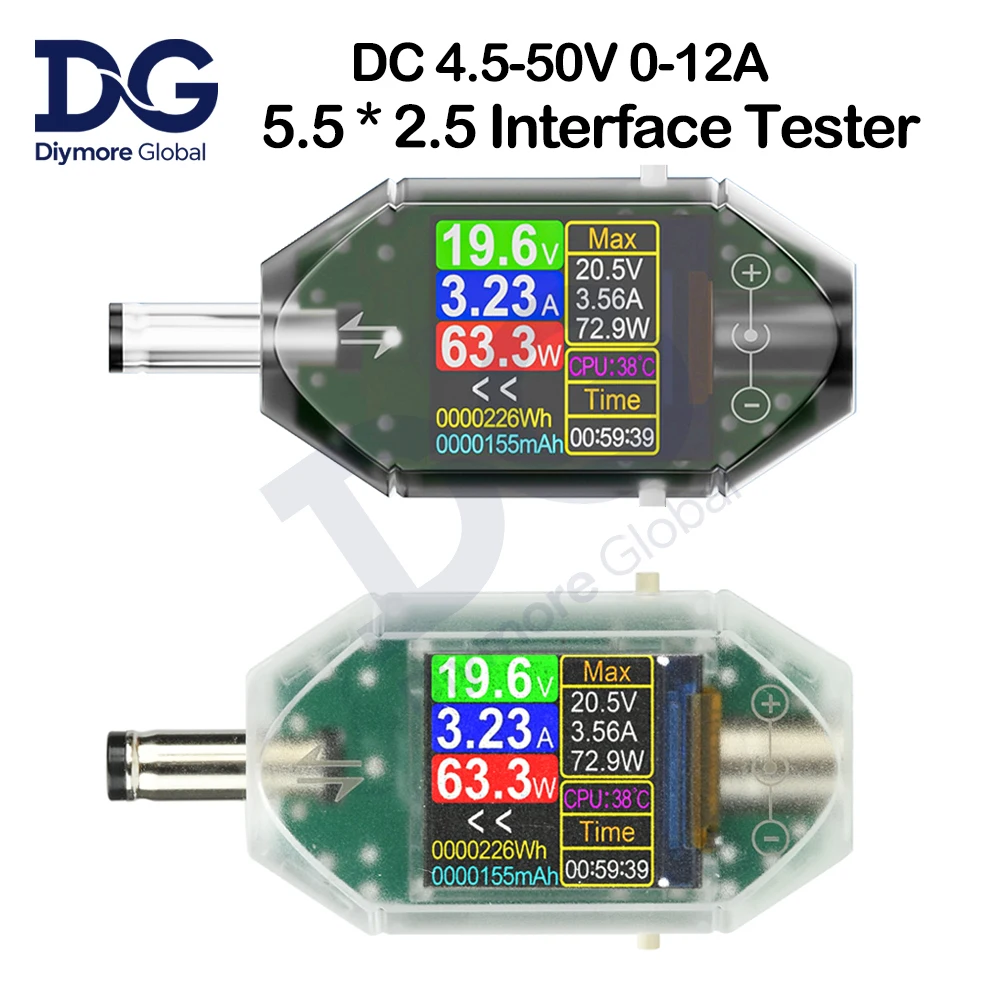
This tester provides a comprehensive suite of measurements, including voltage (DC 4.5-50V), current (0-6A, with a short-term peak of 12A), power (0-600W), and accumulated energy (0-999999Wh). The display also tracks accumulated capacity (0-999999mAh) and elapsed time. Such detailed metrics are crucial for evaluating power supply stability, battery performance, and device efficiency. The resolution of these readings allows for granular analysis, which is essential for identifying subtle power fluctuations or inefficiencies.
Unlike simpler inline meters that offer only basic voltage and current, this device extends its utility significantly. It provides a more complete picture of power delivery. This allows users to diagnose issues beyond simple connectivity. The ability to track energy and capacity over time is particularly valuable for assessing battery health and charging cycles, offering insights that prevent premature component failure.
Central to its metrological performance is the specified 0.001R sampling resistor. This low resistance value minimizes voltage drop across the shunt, ensuring that current measurements are minimally intrusive to the circuit under test. A smaller sampling resistor directly contributes to higher measurement accuracy, especially at higher currents, by reducing the parasitic power loss within the tester itself. This is a critical design choice for maintaining measurement integrity.
Repeatable results are paramount in diagnostic tools. The design, with its dedicated sampling resistor, suggests a consistent measurement pathway. This consistency is vital for comparative testing, allowing users to reliably assess changes in device performance or power supply behavior over time or across different units. Such reliability builds confidence in the diagnostic data. It helps in making informed decisions about equipment maintenance or replacement.
Compared to generic, uncalibrated inline testers, the explicit mention of a low sampling resistor indicates a commitment to more accurate and repeatable data. This elevates the device from a mere indicator to a more serious diagnostic tool. It offers a foundational level of precision for everyday electrical work.
The device features a 5.5*2.5mm DC interface, a common standard for laptop chargers, routers, and various electronic gadgets. The male plug is designed with an all-copper, high-current, dual-metal connector, ensuring excellent contact and stable detection. This design also makes it compatible with both 2.5mm and 2.1mm diameter female jacks, enhancing its versatility across a broader range of devices. This adaptability is a key functional advantage.
The HD color screen offers a four-way rotating display, which is a significant ergonomic benefit. This feature allows the user to orient the screen for optimal viewing regardless of the physical connection angle, preventing awkward viewing positions or the need to physically re-position the device. The screen also supports both color and black-and-white display modes, catering to different user preferences or lighting conditions. Clear visibility is crucial for quick readings.
Many basic testers feature fixed-orientation displays, often leading to readability issues in confined spaces. This rotating screen directly addresses that common frustration. It ensures that critical data is always presented clearly and accessibly. This thoughtful design improves the user experience considerably.
Operating within a temperature range of 0-45°C (32-113°F), the tester is suitable for most indoor and moderate outdoor environments. Its power consumption is less than 0.5W, meaning it draws minimal power from the circuit being tested, further preserving measurement accuracy. The compact dimensions of 58*26*16mm make it highly portable and easy to integrate into any test setup or toolkit. Small size is a practical advantage.
The visible materials imply a robust construction, with a clear casing option showcasing the internal circuitry, suggesting a degree of engineering transparency. The all-copper connectors are a strong indicator of durability and efficient current transfer, resisting corrosion and wear over time. This material choice directly impacts the longevity of the device. It ensures consistent performance through repeated use.
Unlike many plastic-heavy alternatives, the use of dual-metal connectors suggests a higher standard of build quality. This enhances both the electrical performance and the mechanical resilience of the interface. Such attention to material science contributes to a longer service life. It reduces the likelihood of intermittent connections.
For professionals and enthusiasts focused on precise electrical measurements, this device offers substantial value. Its ability to provide detailed, repeatable data across a useful range of DC parameters makes it an indispensable tool for diagnostics, troubleshooting, and performance evaluation. The combination of high-resolution display, robust connectors, and minimal self-consumption positions it as a superior option for those who prioritize measurement accuracy. It is a smart investment.
Imagine effortlessly diagnosing a faulty power adapter by observing real-time voltage drops under load, or precisely quantifying the charging efficiency of a portable battery pack over several cycles. This tester empowers users to move beyond guesswork, providing concrete data to inform their decisions and optimize their electronic systems. It brings clarity to complex electrical behaviors. This tool transforms uncertainty into actionable insights, allowing for more efficient repairs and better-informed purchases of power-related equipment. The detailed metrics enable a deeper understanding of device power profiles, ultimately saving time and preventing costly component damage. This is a tool for empowerment.
Precision in DC Diagnostics
This tester provides a comprehensive suite of measurements, including voltage (DC 4.5-50V), current (0-6A, with a short-term peak of 12A), power (0-600W), and accumulated energy (0-999999Wh). The display also tracks accumulated capacity (0-999999mAh) and elapsed time. Such detailed metrics are crucial for evaluating power supply stability, battery performance, and device efficiency. The resolution of these readings allows for granular analysis, which is essential for identifying subtle power fluctuations or inefficiencies.
Unlike simpler inline meters that offer only basic voltage and current, this device extends its utility significantly. It provides a more complete picture of power delivery. This allows users to diagnose issues beyond simple connectivity. The ability to track energy and capacity over time is particularly valuable for assessing battery health and charging cycles, offering insights that prevent premature component failure.
Robust Measurement Integrity
Central to its metrological performance is the specified 0.001R sampling resistor. This low resistance value minimizes voltage drop across the shunt, ensuring that current measurements are minimally intrusive to the circuit under test. A smaller sampling resistor directly contributes to higher measurement accuracy, especially at higher currents, by reducing the parasitic power loss within the tester itself. This is a critical design choice for maintaining measurement integrity.
Repeatable results are paramount in diagnostic tools. The design, with its dedicated sampling resistor, suggests a consistent measurement pathway. This consistency is vital for comparative testing, allowing users to reliably assess changes in device performance or power supply behavior over time or across different units. Such reliability builds confidence in the diagnostic data. It helps in making informed decisions about equipment maintenance or replacement.
Compared to generic, uncalibrated inline testers, the explicit mention of a low sampling resistor indicates a commitment to more accurate and repeatable data. This elevates the device from a mere indicator to a more serious diagnostic tool. It offers a foundational level of precision for everyday electrical work.
Interface and Display Versatility
The device features a 5.5*2.5mm DC interface, a common standard for laptop chargers, routers, and various electronic gadgets. The male plug is designed with an all-copper, high-current, dual-metal connector, ensuring excellent contact and stable detection. This design also makes it compatible with both 2.5mm and 2.1mm diameter female jacks, enhancing its versatility across a broader range of devices. This adaptability is a key functional advantage.
The HD color screen offers a four-way rotating display, which is a significant ergonomic benefit. This feature allows the user to orient the screen for optimal viewing regardless of the physical connection angle, preventing awkward viewing positions or the need to physically re-position the device. The screen also supports both color and black-and-white display modes, catering to different user preferences or lighting conditions. Clear visibility is crucial for quick readings.
Many basic testers feature fixed-orientation displays, often leading to readability issues in confined spaces. This rotating screen directly addresses that common frustration. It ensures that critical data is always presented clearly and accessibly. This thoughtful design improves the user experience considerably.
Operational Parameters and Durability
Operating within a temperature range of 0-45°C (32-113°F), the tester is suitable for most indoor and moderate outdoor environments. Its power consumption is less than 0.5W, meaning it draws minimal power from the circuit being tested, further preserving measurement accuracy. The compact dimensions of 58*26*16mm make it highly portable and easy to integrate into any test setup or toolkit. Small size is a practical advantage.
The visible materials imply a robust construction, with a clear casing option showcasing the internal circuitry, suggesting a degree of engineering transparency. The all-copper connectors are a strong indicator of durability and efficient current transfer, resisting corrosion and wear over time. This material choice directly impacts the longevity of the device. It ensures consistent performance through repeated use.
Unlike many plastic-heavy alternatives, the use of dual-metal connectors suggests a higher standard of build quality. This enhances both the electrical performance and the mechanical resilience of the interface. Such attention to material science contributes to a longer service life. It reduces the likelihood of intermittent connections.
Value Proposition for the Metrologist
For professionals and enthusiasts focused on precise electrical measurements, this device offers substantial value. Its ability to provide detailed, repeatable data across a useful range of DC parameters makes it an indispensable tool for diagnostics, troubleshooting, and performance evaluation. The combination of high-resolution display, robust connectors, and minimal self-consumption positions it as a superior option for those who prioritize measurement accuracy. It is a smart investment.
Imagine effortlessly diagnosing a faulty power adapter by observing real-time voltage drops under load, or precisely quantifying the charging efficiency of a portable battery pack over several cycles. This tester empowers users to move beyond guesswork, providing concrete data to inform their decisions and optimize their electronic systems. It brings clarity to complex electrical behaviors. This tool transforms uncertainty into actionable insights, allowing for more efficient repairs and better-informed purchases of power-related equipment. The detailed metrics enable a deeper understanding of device power profiles, ultimately saving time and preventing costly component damage. This is a tool for empowerment.