DC 12V LED Driver Transformer
Official Store Deal
Expert Analysis Overview
Powering Your Vision: An Overview
The DC 12V LED Driver Transformer is a pragmatic power conversion unit designed for hobbyists and professionals seeking reliable low-voltage power for LED lighting and surveillance systems. This device efficiently converts higher alternating current (AC) voltages, typically from a grid connection or an inverter in a solar setup, into a stable 12V direct current (DC) output. Its primary function is to provide the precise and consistent power required by sensitive LED arrays and CCTV cameras, preventing flicker and ensuring optimal performance.
For those integrating renewable energy, understanding power conversion is paramount. These drivers ensure that even if your solar inverter outputs AC at varying loads, the downstream DC components receive a steady supply. This stability is crucial for device longevity. The driver's compact form factor also facilitates discreet integration into various projects, from under-cabinet lighting to outdoor security systems, provided appropriate environmental protection is added. It's a fundamental building block.
Unlike unregulated power supplies which can suffer from voltage fluctuations, this LED driver maintains a consistent 12V output. This precision protects connected devices from overvoltage damage and ensures uniform light output from LEDs. The wide input voltage range further enhances its utility, making it adaptable to different regional power standards or fluctuating grid conditions, a common challenge in diverse electrical environments.
The Heart of Low-Voltage Systems
Powering low-voltage components effectively requires a dedicated driver. This unit serves as the crucial intermediary, taking the standard AC input and transforming it into a clean, regulated DC output. The available wattage options—12W, 24W, 36W, and 60W—allow for precise matching with various load requirements, from small accent lighting to more extensive LED strip installations or multiple CCTV cameras.
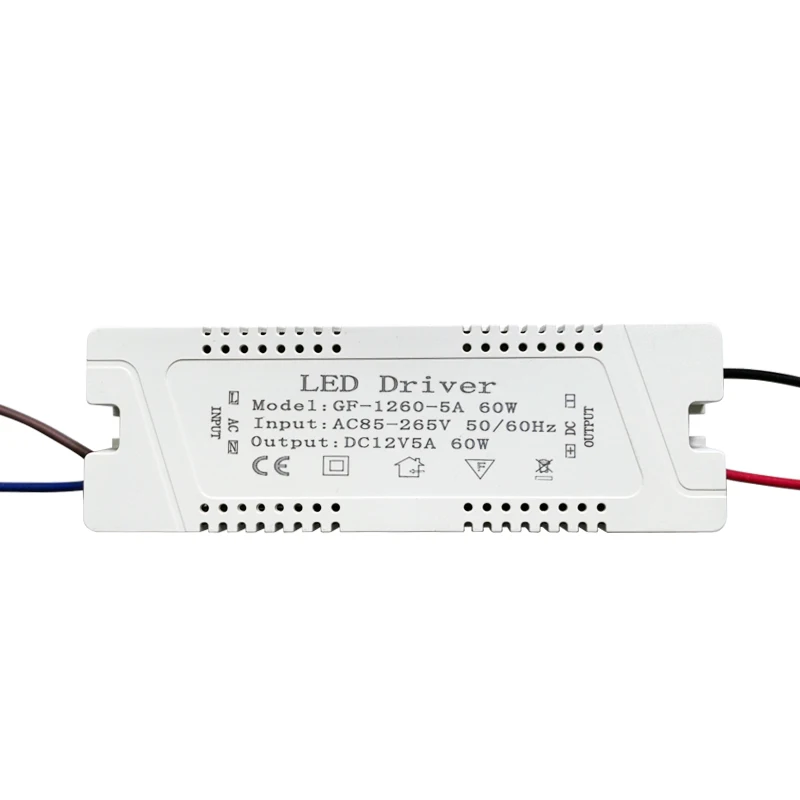
Each wattage variant is engineered to deliver a specific current (1A, 2A, 3A, 5A respectively) at 12V DC. This ensures that the connected devices receive adequate power without being overstressed or underpowered. Proper current delivery extends the lifespan of LEDs significantly. Ignoring this can lead to premature failure.
Compared to generic AC-to-DC adapters, which often lack robust regulation, these dedicated LED drivers offer superior performance. They are specifically designed for the inductive loads and specific current demands of LEDs. This specialized design minimizes ripple and noise, which can otherwise degrade the performance and lifespan of sensitive electronic components. It's a smarter choice.
Engineering for Efficiency: Performance Metrics
Stable Output, Consistent Illumination
The core performance metric of any LED driver is its ability to deliver a stable output voltage and current. These drivers are specified to provide a consistent 12V DC, crucial for the optimal operation of most LED products. The input voltage range of AC 85-265V demonstrates a significant tolerance for varying power sources, including those from less stable grids or off-grid inverter systems.
Maintaining a steady 12V output prevents the common issues of LED flickering or premature degradation. Fluctuations in voltage can stress LED diodes, reducing their efficiency and shortening their operational life. A stable power source is a cornerstone of reliable lighting. This consistency is a key benefit.
Many standard power supplies struggle with load changes, leading to voltage sag or spikes. These LED drivers, however, are designed to regulate output effectively across their specified load range. This makes them a more reliable option than cheaper, unregulated power bricks, especially for long-term installations. The investment pays off.
Thermal Management and Longevity
While specific thermal dissipation features are not explicitly detailed in the visual data, the perforated casing visible on the larger units suggests passive ventilation. Effective thermal management is critical for the longevity of any electronic component, especially power supplies. Overheating can drastically reduce efficiency and component lifespan.
For solar energy hobbyists, minimizing energy waste is a priority. A driver that runs cooler is generally more efficient, meaning less energy is lost as heat during the AC-to-DC conversion process. This translates to more of your generated solar power reaching your actual load. Every watt counts.
Unlike drivers enclosed in completely sealed, non-ventilated housings, the visible perforations imply an attempt at passive cooling. For optimal performance, especially in enclosed spaces or high ambient temperatures, ensuring adequate airflow around the unit is always recommended. This simple step can prevent thermal stress. Proper installation matters.
Seamless Integration: Compatibility and Application
Bridging AC to DC for Diverse Setups
The wide input voltage range, AC 85-265V, positions these LED drivers as highly versatile components. This broad compatibility means they can be used in almost any global electrical standard, from 110V to 220V systems. Such flexibility simplifies procurement and deployment for international projects or varied domestic applications.
In a solar energy context, this wide input range is particularly beneficial. If your off-grid system utilizes an inverter to convert battery DC to AC, the inverter's output might vary slightly depending on load or battery state. This driver's tolerance ensures reliable operation despite minor fluctuations. It adapts to conditions.
This adaptability contrasts sharply with single-voltage input drivers, which are restricted to specific regions or inverter outputs. The ability to handle a broad AC input makes these drivers a more forgiving and robust choice for complex or evolving power systems. It reduces compatibility headaches. One unit fits many scenarios.
Off-Grid Potential and System Design
For self-sustaining energy systems, these drivers are instrumental in powering 12V DC loads from an AC source, which could be an inverter. While a direct 12V DC-to-DC conversion might be more efficient in some cases, many existing LED and CCTV systems are designed for AC input drivers, even if their internal components are DC. This driver fills that gap.
Calculating efficiency losses within your overall solar setup is crucial. While the driver itself has an inherent efficiency, its role in providing stable power often outweighs the minor conversion losses compared to the instability of direct, unregulated connections. System stability is a gain.
Verifying compatibility with existing solar setups involves ensuring your inverter's AC output falls within the driver's 85-265V range and that the driver's wattage matches or exceeds your load. These drivers simplify the integration of standard 12V LED lighting into an AC-powered off-grid home. They make integration easier. Planning is essential.
Durability and Installation Considerations
Enclosure Resilience
The visible white plastic enclosure appears to be a standard, non-sealed type. This design is common for indoor applications where protection from dust and incidental contact is sufficient. The material likely offers basic insulation and mechanical protection for the internal circuitry. Its simplicity aids manufacturing.
For outdoor or harsh environments, this type of enclosure would necessitate additional protection, such as a waterproof junction box. The absence of an IP rating suggests it is not designed for direct exposure to moisture or significant dust. Environmental considerations are key. Plan for the setting.
Unlike industrial-grade, often metal-cased, IP-rated drivers, these units prioritize cost-effectiveness and ease of integration in less demanding environments. Their lightweight construction simplifies mounting. However, users must ensure the operating environment matches the enclosure's capabilities. Adapt the installation.
Wiring Simplicity
The drivers feature clearly labeled input and output wires, typically brown/blue for AC input and red/black for DC output. This color-coding adheres to common electrical standards, simplifying the connection process. Clear labeling reduces the risk of incorrect wiring, a common cause of component failure.
Installation involves connecting the AC input wires to your power source and the DC output wires to your 12V LED or CCTV load. The absence of complex terminals or configuration switches makes these units straightforward to integrate, even for those with basic electrical knowledge. It's plug-and-play simplicity.
Compared to drivers requiring screw terminals and specialized tools, the pre-stripped wire leads streamline the installation process. This design choice accelerates deployment, particularly for multiple installations or hobbyist projects where time and complexity are factors. Quick setup is a bonus. Efficiency in installation matters.
Economic Value and Future-Proofing
Long-Term System Stability
Investing in a dedicated LED driver like these contributes to the long-term stability and reliability of your lighting or surveillance system. The consistent 12V DC output protects sensitive components, reducing the frequency of replacements and maintenance. This stability translates into significant cost savings over time.
For solar energy systems, where component reliability is paramount, a stable power supply ensures your energy investments perform as expected. Preventing premature LED failure means less waste and more consistent illumination from your renewable energy source. It's a smart long-term play. Reliability is priceless.
Unlike relying on generic power adapters that might degrade quickly or provide inconsistent power, these purpose-built drivers offer a more robust solution. Their design focuses on the specific needs of LEDs, ensuring a longer operational life for the entire system. This dedicated approach yields better results. Quality matters for longevity.
Scalability for Expanding Projects
The availability of multiple wattage options (12W, 24W, 36W, 60W) allows for scalable project design. Users can select the appropriate driver size for their current needs and easily upgrade or add more drivers as their lighting or surveillance requirements expand. This modularity offers flexibility.
For solar hobbyists planning incremental system expansions, having a range of compatible drivers simplifies the process. You can start with a smaller setup and gradually add more lighting or cameras, knowing there's a suitable driver available. This prevents over-specifying or under-specifying power. Growth is accommodated.
This tiered wattage offering is superior to a one-size-fits-all approach, which often leads to either wasted capacity or insufficient power. The ability to precisely match the driver to the load optimizes efficiency and cost. It's a tailored solution. Flexibility is a benefit.
Final Thoughts: Energizing Your Projects
Imagine your meticulously designed solar-powered outdoor lighting illuminating your garden flawlessly every evening, or your CCTV cameras providing crystal-clear footage without a single flicker. This stability and peace of mind come from reliable components like the DC 12V LED Driver Transformer. Your LED strips will shine with consistent brilliance, their lifespan extended by the steady 12V DC supply. Your security cameras will operate without interruption, ensuring continuous monitoring. This driver simply works, quietly and efficiently, allowing you to focus on the bigger picture of your sustainable energy projects. It integrates seamlessly, becoming an invisible yet indispensable part of your system, delivering the dependable power that brings your visions to light and keeps your spaces secure. Enjoy the fruits of your well-powered endeavors.