CN3791 MPPT Solar Charger Module
Official Store Deal
Expert Analysis Overview
The CN3791 MPPT Solar Charger Module is an efficient power management solution tailored for hobbyists and makers developing compact, off-grid energy systems utilizing single-cell lithium batteries. This module excels in its ability to extract maximum power from solar panels, ensuring optimal charging even under varying light conditions.
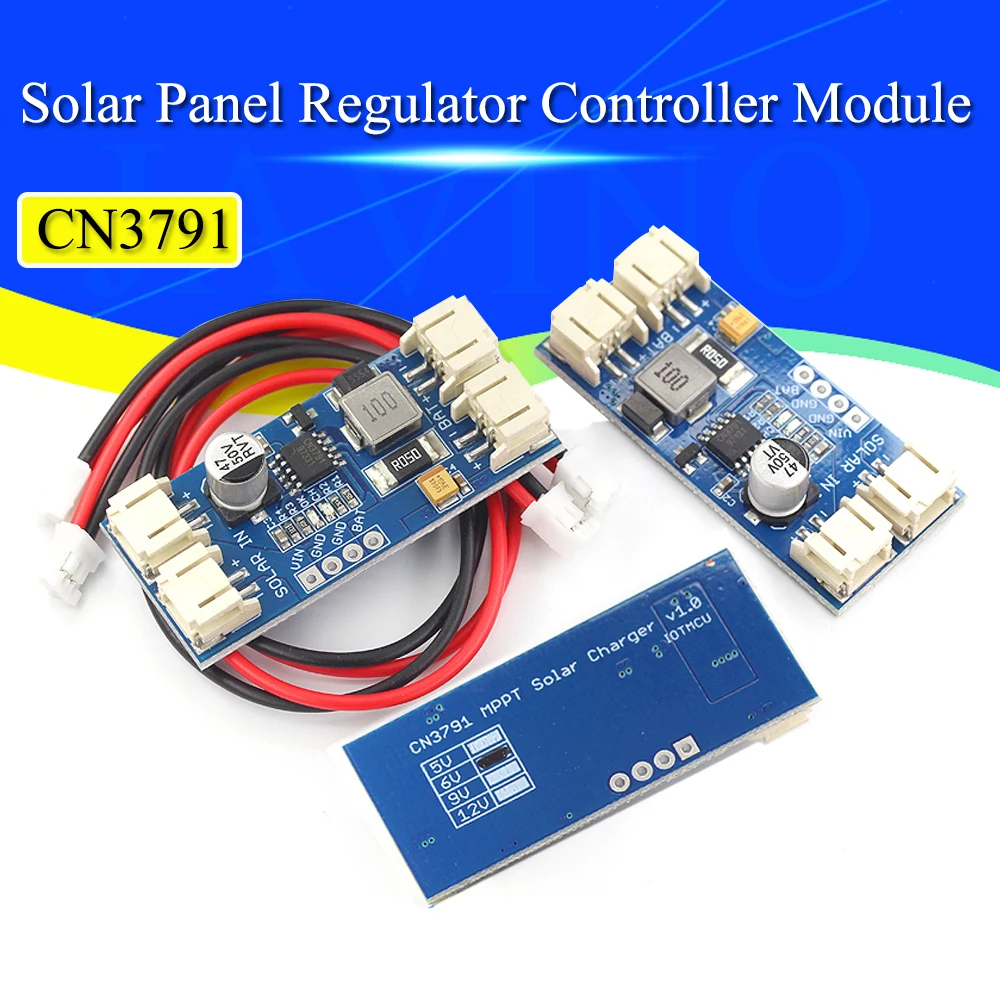
The module prominently features the CN3791 MPPT (Maximum Power Point Tracking) controller chip. This integrated circuit is visible on the blue PCB, surrounded by various passive components and power inductors. The visual layout suggests a well-engineered, compact design focused on dedicated power conversion.
This intelligent tracking capability ensures that the solar panel operates at its peak power output, dynamically adjusting the load impedance to match the panel's characteristics. For small-scale solar projects, this means more energy captured from a given panel size, directly translating to faster charging times or extended operational periods for connected devices. It's a critical component for anyone aiming to build a truly self-sustaining energy system where every watt counts.
Unlike simpler PWM (Pulse Width Modulation) controllers, which merely reduce voltage to match the battery, MPPT technology actively seeks the optimal voltage and current point of the solar panel. This can yield efficiency gains of 20-30% or more, especially in conditions where the panel's voltage significantly exceeds the battery's voltage, making it a superior choice for serious solar applications.
The module supports a wide range of solar panel input voltages, specifically 5V, 6V, 9V, and 12V. The presence of multiple input voltage options on the product description indicates robust design for varied solar panel configurations. This broad compatibility is a significant advantage.
Such flexibility allows users to pair the module with a variety of readily available solar panels, from small hobbyist panels to slightly larger consumer-grade units. This reduces the complexity of sourcing perfectly matched components, streamlining the project development process. It's a key factor for quickly verifying compatibility with existing solar setups.
Standard solar chargers often demand a very specific input voltage range, limiting panel choices. This module's wider acceptance range, unlike many fixed-input chargers, provides greater freedom in system design and component selection, making it a more forgiving option for experimentation.
This controller is specifically designed for 1-cell lithium batteries, supporting both 3.7V nominal and 4.2V charge termination voltages. The image clearly shows designated output terminals for the lithium battery, indicating a focused charging solution. The module does one thing, and does it well.
By focusing solely on single-cell lithium, the module can be optimized for the precise charging profile required by these batteries, including constant current (CC) and constant voltage (CV) stages. This ensures the longevity and safety of the connected battery, preventing overcharge or undercharge conditions that can degrade battery health. Proper battery management is crucial for the lifespan of any portable electronic device.
Generic chargers often attempt to support multiple battery chemistries, sometimes leading to compromises in charging algorithms. This dedicated approach, in contrast to universal chargers, guarantees a tailored and safer charging experience for 3.7V lithium-ion or lithium-polymer cells, which are ubiquitous in portable electronics.
Visible in the images are PH2.0-2P connectors for both solar panel access and lithium battery input/output. These small, white connectors are designed for easy and secure attachment, minimizing the need for complex soldering for basic connections. The wiring diagram explicitly labels these connections, simplifying setup.
These standardized connectors facilitate quick assembly and disassembly, which is ideal for prototyping or field repairs. Users can rapidly connect their solar panel and battery without specialized tools, making the module highly accessible for those new to solar electronics. It makes building a self-sustaining energy system much more straightforward.
Many DIY modules require direct soldering or screw terminals, which can be less convenient or secure for frequent modifications. The inclusion of PH2.0-2P connectors, unlike bare PCB pads, significantly lowers the barrier to entry for hobbyists, offering a plug-and-play experience for core components.
The physical dimensions of the PCB are notably small, as evident from the images showing the module alongside standard wires. Its compact form factor is a significant advantage for integration into tight enclosures or portable projects. Small projects demand small components.
This miniature size allows the module to be incorporated into a wide array of projects where space is at a premium, such as IoT devices, wearable electronics, remote sensors, or small robotic platforms. Its discrete presence ensures that the charging solution doesn't dominate the overall design. Calculating efficiency losses becomes easier with a clean, compact setup.
Larger, bulkier charge controllers can often dictate the size and shape of an entire project enclosure. This module, by contrast, offers design freedom, enabling more aesthetically pleasing and functionally integrated solutions compared to oversized alternatives.
The CN3791 is designed to manage the entire charge cycle for a single-cell lithium battery. This includes pre-charge conditioning, constant current charging, constant voltage charging, and charge termination. The controller handles these stages autonomously.
This comprehensive management protects the battery from common issues like overcurrent during initial charging or overvoltage once fully charged. The automatic termination prevents excessive stress on the battery, which is vital for maintaining its capacity over many cycles. This ensures the longevity of the power source.
Simpler charging circuits might only offer basic voltage regulation, potentially leading to inefficient charging or premature battery degradation. The CN3791's full-cycle management, unlike rudimentary charge circuits, provides a robust and reliable charging solution, ensuring the battery is always optimally maintained.
This module is a cornerstone for anyone looking to build small, efficient, and self-powered devices. Its MPPT capability ensures maximum energy capture from solar panels, directly translating to longer operational times for connected loads or faster recharging cycles. The dedicated single-cell lithium battery support guarantees safe and optimal battery health, extending the lifespan of your power source. Its compact size and user-friendly connectors simplify integration into even the most constrained project enclosures, making complex solar solutions accessible to a broader audience. Imagine powering your custom weather station, remote sensor, or portable gadget indefinitely, drawing clean energy directly from the sun, without ever needing to swap batteries or connect to a wall charger. This module brings that vision of energy independence within reach, enabling truly autonomous devices that thrive off-grid.
Maximizing Solar Harvest with MPPT
The module prominently features the CN3791 MPPT (Maximum Power Point Tracking) controller chip. This integrated circuit is visible on the blue PCB, surrounded by various passive components and power inductors. The visual layout suggests a well-engineered, compact design focused on dedicated power conversion.
This intelligent tracking capability ensures that the solar panel operates at its peak power output, dynamically adjusting the load impedance to match the panel's characteristics. For small-scale solar projects, this means more energy captured from a given panel size, directly translating to faster charging times or extended operational periods for connected devices. It's a critical component for anyone aiming to build a truly self-sustaining energy system where every watt counts.
Unlike simpler PWM (Pulse Width Modulation) controllers, which merely reduce voltage to match the battery, MPPT technology actively seeks the optimal voltage and current point of the solar panel. This can yield efficiency gains of 20-30% or more, especially in conditions where the panel's voltage significantly exceeds the battery's voltage, making it a superior choice for serious solar applications.
Adaptable Input Voltage
The module supports a wide range of solar panel input voltages, specifically 5V, 6V, 9V, and 12V. The presence of multiple input voltage options on the product description indicates robust design for varied solar panel configurations. This broad compatibility is a significant advantage.
Such flexibility allows users to pair the module with a variety of readily available solar panels, from small hobbyist panels to slightly larger consumer-grade units. This reduces the complexity of sourcing perfectly matched components, streamlining the project development process. It's a key factor for quickly verifying compatibility with existing solar setups.
Standard solar chargers often demand a very specific input voltage range, limiting panel choices. This module's wider acceptance range, unlike many fixed-input chargers, provides greater freedom in system design and component selection, making it a more forgiving option for experimentation.
Dedicated Single-Cell Lithium Management
This controller is specifically designed for 1-cell lithium batteries, supporting both 3.7V nominal and 4.2V charge termination voltages. The image clearly shows designated output terminals for the lithium battery, indicating a focused charging solution. The module does one thing, and does it well.
By focusing solely on single-cell lithium, the module can be optimized for the precise charging profile required by these batteries, including constant current (CC) and constant voltage (CV) stages. This ensures the longevity and safety of the connected battery, preventing overcharge or undercharge conditions that can degrade battery health. Proper battery management is crucial for the lifespan of any portable electronic device.
Generic chargers often attempt to support multiple battery chemistries, sometimes leading to compromises in charging algorithms. This dedicated approach, in contrast to universal chargers, guarantees a tailored and safer charging experience for 3.7V lithium-ion or lithium-polymer cells, which are ubiquitous in portable electronics.
Streamlined Connectivity
Visible in the images are PH2.0-2P connectors for both solar panel access and lithium battery input/output. These small, white connectors are designed for easy and secure attachment, minimizing the need for complex soldering for basic connections. The wiring diagram explicitly labels these connections, simplifying setup.
These standardized connectors facilitate quick assembly and disassembly, which is ideal for prototyping or field repairs. Users can rapidly connect their solar panel and battery without specialized tools, making the module highly accessible for those new to solar electronics. It makes building a self-sustaining energy system much more straightforward.
Many DIY modules require direct soldering or screw terminals, which can be less convenient or secure for frequent modifications. The inclusion of PH2.0-2P connectors, unlike bare PCB pads, significantly lowers the barrier to entry for hobbyists, offering a plug-and-play experience for core components.
Compact Footprint for Integration
The physical dimensions of the PCB are notably small, as evident from the images showing the module alongside standard wires. Its compact form factor is a significant advantage for integration into tight enclosures or portable projects. Small projects demand small components.
This miniature size allows the module to be incorporated into a wide array of projects where space is at a premium, such as IoT devices, wearable electronics, remote sensors, or small robotic platforms. Its discrete presence ensures that the charging solution doesn't dominate the overall design. Calculating efficiency losses becomes easier with a clean, compact setup.
Larger, bulkier charge controllers can often dictate the size and shape of an entire project enclosure. This module, by contrast, offers design freedom, enabling more aesthetically pleasing and functionally integrated solutions compared to oversized alternatives.
Understanding the Charge Cycle
The CN3791 is designed to manage the entire charge cycle for a single-cell lithium battery. This includes pre-charge conditioning, constant current charging, constant voltage charging, and charge termination. The controller handles these stages autonomously.
This comprehensive management protects the battery from common issues like overcurrent during initial charging or overvoltage once fully charged. The automatic termination prevents excessive stress on the battery, which is vital for maintaining its capacity over many cycles. This ensures the longevity of the power source.
Simpler charging circuits might only offer basic voltage regulation, potentially leading to inefficient charging or premature battery degradation. The CN3791's full-cycle management, unlike rudimentary charge circuits, provides a robust and reliable charging solution, ensuring the battery is always optimally maintained.
Building Sustainable Micro-Projects
This module is a cornerstone for anyone looking to build small, efficient, and self-powered devices. Its MPPT capability ensures maximum energy capture from solar panels, directly translating to longer operational times for connected loads or faster recharging cycles. The dedicated single-cell lithium battery support guarantees safe and optimal battery health, extending the lifespan of your power source. Its compact size and user-friendly connectors simplify integration into even the most constrained project enclosures, making complex solar solutions accessible to a broader audience. Imagine powering your custom weather station, remote sensor, or portable gadget indefinitely, drawing clean energy directly from the sun, without ever needing to swap batteries or connect to a wall charger. This module brings that vision of energy independence within reach, enabling truly autonomous devices that thrive off-grid.