CHYAM Heat-Resistant Soft Silicone Wire (12-30AWG)
Official Store Deal
Expert Analysis Overview
The CHYAM Heat-Resistant Soft Silicone Wire is a critical component engineered for the rigorous demands of modern industrial automation. From a controls engineering perspective, this wiring solution is not merely a conductor; it represents a foundational element for ensuring system stability and operational longevity in challenging environments. Its design prioritizes both electrical performance and mechanical resilience, making it suitable for applications where standard PVC wiring would quickly degrade. This wire facilitates reliable signal transmission and power distribution across a spectrum of industrial control systems.
The core of this wiring solution features tinned copper conductors. This material choice is not arbitrary. Copper offers excellent electrical conductivity. Tinning the copper provides a crucial layer of protection against oxidation and corrosion, which is a common failure point in humid or chemically active industrial settings. This enhances the wire's lifespan. It also improves solderability, simplifying connections in complex control panels.
The insulation is crafted from soft silicone. Unlike traditional PVC, silicone maintains its flexibility across an extreme temperature range, from -60°C to 200°C. This characteristic is vital for applications involving significant temperature fluctuations or where wires must be routed through tight bends and dynamic movements. The elasticity of silicone also provides superior resistance to cracking and embrittlement over time. This ensures the integrity of the insulation barrier.
Compared to conventional PVC-insulated wires, the silicone variant offers a significant upgrade in both thermal and mechanical performance. PVC becomes brittle at low temperatures and can melt or deform at higher ones, leading to potential short circuits or signal loss. The CHYAM wire's silicone insulation mitigates these risks, providing a more stable and reliable electrical path for critical control signals and power delivery. This directly contributes to reduced downtime and maintenance costs in automated systems.
This product offers an extensive range of American Wire Gauge (AWG) sizes, from 12AWG down to 30AWG. This broad selection allows engineers to precisely match the wire gauge to the specific current requirements and signal types of their applications. A larger AWG number indicates a thinner wire, suitable for low-current signal transmission, while a smaller AWG number signifies a thicker wire, capable of handling higher current loads for power distribution.
For instance, 12AWG wire is robust. It can manage significant power delivery to actuators or motors, minimizing voltage drop over longer runs. Conversely, 30AWG is ideal for intricate sensor wiring or delicate data signals where space is at a premium and current is minimal. This versatility eliminates the need for multiple specialized wire types, streamlining inventory and procurement processes for industrial projects. Each gauge has specific current limits.
This comprehensive AWG range provides a distinct advantage over products offering only a limited selection. Many generic wiring solutions force compromises, leading to either oversized wires that consume unnecessary space or undersized wires that pose overheating risks. The CHYAM wire's diverse offering ensures optimal performance and safety across an entire control system, from power supply units to individual I/O modules on a PLC. This adaptability is key for complex system designs.
The CHYAM silicone wire is designed for seamless integration into various industrial control architectures. Its 600V rated voltage makes it suitable for a wide array of industrial applications, including those involving higher voltage control circuits. The tinned copper conductor ensures excellent signal integrity, which is paramount for reliable communication protocols such as Modbus, EtherCAT, or standard digital/analog I/O signals.
In a typical PLC-based automation system, these wires can connect sensors, actuators, human-machine interfaces (HMIs), and other field devices to the central controller. The low electrical resistance, as detailed in the product specifications, minimizes signal degradation over distance, ensuring that commands are executed precisely and sensor data is accurately transmitted. This is crucial for maintaining tight control loops and preventing operational anomalies. Signal quality is paramount.
Unlike standard hook-up wire, the superior flexibility and temperature resistance of this silicone wire make it ideal for dynamic applications, such as wiring robotic arms, moving gantry systems, or equipment subject to vibration. Its ability to withstand repeated bending without fatigue reduces the likelihood of wire breakage, a common cause of intermittent faults in automated machinery. This enhances system uptime and reduces troubleshooting efforts.
The durability of the silicone insulation contributes significantly to the long-term operational reliability of industrial equipment. It resists common industrial hazards such as oil, solvents, and certain chemicals, which can degrade conventional insulation materials over time. This chemical resistance ensures that the wire maintains its protective properties even in harsh manufacturing environments. Longevity is a key benefit.
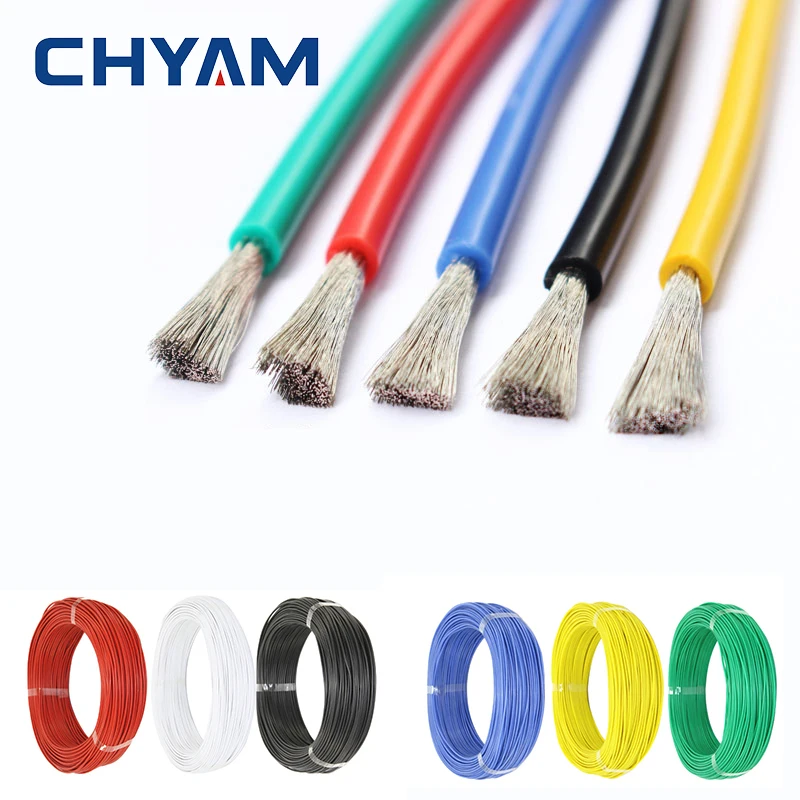
Maintenance procedures are also simplified by the wire's characteristics. The multiple color options (red, blue, green, black, white, yellow) facilitate easy circuit identification, reducing the time required for diagnostics and repairs. Clear color coding is essential for complex panels. The wire's flexibility also makes it easier to route and replace in confined spaces, minimizing disruption during scheduled maintenance or unexpected repairs. This translates directly into reduced labor costs and improved efficiency.
Considering the potential costs associated with system downtime in industrial settings, investing in high-quality, heat-resistant wiring like the CHYAM silicone wire offers substantial long-term value. The enhanced durability and reliability reduce the frequency of wire-related failures, thereby decreasing maintenance interventions and preventing costly production stoppages. This represents a significant return on investment for any automation project.
While offering superior performance, it is important to acknowledge certain deployment considerations. The silicone insulation, while highly flexible and temperature-resistant, can be softer than some rigid PVC or PTFE alternatives. This means that in applications where the wire is exposed to sharp edges or extreme abrasive forces, additional mechanical protection, such as conduit or cable sleeving, may be necessary to prevent damage. Proper installation is key.
Furthermore, the initial unit cost of high-performance silicone wire is typically higher than that of basic PVC wire. This is a direct trade-off for its enhanced capabilities in temperature, flexibility, and chemical resistance. For non-critical, low-stress applications where environmental conditions are benign, a more economical wiring solution might suffice. However, for any application where reliability, safety, and longevity are paramount, the investment in silicone wire is justified by its superior performance and reduced total cost of ownership over the equipment's lifespan. Value outweighs initial cost.
Imagine a control panel where every connection remains steadfast, unaffected by ambient heat or constant vibration. Picture a robotic cell operating flawlessly, its intricate wiring bending and flexing without a hint of fatigue. This CHYAM silicone wire empowers engineers to build automation systems that are not just functional, but exceptionally resilient and dependable, ensuring continuous operation and peak productivity for years to come. It delivers peace of mind.
Conductor and Insulation Architecture
The core of this wiring solution features tinned copper conductors. This material choice is not arbitrary. Copper offers excellent electrical conductivity. Tinning the copper provides a crucial layer of protection against oxidation and corrosion, which is a common failure point in humid or chemically active industrial settings. This enhances the wire's lifespan. It also improves solderability, simplifying connections in complex control panels.
The insulation is crafted from soft silicone. Unlike traditional PVC, silicone maintains its flexibility across an extreme temperature range, from -60°C to 200°C. This characteristic is vital for applications involving significant temperature fluctuations or where wires must be routed through tight bends and dynamic movements. The elasticity of silicone also provides superior resistance to cracking and embrittlement over time. This ensures the integrity of the insulation barrier.
Compared to conventional PVC-insulated wires, the silicone variant offers a significant upgrade in both thermal and mechanical performance. PVC becomes brittle at low temperatures and can melt or deform at higher ones, leading to potential short circuits or signal loss. The CHYAM wire's silicone insulation mitigates these risks, providing a more stable and reliable electrical path for critical control signals and power delivery. This directly contributes to reduced downtime and maintenance costs in automated systems.
Gauge Versatility and Current Handling
This product offers an extensive range of American Wire Gauge (AWG) sizes, from 12AWG down to 30AWG. This broad selection allows engineers to precisely match the wire gauge to the specific current requirements and signal types of their applications. A larger AWG number indicates a thinner wire, suitable for low-current signal transmission, while a smaller AWG number signifies a thicker wire, capable of handling higher current loads for power distribution.
For instance, 12AWG wire is robust. It can manage significant power delivery to actuators or motors, minimizing voltage drop over longer runs. Conversely, 30AWG is ideal for intricate sensor wiring or delicate data signals where space is at a premium and current is minimal. This versatility eliminates the need for multiple specialized wire types, streamlining inventory and procurement processes for industrial projects. Each gauge has specific current limits.
This comprehensive AWG range provides a distinct advantage over products offering only a limited selection. Many generic wiring solutions force compromises, leading to either oversized wires that consume unnecessary space or undersized wires that pose overheating risks. The CHYAM wire's diverse offering ensures optimal performance and safety across an entire control system, from power supply units to individual I/O modules on a PLC. This adaptability is key for complex system designs.
Integration into Control Systems
The CHYAM silicone wire is designed for seamless integration into various industrial control architectures. Its 600V rated voltage makes it suitable for a wide array of industrial applications, including those involving higher voltage control circuits. The tinned copper conductor ensures excellent signal integrity, which is paramount for reliable communication protocols such as Modbus, EtherCAT, or standard digital/analog I/O signals.
In a typical PLC-based automation system, these wires can connect sensors, actuators, human-machine interfaces (HMIs), and other field devices to the central controller. The low electrical resistance, as detailed in the product specifications, minimizes signal degradation over distance, ensuring that commands are executed precisely and sensor data is accurately transmitted. This is crucial for maintaining tight control loops and preventing operational anomalies. Signal quality is paramount.
Unlike standard hook-up wire, the superior flexibility and temperature resistance of this silicone wire make it ideal for dynamic applications, such as wiring robotic arms, moving gantry systems, or equipment subject to vibration. Its ability to withstand repeated bending without fatigue reduces the likelihood of wire breakage, a common cause of intermittent faults in automated machinery. This enhances system uptime and reduces troubleshooting efforts.
Operational Reliability and Maintenance
The durability of the silicone insulation contributes significantly to the long-term operational reliability of industrial equipment. It resists common industrial hazards such as oil, solvents, and certain chemicals, which can degrade conventional insulation materials over time. This chemical resistance ensures that the wire maintains its protective properties even in harsh manufacturing environments. Longevity is a key benefit.
Maintenance procedures are also simplified by the wire's characteristics. The multiple color options (red, blue, green, black, white, yellow) facilitate easy circuit identification, reducing the time required for diagnostics and repairs. Clear color coding is essential for complex panels. The wire's flexibility also makes it easier to route and replace in confined spaces, minimizing disruption during scheduled maintenance or unexpected repairs. This translates directly into reduced labor costs and improved efficiency.
Considering the potential costs associated with system downtime in industrial settings, investing in high-quality, heat-resistant wiring like the CHYAM silicone wire offers substantial long-term value. The enhanced durability and reliability reduce the frequency of wire-related failures, thereby decreasing maintenance interventions and preventing costly production stoppages. This represents a significant return on investment for any automation project.
Strategic Transparency: Considerations for Deployment
While offering superior performance, it is important to acknowledge certain deployment considerations. The silicone insulation, while highly flexible and temperature-resistant, can be softer than some rigid PVC or PTFE alternatives. This means that in applications where the wire is exposed to sharp edges or extreme abrasive forces, additional mechanical protection, such as conduit or cable sleeving, may be necessary to prevent damage. Proper installation is key.
Furthermore, the initial unit cost of high-performance silicone wire is typically higher than that of basic PVC wire. This is a direct trade-off for its enhanced capabilities in temperature, flexibility, and chemical resistance. For non-critical, low-stress applications where environmental conditions are benign, a more economical wiring solution might suffice. However, for any application where reliability, safety, and longevity are paramount, the investment in silicone wire is justified by its superior performance and reduced total cost of ownership over the equipment's lifespan. Value outweighs initial cost.
Imagine a control panel where every connection remains steadfast, unaffected by ambient heat or constant vibration. Picture a robotic cell operating flawlessly, its intricate wiring bending and flexing without a hint of fatigue. This CHYAM silicone wire empowers engineers to build automation systems that are not just functional, but exceptionally resilient and dependable, ensuring continuous operation and peak productivity for years to come. It delivers peace of mind.