CG Industrial Grade Shielded Thermocouple Temperature Sensor
Official Store Deal
Expert Analysis Overview
Precision Temperature Monitoring for Demanding Environments
The CG Industrial Grade Shielded Thermocouple Temperature Sensor is a robust temperature monitoring solution designed for demanding industrial and workshop environments where precision and durability are paramount. This sensor offers reliable temperature measurement across a broad range, crucial for applications from woodworking kilns to industrial process control. Its construction emphasizes resilience, ensuring consistent performance even in challenging conditions. Professionals require accurate data. This sensor delivers.
Core Technology: Sensor Types and Their Utility
This sensor is available in K-type, J-type, and PT100 configurations, offering versatility for various temperature sensing needs. Each type possesses distinct characteristics that make it suitable for specific applications. K-type thermocouples, for instance, are widely used due to their broad temperature range and relatively low cost, making them a workhorse in many industrial settings. They are very common. J-type thermocouples offer a narrower range but higher sensitivity at lower temperatures, often preferred for specific heating applications. PT100 sensors, or Resistance Temperature Detectors (RTDs), provide exceptional accuracy and stability, particularly valuable when precise, repeatable measurements are critical. This precision is non-negotiable for quality control.
Unlike generic, uncalibrated sensors that can introduce significant measurement errors, the availability of these standardized types means users can select the most appropriate sensor for their specific process requirements. The choice directly impacts data integrity. For a carpenter monitoring the curing temperature of a specialized adhesive or the internal temperature of a wood drying chamber, selecting the correct sensor type ensures optimal process control and prevents material damage. Accurate temperature directly impacts material integrity. This adaptability makes the CG sensor a valuable asset in diverse professional toolkits, moving beyond a one-size-fits-all approach.
Engineered Resilience: Shielded Braided Construction
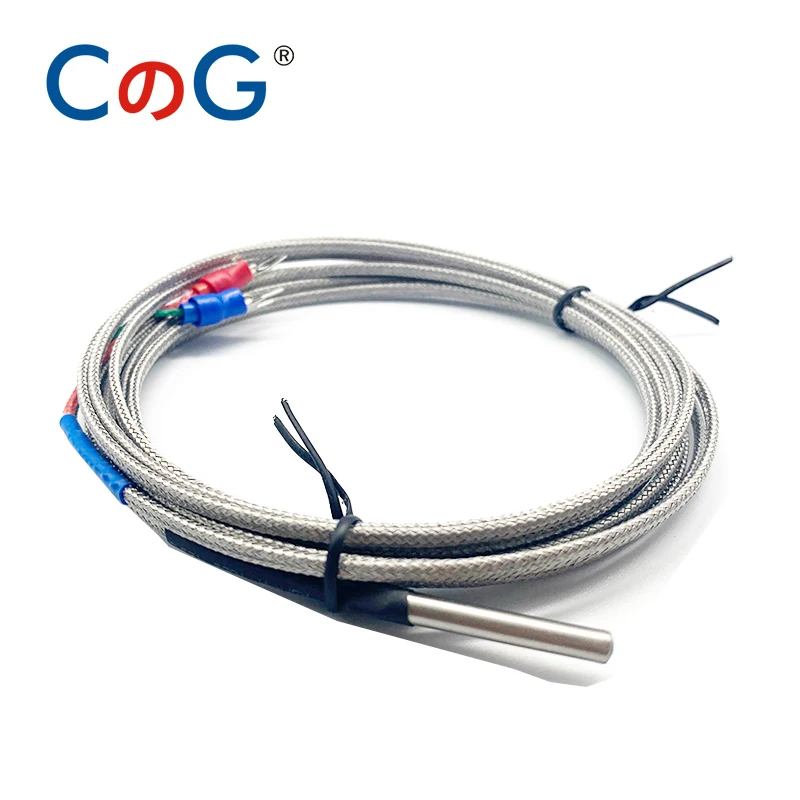
The physical construction of this temperature sensor is a key differentiator, featuring a shielded braided wire and a durable 4mm x 30mm probe. The braided wire, visible in the product imagery, provides an extra layer of mechanical protection against abrasion, cuts, and general wear and tear common in active work environments. This shielding also helps to mitigate electromagnetic interference (EMI), which can corrupt temperature readings in electrically noisy industrial settings. Stable readings are essential. The 4mm diameter stainless steel probe offers a compact yet robust form factor, capable of withstanding physical impact and corrosive elements. Its small size allows for insertion into confined spaces.
Compared to standard PVC-jacketed wires that can quickly degrade under harsh conditions, the braided design significantly extends the sensor's operational lifespan. This means fewer replacements and reduced downtime for critical applications. Imagine a busy workshop where tools and materials are constantly moved; a flimsy sensor would quickly fail. This unit is built to last. The robust probe ensures that even if accidentally dropped from a workbench, the sensing element remains protected, maintaining its integrity and accuracy. Durability saves money. This construction directly addresses the pain point of sensor fragility, offering a solution that stands up to the rigors of daily professional use.
Connection Versatility and Length Options
This CG sensor offers various cable lengths—1m, 2m, 3m, 5m, and 10m—providing significant flexibility for installation. The different lengths mean users can position the temperature controller at a convenient location while the probe reaches the precise measurement point. Long runs are possible. This eliminates the need for inconvenient cable extensions or having the controller too close to a heat source. The availability of 2-wire and 3-wire configurations for K/J type and PT100 sensors, respectively, caters to different controller input requirements. Proper wiring is crucial.
Unlike generic sensors with fixed, often short, cable lengths that limit placement options, these multiple length choices allow for optimized setup in complex machinery or expansive workspaces. A longer cable can prevent controller overheating. For a carpenter setting up a precise temperature control system for a large-scale wood drying operation, the ability to choose a 10m cable means the controller can be safely situated away from the high-temperature kiln. This avoids potential damage to the control unit and ensures operator safety. The varied wiring options also mean broader compatibility with existing temperature controllers, reducing the need for costly interface modules. It integrates smoothly. This thoughtful range of options simplifies installation and enhances overall system reliability.
Operational Reliability and Data Integrity
The primary function of any temperature sensor is to provide consistent and accurate data, and this CG unit is engineered for operational reliability. The combination of its chosen sensor type (K, J, or PT100) and the shielded braided wire minimizes external influences on the temperature reading. This ensures that the data fed to the temperature controller is a true representation of the measured environment. Reliable data is paramount for automated processes. Fluctuations caused by electrical noise or minor physical disturbances are significantly reduced, leading to more stable control loops and predictable outcomes.
Many entry-level sensors can suffer from signal degradation over longer cable runs or in environments with high electromagnetic interference, leading to erratic readings and poor process control. This sensor mitigates those issues. The shielded design actively combats these common problems, ensuring signal integrity even in challenging industrial settings. For critical applications like maintaining precise temperatures in a chemical mixing vat or regulating the curing process of composite materials, consistent data prevents costly errors and ensures product quality. This sensor helps avoid rework. The robust design and reliable signal transmission mean that the user can trust the readings, allowing for confident decision-making and automated system operation.
Value Proposition: Long-Term Investment in Precision
Investing in a high-quality temperature sensor like the CG shielded unit translates into significant long-term value, far outweighing its initial cost. Its enhanced durability means a longer operational life, reducing the frequency and expense of replacements. Fewer replacements mean lower costs. The precision offered by the K, J, and PT100 sensor types ensures optimal process control, which can prevent material waste, improve product quality, and increase operational efficiency. Accurate control saves resources. For businesses where temperature is a critical parameter, such as in food processing, plastics manufacturing, or specialized carpentry, the cost of inaccurate temperature control can be substantial.
Unlike cheaper, disposable sensors that offer a low upfront cost but fail quickly or provide unreliable data, this unit represents a strategic investment. It pays for itself through consistent performance. The ability to maintain tighter temperature tolerances can lead to energy savings by optimizing heating or cooling cycles. Furthermore, the robust construction minimizes the risk of sensor failure during critical operations, preventing costly downtime and production delays. This reliability is invaluable. This sensor is not just a component; it is a tool for achieving consistent quality and operational excellence, providing a strong return on investment through improved efficiency and reduced losses.
The Carpenter's Edge: Precision in Craft
For the discerning carpenter, this temperature sensor offers a distinct advantage in specialized projects. Imagine precisely monitoring the internal temperature of a custom-built drying kiln, ensuring exotic hardwoods cure perfectly without warping or cracking. The sensor provides critical feedback. Or consider the meticulous process of applying specific finishes or adhesives that demand exact temperature conditions for optimal bonding and durability. This unit delivers that control. It empowers the craftsman to achieve consistent, professional results, elevating the quality of their work beyond what guesswork allows. This is precision for true craft.
This sensor allows for accurate temperature monitoring even in a busy workshop, providing clear, precise readings for critical processes like wood stabilization or glue curing. It withstands the rigors of a demanding environment. This tool ensures that intricate projects, where temperature variations can compromise structural integrity or aesthetic finish, are executed with scientific precision. The craftsman gains confidence. It’s about bringing scientific rigor to the art of carpentry, ensuring every piece meets the highest standards of quality and longevity.
Imagine a workshop where every temperature-sensitive process is meticulously controlled, eliminating guesswork and ensuring perfect results every time. This sensor makes that vision a reality, providing the reliable data needed to master complex material behaviors. It allows for consistent quality. Envision the satisfaction of perfectly cured wood, flawlessly bonded joints, and durable finishes, all achieved with the confidence that comes from precise environmental control. This tool empowers superior craftsmanship. The CG Industrial Grade Shielded Thermocouple Temperature Sensor is an indispensable ally for any professional committed to excellence and efficiency in their craft. It enhances every project.