BSIDE L1 Digital Lux Meter
Official Store Deal
Expert Analysis Overview
Illumination Intelligence for the Job Site
The BSIDE L1 Digital Lux Meter is a practical illumination measurement tool designed for professionals and hobbyists who require reliable light level data without unnecessary complexity. This compact device offers a straightforward approach to quantifying light intensity, making it an essential addition to any toolkit where precise environmental assessment is critical. Its design prioritizes ease of use and portability, ensuring that accurate light readings are always within reach, whether on a construction site or in a controlled environment.
Precision in Light Measurement
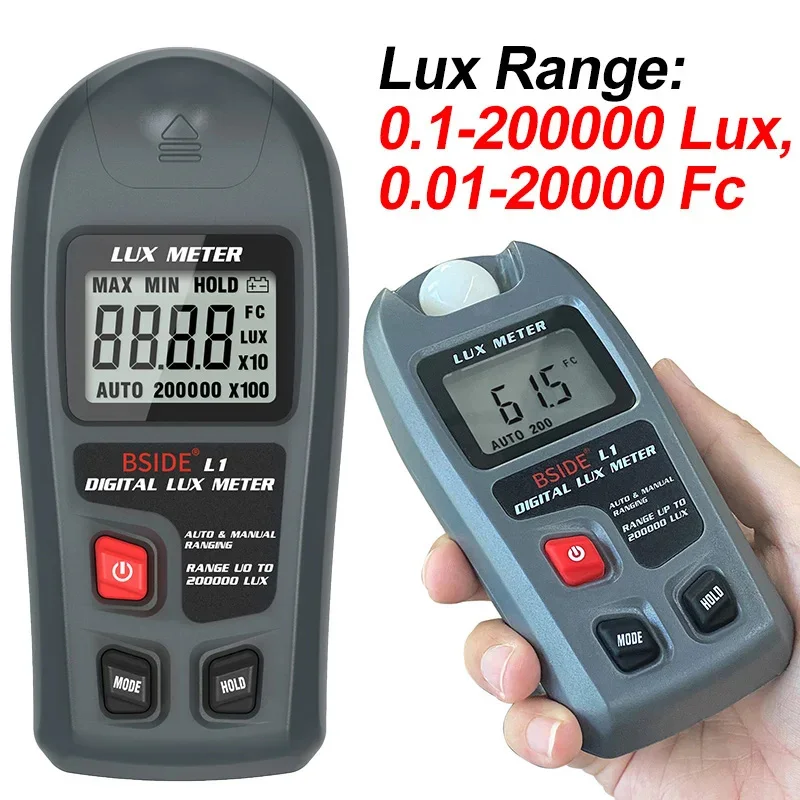
This digital lux meter boasts a wide measurement range, spanning from 0.1 to 200,000 Lux and 0.01 to 20,000 Fc. Such a broad spectrum allows for accurate readings across diverse lighting conditions, from dimly lit workshops to brightly lit outdoor areas or specialized grow operations. The device automatically adjusts its sensitivity to the ambient light, ensuring that the user receives a precise reading without manual range selection. This automatic ranging capability simplifies the measurement process considerably.
For instance, when a carpenter needs to verify the lighting conditions for a fine finishing project, the L1 meter provides immediate, quantifiable data. This eliminates guesswork. Unlike older, less precise analog light meters that often require manual range switching and can be prone to reading errors, the L1's digital display and auto-ranging function streamline the task. It delivers consistent results quickly. This capability is crucial for maintaining consistent quality in detailed work, where proper illumination directly impacts accuracy and visual comfort.
The accuracy of the L1 is specified at ±4%, which is entirely adequate for most general and professional applications. This level of precision ensures that environmental light assessments are reliable enough for practical decisions, such as optimizing grow lights for plants or ensuring adequate illumination in a workspace to meet safety standards. High-end laboratory equipment might offer slightly tighter tolerances, but for on-site verification and everyday use, the L1 provides a highly dependable metric. This meter is a solid choice. It avoids the over-engineering of specialized scientific instruments while still delivering trustworthy data for critical tasks.
Designed for the Hand and Pocket
The physical form factor of the BSIDE L1 is clearly engineered for portability and single-handed operation. Its compact, ergonomic design fits comfortably in the palm, making it easy to carry in a tool belt or pocket. The gray and black casing suggests a durable plastic construction, capable of withstanding the routine bumps and scrapes encountered in various work environments. A protective lid covers the measurement sensor when not in use, safeguarding the most critical component from dust, debris, and accidental impact. This small detail extends the life of the instrument.
Such a design is particularly beneficial for professionals who move frequently between different locations or need to take readings in awkward positions. A carpenter might need to check light levels under a cabinet, or an electrician might assess lighting in a ceiling cavity. The compact size facilitates these tasks. Unlike bulkier, more fragile light meters that demand careful handling and dedicated storage, the L1's pocket-friendly dimensions and sensor protection encourage its regular use as a go-to tool. Its readiness for immediate deployment saves time on the job site.
This meter's construction implies a focus on practical resilience rather than extreme ruggedization. While it may not survive repeated drops from significant heights onto concrete, its everyday durability for typical use cases appears robust. The visible materials imply a good balance between weight, cost, and protective qualities. It feels solid. This balance makes it an accessible and reliable option for users who need a functional tool without the premium cost associated with industrial-grade, impact-proof devices. The design is pragmatic.
Readability Under Any Condition
The device features a large, clear LCD display that presents readings in a highly legible format. The digital readout includes the current lux or Fc value, along with indicators for maximum, minimum, and hold functions. The display also shows the auto-ranging status and a battery level indicator. This comprehensive information is crucial for quick interpretation of data, even in varying ambient light conditions.
This ensures readings are easily discernible whether the user is in a dimly lit server room or a bright greenhouse. The high contrast of the display prevents eye strain during prolonged use. Unlike older meters with smaller, less informative displays or those that lack backlighting, the L1's interface prioritizes clarity and completeness. Every piece of data is visible. This enhances efficiency by reducing the need for repeated measurements or squinting to interpret values.
The inclusion of MAX/MIN hold functions allows users to capture the highest or lowest light levels recorded during a measurement session. This is particularly useful for identifying fluctuations in lighting or for determining peak illumination in dynamic environments. A user can set the meter to record the maximum light encountered, for example, when assessing the brightest spot in a room. This feature adds significant utility. It transforms the meter from a simple spot checker into a basic data logger for transient events, providing insights that a single instantaneous reading would miss.
Built for Daily Demands
The visible construction of the BSIDE L1 suggests a focus on functional durability for its intended applications. The plastic housing appears sturdy enough for routine professional use, offering a degree of impact resistance that is suitable for a handheld device. The buttons are clearly labeled and appear to be made of a tactile rubber or soft plastic, indicating they can withstand repeated presses. This design choice contributes to the overall longevity of the unit.
This level of construction ensures that the meter can endure the typical wear and tear of being carried in a toolbox, used on various job sites, or handled daily in a laboratory setting. It is not a delicate instrument. Unlike more fragile electronic devices that require extreme caution, the L1 seems designed for practical, everyday resilience, minimizing concerns about minor bumps. This makes it a reliable companion for tasks that demand frequent light measurements without constant worry about damage.
Its robust exterior, coupled with the sensor's protective cap, implies a tool built to last through numerous projects. While it doesn't claim to be waterproof or dustproof to an extreme degree, the general build quality suggests it will hold up well in typical indoor and sheltered outdoor environments. This provides peace of mind. Carpenters, for instance, need tools that can handle the rigors of a workshop without failing prematurely, and the L1 appears to meet this expectation for a measurement device. It is a solid investment.
Operational Simplicity
The user interface of the BSIDE L1 is designed for intuitive operation, featuring just a few clearly marked buttons. There is a power on/off button, a mode button for switching between Lux and Fc units and for manual ranging, and a hold button for freezing the display or accessing MAX/MIN values. This minimalist approach reduces the learning curve, allowing users to quickly become proficient with the device.
This simplicity is a significant advantage for professionals who need to take quick, accurate readings without fumbling through complex menus or settings. A busy electrician can grab the meter, power it on, and get a reading in seconds. This saves valuable time. Unlike multi-function devices that often bury essential features within layers of menus, the L1 puts its core capabilities front and center, ensuring efficiency. Its direct controls are a highlight.
The ability to switch between Lux and Foot-Candle (Fc) units is particularly useful for users working with different international standards or specific project requirements. This flexibility ensures the meter is adaptable to various contexts, from architectural lighting design to horticultural light management. The manual ranging option, while often unnecessary due to auto-ranging, provides an additional layer of control for specialized measurements or troubleshooting. It is a thoughtful inclusion.
The Carpenter's Eye for Lumens
For a carpenter, understanding light levels is more critical than often perceived. Proper illumination in a workshop directly impacts safety, precision, and the quality of finished work. The L1 Lux Meter allows for objective assessment of task lighting, ensuring that areas for cutting, sanding, or fine assembly are adequately lit to prevent errors and reduce eye strain. This tool helps create optimal working conditions.
Consider a scenario where a carpenter is installing custom cabinetry and needs to ensure the integrated lighting provides sufficient illumination for food preparation areas. The L1 can verify that the installed fixtures meet recommended light levels, ensuring client satisfaction and functional design. This goes beyond subjective visual inspection. It provides measurable data to support design decisions. Unlike relying solely on visual perception, which can be highly subjective and vary between individuals, the L1 offers an objective standard.
Furthermore, when working with natural light, such as designing a sunroom or installing skylights, the L1 can help assess the amount of daylight entering a space at different times of day. This data can inform decisions about window placement, glazing types, or the need for supplemental artificial lighting. It allows for informed choices. This capability helps optimize both the aesthetic and functional aspects of a project, ensuring comfortable and efficient spaces for occupants.
Long-Term Value in Every Reading
The BSIDE L1 Digital Lux Meter, priced affordably, represents excellent long-term value. Its combination of accuracy, ease of use, and durable construction means it will serve reliably for numerous projects over time. The initial investment is quickly recouped through improved efficiency, reduced errors, and the ability to make data-driven decisions regarding lighting. This device is a smart investment.
Its consistent performance eliminates the need for repeated purchases of less reliable or single-use measurement tools. The meter's ability to provide repeatable, objective data helps avoid costly mistakes related to inadequate or excessive lighting, such as poor plant growth or inefficient energy consumption in commercial spaces. This prevents rework. Unlike cheaper, disposable alternatives, the L1 is built to be a lasting part of a professional's toolkit, offering sustained utility.
The device's straightforward maintenance, primarily involving battery replacement and sensor cleaning, ensures its operational longevity without requiring specialized servicing. This contributes to its low cost of ownership. It is easy to care for. For anyone needing to regularly measure light levels, from hobbyists to seasoned professionals, the BSIDE L1 offers a compelling balance of performance and affordability, making it a valuable asset for years to come.
Illuminating Your Next Project
Imagine the confidence of knowing your workshop is perfectly lit for intricate joinery, or that your greenhouse provides optimal light for vigorous plant growth. Picture the ease of quickly verifying light levels for photography setups or ensuring compliance with workplace illumination standards. This digital lux meter empowers you with precise data, streamlining your work and enhancing your results. It transforms guesswork into certainty, allowing you to focus on the craft, not the conditions. This tool puts control in your hands, ensuring every project shines with optimal light.