Brushless Motor & Controller Diagnostics Tool
Official Store Deal
Expert Analysis Overview
Precision Diagnostics for Electric Drivetrains
The Bo Ai Zhi Brushless Motor & Controller Diagnostics Tool is an essential diagnostic instrument for enthusiasts and professionals maintaining electric vehicles. This device targets the critical components of electric bicycles, scooters, and other electro-cars, specifically brushless DC (BLDC) motors and their controllers. It provides a streamlined method for identifying faults, ensuring optimal system performance and extending the lifespan of valuable components.
This tester offers broad compatibility. It supports a wide range of voltage systems.
Unveiling Drivetrain Efficiency
The tool's primary function is to quickly ascertain the operational status of brushless motors and their associated controllers. This capability is paramount for anyone building or maintaining an efficient electric propulsion system, especially those integrated with or powered by solar energy setups. Verifying the health of these components directly impacts energy conversion efficiency.
Brushless motors are fundamental to modern electric mobility. Their efficiency is key.
Unlike generic multimeter checks that only provide basic electrical readings, this dedicated tester specifically evaluates Hall sensor functionality and motor phase lines. These are critical for the smooth, efficient operation of BLDC motors. A malfunctioning Hall sensor can lead to jerky acceleration, reduced power, or complete motor failure, directly impacting the energy draw and overall system efficiency.
Consider a solar-powered e-bike. Its range depends heavily on motor efficiency. If the motor or controller is drawing excessive current due to an undetected fault, the solar charging system will struggle to keep up, or the battery will deplete prematurely. This tester helps pinpoint such inefficiencies, allowing for timely repairs or replacements that preserve the integrity of the entire energy ecosystem. It saves time and resources.
Comprehensive Component Analysis
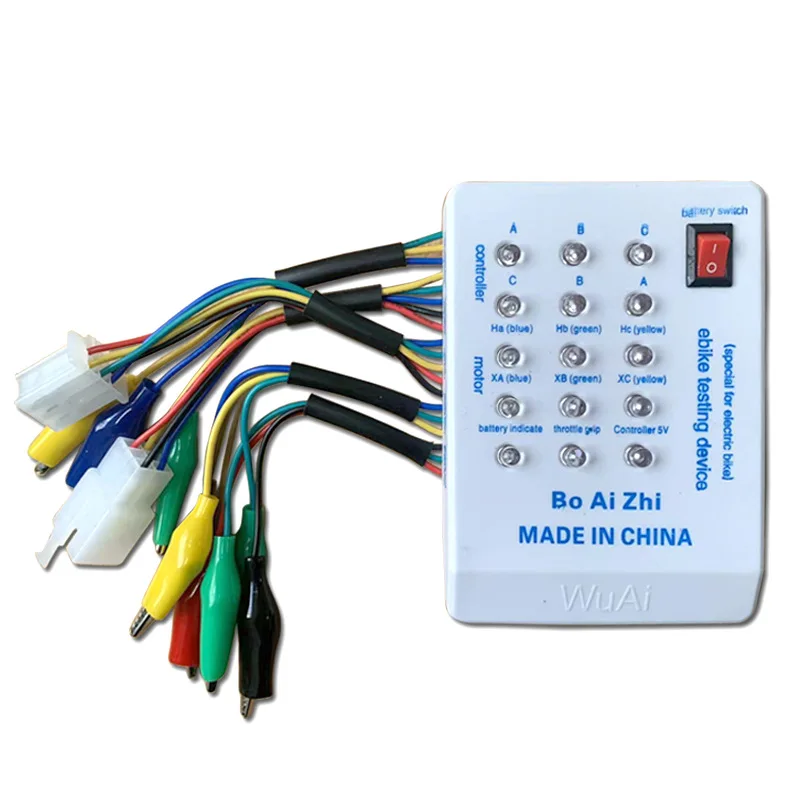
The device features multiple connection points designed to interface with various parts of the electric drive system. It includes dedicated inputs for controller main phase lines, controller Hall lines, motor Hall lines, motor main phase lines, and even throttle and brake lever signals. This comprehensive array of diagnostic points allows for a thorough examination of the entire control loop.
Visible are numerous LED indicators. Each corresponds to a specific test point.
When troubleshooting, these indicators provide immediate visual feedback on the health of each circuit. For instance, if a Hall sensor LED fails to illuminate or flashes erratically, it indicates a potential issue with that specific sensor. This direct feedback eliminates guesswork, significantly speeding up the diagnostic process compared to manual voltage tracing. It simplifies complex electrical diagnostics.
Standard diagnostic practices often involve isolating components and testing them individually, which can be time-consuming. This integrated tester allows for a more holistic approach, checking multiple parameters simultaneously. This reduces downtime for electric vehicles, a crucial factor for daily commuters or those relying on their e-bikes for work. Less downtime means more operational hours.
Voltage Versatility and Operational Simplicity
Supporting 24V, 36V, 48V, 60V, and 72V systems, this tester demonstrates remarkable versatility. This broad voltage compatibility makes it suitable for diagnosing a vast majority of e-bikes, e-scooters, and small electric vehicles currently on the market. Its adaptability is a significant advantage for workshops or individuals dealing with diverse electric vehicle fleets.
Power comes from a 9V battery. This ensures portability.
The inclusion of a simple ON/OFF switch and a clear display panel further enhances its user-friendliness. The device is designed for intuitive operation, requiring minimal technical expertise to perform basic diagnostics. This accessibility is particularly beneficial for hobbyists or those new to electric vehicle maintenance, lowering the barrier to entry for self-repair.
Compared to professional-grade diagnostic equipment, which can be prohibitively expensive and complex, this tester offers a cost-effective alternative for routine maintenance and basic troubleshooting. While it may not provide granular data logging or advanced waveform analysis, its ability to quickly identify common faults makes it an invaluable tool for everyday use. It offers practical, immediate results.
Durability and Field Readiness
The visible casing is constructed from plastic, implying a lightweight and reasonably durable design suitable for field use. Its compact dimensions, approximately 109mm x 76mm x 26mm, ensure it can be easily carried in a toolbox or backpack. This portability is crucial for on-the-go diagnostics, enabling repairs away from a workshop.
Working temperature ranges from -20°C to 50°C. Relative humidity up to 80% is acceptable.
While plastic construction might not offer the same ruggedness as a metal enclosure, it provides adequate protection against typical knocks and bumps encountered during maintenance tasks. The material choice also contributes to its affordability, making it accessible to a wider audience. Its design prioritizes functionality and ease of transport.
For solar energy hobbyists, this tool becomes a vital companion for maintaining electric vehicles that are part of a self-sustaining system. Imagine a scenario where a solar-charged e-bike suddenly loses power. This tester allows for immediate diagnosis of the motor or controller, preventing prolonged downtime and ensuring the vehicle remains a reliable part of the renewable energy ecosystem. It keeps systems running smoothly.
Optimizing Energy Conversion and System Integration
The tester's ability to verify the functionality of brushless motors and controllers directly impacts the efficiency of energy conversion. A motor or controller operating sub-optimally will draw more current than necessary, leading to energy waste. For solar-powered applications, this means less effective use of generated power and reduced battery autonomy. This tool helps ensure every watt counts.
It supports both 60° and 120° phase angles. This broad compatibility is key.
Verifying compatibility with existing solar setups involves ensuring the electric vehicle's components are functioning at peak efficiency to minimize load on the solar charging system. By quickly identifying and rectifying issues with the motor or controller, users can maintain a balanced energy budget within their off-grid or hybrid systems. This promotes system longevity and reliability.
This diagnostic device empowers users to take control of their electric vehicle maintenance, fostering a deeper understanding of their systems. It moves beyond simple observation, offering concrete data through its LED indicators. This empowers users to make informed decisions about repairs and upgrades, ultimately contributing to more robust and efficient electric mobility solutions. It is a tool for empowerment.
The Upgrade in Diagnostics
Unlike relying on trial-and-error component swapping or complex oscilloscope readings, this tester provides a direct, intuitive method for fault isolation. It significantly reduces the time and frustration associated with diagnosing electric drivetrain issues. This means less time troubleshooting and more time enjoying efficient, reliable electric transport.
Imagine the satisfaction of quickly identifying a faulty Hall sensor and replacing it, restoring your e-bike to full efficiency. This tester makes such precise diagnostics straightforward, ensuring your electric vehicle, whether powered by grid electricity or your meticulously designed solar array, operates at its peak. It ensures your investment in electric mobility truly pays off, providing consistent, eco-friendly transportation for years to come.
Technical Specifications at a Glance
Core Performance Metrics
The device is engineered to handle a broad spectrum of electric vehicle power systems. It supports common voltages found in e-bikes and scooters. This ensures wide applicability.
Voltage compatibility spans 24V, 36V, 48V, 60V, and 72V. This covers most personal electric transport.
Its operational range between -20°C and 50°C allows for use in diverse environmental conditions. The relative humidity tolerance up to 80% further extends its utility in various climates. These parameters indicate a robust design for practical field applications.
Physical Attributes
The tester's physical dimensions are compact and ergonomic. It measures 109mm in length, 76mm in width, and 26mm in thickness. This small footprint makes it highly portable.
Weighing only 150g, the device adds minimal bulk to a toolkit. Its lightweight nature is a significant advantage for mobile technicians or hobbyists who need to carry it regularly. The plastic material contributes to this low weight.
Construction from durable plastic ensures a balance between resilience and cost-effectiveness. The material selection is appropriate for its intended diagnostic use, offering sufficient protection without unnecessary heft. It is a practical choice for a portable tool.
Power and Interface
The unit operates on a standard 9V button battery, which is not included. This common power source simplifies battery replacement. A red ON/OFF switch provides clear operational control.
Multiple LED indicators are present on the display panel. These visually communicate diagnostic results for various motor and controller components. The visual feedback is instant and clear.
Connection is made via multiple color-coded wires terminating in alligator clips and quick connectors. This facilitates easy and secure attachment to the electric vehicle's wiring harness. The color coding aids in correct hookup.
Frequently Asked Questions
Common Inquiries
Many users ask about the tester's compatibility. It is a common concern.
Q: What types of motors can this tester diagnose?
A: This tester is specifically designed for brushless DC (BLDC) motors and their controllers, commonly found in electric bicycles, scooters, and other small electric vehicles. It supports both 60° and 120° phase angles.
Q: Is the battery included with the tester?
A: No, a 9V button battery is required to power the device but is not included in the package. Users will need to purchase one separately.
Q: Can this device test individual Hall sensors or just the entire motor?
A: The tester can evaluate the functionality of individual Hall sensors within the motor, as well as the motor's main phase lines and the controller's Hall and phase lines. It provides specific LED feedback for each component.
Q: What voltage systems can this tester work with?
A: The device is compatible with a wide range of common electric vehicle voltages, including 24V, 36V, 48V, 60V, and 72V systems.
Q: Is this tester waterproof?
A: While the product description mentions