Bitaxe Gamma 601 Solo Bitcoin Miner
Official Store Deal
Expert Analysis Overview
The Bitaxe Gamma 601: A Compact ASIC for Distributed Computing
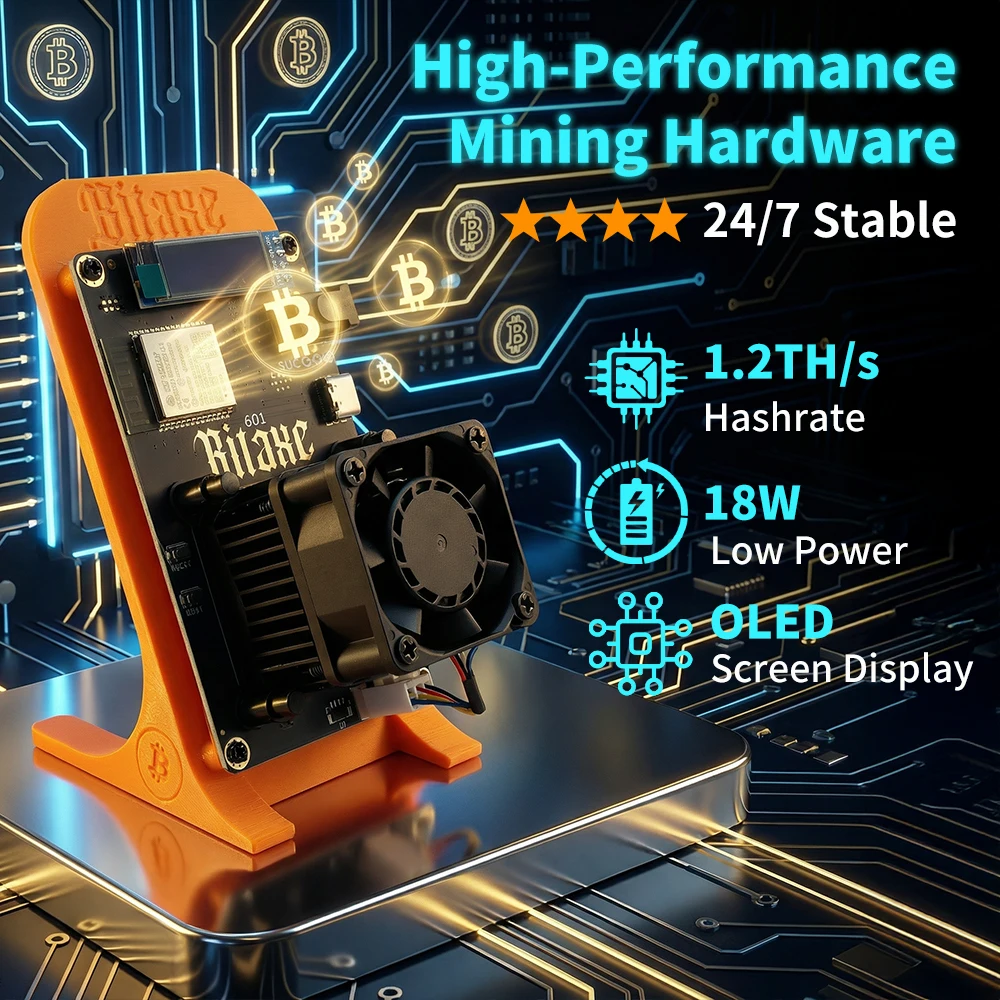
The Bitaxe Gamma 601 is a specialized application-specific integrated circuit (ASIC) device, primarily marketed as a solo Bitcoin miner. This unit is engineered around the BM1370 ASIC chip, a component known for its efficiency in cryptographic hashing operations. Its compact form factor and low power consumption position it as a distinct alternative to larger, more power-intensive mining rigs, particularly for niche applications or distributed computing experiments.
From an industrial automation perspective, the device's design emphasizes continuous operation, a critical factor for any system intended for 24/7 deployment. The visible cooling fan and heatsink assembly are integral to maintaining stable temperatures, which is paramount for ASIC longevity. While its primary function is cryptocurrency mining, the underlying hardware principles of efficient, dedicated processing at low power draw hold relevance for various embedded systems requiring consistent computational cycles.
Unlike general-purpose computing platforms that consume significant power for diverse tasks, the Bitaxe Gamma 601 focuses its energy on a singular, highly optimized function. This dedicated approach minimizes wasted energy, a key consideration in industrial settings where power efficiency directly impacts operational costs. The device represents a shift from bulky, high-overhead server racks to more streamlined, purpose-built hardware.
Core Engineering and Performance Metrics
The Bitaxe Gamma 601 delivers a hash rate of 1.0 to 1.2 Terahashes per second (TH/s). This performance is achieved with a remarkably low power draw, typically between 17 and 18 Watts. Such efficiency is a direct result of the integrated BM1370 ASIC, which is specifically designed to accelerate SHA-256 computations. The unit's 15 Joules per Terahash (J/TH) efficiency rating underscores its optimized energy conversion for hashing tasks.
For industrial applications, the combination of dedicated processing power and minimal energy footprint is highly desirable. Systems requiring constant, low-latency data processing, even if not directly related to blockchain, could benefit from similar architectural philosophies. The ability to perform intensive calculations without significant thermal or electrical overhead allows for deployment in environments where power availability or cooling infrastructure is limited. This contrasts sharply with traditional server racks that demand substantial power and cooling, often making them impractical for remote or constrained industrial sites.
Consider a scenario where distributed sensor networks require on-site data pre-processing before transmission. While the Bitaxe is not designed for this, its efficiency model is instructive. The device's stable 24/7 operation claim suggests a robust internal design capable of sustained workloads, a non-negotiable requirement for industrial control systems. The small fan, while adequate for its low power, would necessitate careful consideration of ambient dust and temperature in an unconditioned industrial space.
Connectivity and Monitoring Capabilities
Connectivity for the Bitaxe Gamma 601 is handled via 2.4GHz WiFi and Bluetooth. These wireless protocols enable remote control and monitoring through the STARMINER mobile application. An integrated OLED screen display provides immediate feedback on operational status and key metrics, a valuable feature for on-site diagnostics without requiring external peripherals.
While 2.4GHz WiFi and Bluetooth are common in consumer electronics, their application in industrial settings requires careful assessment. For non-critical monitoring or data aggregation, these can be sufficient, offering flexibility in deployment. However, for real-time control or mission-critical data transfer, industrial-grade Ethernet or specialized fieldbus protocols are typically preferred due to their enhanced reliability and noise immunity. The app-based control, while convenient, introduces a dependency on mobile infrastructure.
This wireless capability, however, offers a distinct advantage over older, wired-only industrial devices. It simplifies installation and reduces cabling complexity, which can be a significant cost and labor saver in large facilities. Imagine deploying multiple such units across a factory floor for distributed computational tasks; the wireless setup streamlines the process considerably compared to running dedicated Ethernet drops to each node. The open-source nature of the Bitaxe also allows for potential customization of its network stack, enabling integration into bespoke industrial IoT (IIoT) frameworks.
Durability and Environmental Considerations
The Bitaxe Gamma 601 features an orange plastic stand that houses the circuit board and cooling components. The visible heatsink and fan are exposed, indicating a design optimized for airflow rather than sealed environmental protection. This open-frame approach is typical for consumer-grade electronics where ambient conditions are assumed to be controlled.
In an industrial context, this open design presents a vulnerability to dust ingress, moisture, and corrosive agents. Factory environments often contain airborne particulates, metallic dust, or chemical fumes that can degrade electronic components over time. For deployment in such settings, the unit would require an additional protective enclosure, ideally with IP (Ingress Protection) ratings suitable for the specific environment. This is a crucial consideration for long-term reliability in non-cleanroom conditions.
Compared to ruggedized industrial computers, which feature sealed chassis, fanless designs, and wide operating temperature ranges, the Bitaxe Gamma 601 is not inherently built for harsh conditions. Its low power consumption, however, means less internal heat generation, which could extend component life if kept in a clean, temperature-controlled enclosure. The 24/7 stable operation claim suggests internal components are selected for continuous duty, but external environmental factors remain a significant challenge for its un-enclosed form.
The Open-Source Advantage
The Bitaxe Gamma 601 is promoted as an open-source Bitcoin miner. This characteristic is particularly compelling from an engineering standpoint. Open-source hardware and software allow for community-driven development, customization, and auditing. Users can inspect the code, modify firmware, and potentially adapt the device for purposes beyond its original intent.
For industrial automation, open-source platforms offer unparalleled flexibility. Engineers can tailor the device's behavior to specific control logic, integrate it with proprietary systems, or even develop custom monitoring solutions. This contrasts sharply with closed-source industrial hardware, where functionality is often fixed, and customization is limited to vendor-provided options. The ability to understand and modify the core operation of the device provides a level of control and transparency that is highly valued in complex industrial deployments.
Imagine a scenario where a specific industrial process requires a unique hashing algorithm for data integrity checks. An open-source platform like the Bitaxe could be re-purposed with custom firmware to perform this task, leveraging its efficient ASIC. This level of adaptability is rarely found in off-the-shelf industrial components, which are typically designed for a narrow range of applications. The community support inherent in open-source projects can also provide a valuable resource for troubleshooting and innovation, extending the device's utility and lifespan beyond its initial design brief.
Operational Longevity and Value Proposition
The Bitaxe Gamma 601 is designed for 24/7 stable operation, a testament to its intended role as a continuous processing unit. This operational longevity is crucial for industrial applications where downtime translates directly to lost productivity and revenue. The low power consumption further contributes to its long-term viability, reducing electricity costs over extended periods of use.
For industrial users considering distributed computing tasks or specialized data processing, the Bitaxe Gamma 601 offers a unique value proposition. Its low initial cost, combined with minimal operational expenses, makes it an attractive option for experimental deployments or niche computational needs where traditional industrial servers would be overkill. The device's focus on efficiency ensures that computational output is maximized relative to energy input, a key metric for return on investment in any continuous operation. This contrasts with older, less efficient hardware that might be cheaper upfront but incurs significant long-term energy costs.
Picture a small manufacturing plant needing to run continuous, low-intensity data analytics on sensor feeds. Deploying a fleet of these compact, low-power devices could provide the necessary distributed processing capability without the infrastructure demands of a full server room. The remote monitoring via the STARMINER app further enhances its utility, allowing operators to oversee performance from a central location. This blend of dedicated performance, efficiency, and remote manageability makes the Bitaxe Gamma 601 a compelling piece of hardware for specific, resource-conscious industrial computing challenges.
The Future of Distributed Industrial Computing
Imagine a future where compact, efficient ASIC-based devices like the Bitaxe Gamma 601 are integrated into the fabric of industrial operations, silently performing specialized computations across a network. This unit offers a glimpse into a world where dedicated hardware handles specific, repetitive tasks with unparalleled efficiency, freeing up larger systems for more complex, adaptive processes. Its low power footprint means less heat, less noise, and lower energy bills, allowing for a more sustainable and distributed approach to industrial automation. The ability to monitor and control these units remotely ensures operational continuity, even in challenging environments. This is not just a miner; it is a foundational component for a new era of intelligent, decentralized industrial infrastructure.