BIGTREETECH EBB SB2209/SB2240 CAN Bus Toolhead Board for Voron StealthBurner
Official Store Deal
Expert Analysis Overview
Precision Control and Connectivity for Advanced 3D Printing
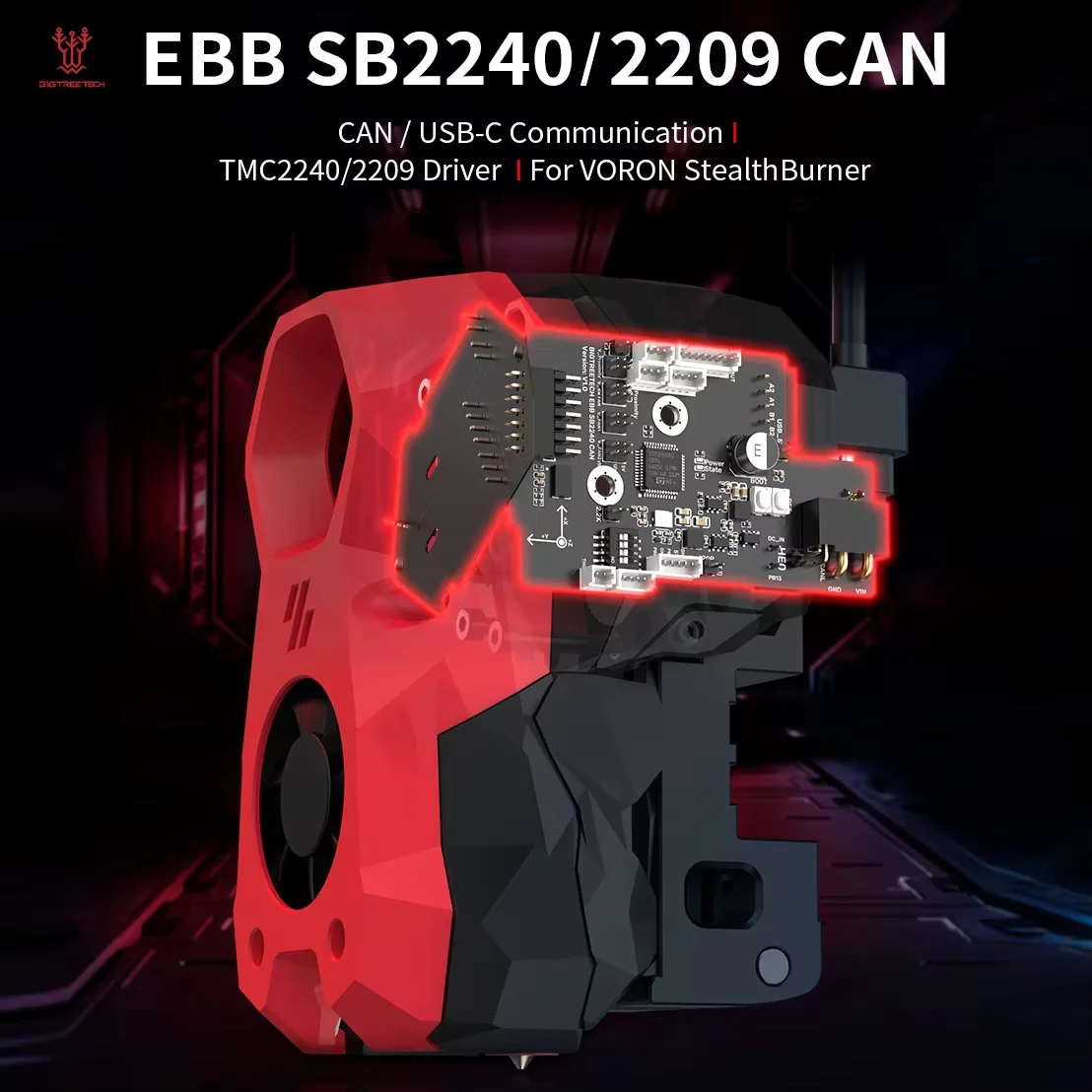
The BIGTREETECH EBB SB2209/SB2240 CAN Bus Toolhead Board is a critical upgrade component engineered for advanced 3D printer enthusiasts seeking enhanced control and reliability for their Voron StealthBurner setups. This board fundamentally redefines toolhead communication, moving beyond traditional direct wiring to a more robust and efficient system. It offers a streamlined approach to managing the complex array of sensors and actuators present in a modern 3D printer toolhead. This is a significant leap forward.
The CAN Bus Advantage
CAN (Controller Area Network) bus is a message-based protocol designed to allow microcontrollers and devices to communicate with each other in applications without a host computer. In 3D printing, this translates to a single pair of wires handling all communication between the main control board and the toolhead, drastically reducing cable clutter. This reduction in physical wiring is not merely aesthetic; it directly impacts signal integrity over longer cable runs, a common challenge in larger format 3D printers. Fewer wires mean fewer points of failure. The system becomes more resilient.
Unlike traditional direct-wired toolheads that often suffer from signal degradation and complex cable routing, these BIGTREETECH EBB boards utilize CAN bus communication to ensure cleaner signals, reduced wiring, and improved reliability for high-speed, high-precision 3D printing. This architectural shift minimizes electromagnetic interference, which can otherwise lead to intermittent errors or communication dropouts, particularly in environments with multiple electrical components. Data transmission is robust. This ensures consistent performance.
Integrated Toolhead Management
Visible on the board are integrated stepper drivers, typically TMC2209 or TMC2240, alongside a MAX31865 RTD sensor interface, multiple fan headers, and various endstop/probe inputs. This consolidation of critical toolhead electronics onto a single, compact PCB simplifies the entire assembly. It removes the need for individual breakout boards or extensive wiring harnesses for each component, which can introduce complexity and potential failure points. Every component is neatly integrated.
This integration directly impacts the toolhead's performance by minimizing signal paths and reducing latency. With the stepper driver located directly on the toolhead, motor control signals are cleaner and more immediate, leading to smoother motion and greater precision in extrusion. Accurate temperature readings from the MAX31865 ensure consistent filament melting, crucial for material consistency and layer adhesion. Fan control is also precise. This improves print quality.
Compared to setups requiring multiple discrete modules and extensive point-to-point wiring, the integrated design of the EBB boards offers a superior solution for toolhead management. It streamlines the build process, reduces the overall weight of the toolhead by eliminating unnecessary wiring, and creates a more compact and aesthetically pleasing assembly. This is a clear design advantage. It simplifies maintenance.
Engineering for Reliability
Thermal Management and Sensor Integration
The inclusion of the MAX31865 RTD (Resistance Temperature Detector) sensor interface is a significant feature for thermal management. RTD sensors, particularly PT100 or PT1000 types, offer superior accuracy and stability compared to standard thermistors, especially at higher temperatures. This precision is vital for printing engineering-grade materials like ABS, Nylon, or polycarbonate, which demand tight temperature control for optimal layer adhesion and minimal warping. Temperature stability is paramount. It prevents print failures.
Reliable temperature sensing directly translates to consistent print quality and reduced material waste. Inaccurate temperature readings can lead to issues like under-extrusion, over-extrusion, or even thermal runaway, a critical safety concern. The MAX31865's ability to provide highly accurate and stable temperature data ensures that the hotend maintains its target temperature precisely, even during long print jobs or rapid temperature changes. This is essential for demanding applications. It ensures material consistency.
Unlike basic thermistor setups that can exhibit non-linear responses or drift at extreme temperatures, the MAX31865-driven RTD solution provides a robust and linear temperature measurement across a wide range. This upgrade is particularly beneficial for users pushing the boundaries of material science in their 3D printing endeavors, offering a level of thermal control previously reserved for industrial machines. This enhances material compatibility. It expands printing capabilities.
Robust Power Delivery
The board's design incorporates robust power delivery mechanisms, visible through its component layout and traces. Stable power is fundamental for the consistent operation of stepper motors, heaters, and fans. Fluctuations in power can lead to skipped steps, inconsistent heating, or premature component failure. The board is designed to handle the power demands of a typical hotend and extruder setup within the Voron ecosystem. Power integrity is critical. It ensures stable operation.
Consistent power delivery ensures that all connected components operate within their optimal parameters, contributing to the overall reliability and longevity of the toolhead. This minimizes the risk of brownouts or voltage drops that could disrupt communication or motor movement, which are common causes of print artifacts or outright failures. A stable power rail is non-negotiable for precision. This prevents unexpected shutdowns.
Compared to solutions with less robust power stages or poorly designed voltage regulation, the BIGTREETECH EBB boards offer a more dependable foundation for toolhead operation. This attention to power stability is a key factor in achieving the high print quality and reliability expected from a premium 3D printer build. This is a foundational strength. It supports demanding tasks.
Streamlined Integration and Workflow
Compact Form Factor
The physical dimensions of the EBB boards, as indicated by the technical diagrams (e.g., main board at 68.54 mm x 42.45 mm), highlight their compact form factor. This small footprint is crucial for integration into the constrained space of a Voron StealthBurner toolhead. The design prioritizes space efficiency without compromising on functionality. Size matters in toolheads. It allows for tight integration.
This compact design allows the toolhead to remain lightweight and agile, which is essential for achieving high print speeds and minimizing inertia. A lighter toolhead reduces stress on the gantry system and stepper motors, potentially extending the lifespan of mechanical components and allowing for faster acceleration and deceleration. This improves dynamic performance. It reduces wear and tear.
Unlike bulkier, multi-board solutions that can add significant mass and volume to the toolhead, the EBB's integrated and compact design is specifically optimized for the StealthBurner's aesthetic and functional requirements. This thoughtful engineering ensures that the upgrade enhances performance without introducing undesirable physical compromises. This is a design triumph. It fits perfectly.
Klipper Firmware Synergy
These boards are designed with Klipper firmware in mind, a powerful open-source 3D printer firmware that offloads computation from the main control board to a more powerful host computer (like a Raspberry Pi). This distributed architecture allows for advanced features, precise motion control, and high-speed printing capabilities. Klipper offers immense flexibility. It is highly configurable.
The EBB boards enhance Klipper's capabilities by providing a dedicated, high-speed communication channel (CAN bus) directly to the toolhead. This enables Klipper to exert extremely fine-grained control over the extruder motor, hotend temperature, and cooling fans with minimal latency. The synergy between the hardware and firmware unlocks the full potential of the printer for complex geometries and demanding materials. Control is exceptionally precise. It enables advanced printing.
Compared to traditional firmware solutions that can be limited by the processing power of the main board, the Klipper-EBB combination offers a scalable and highly responsive control system. This allows users to experiment with advanced printing techniques, such as input shaping for vibration compensation, leading to significantly cleaner and more accurate prints at higher speeds. This is a performance multiplier. It pushes boundaries.
Value Proposition for Advanced Builds
Mitigating Print Failures
Print failures are a significant source of frustration and material waste in 3D printing. Common causes include unreliable wiring, inconsistent temperature control, and communication errors. The BIGTREETECH EBB boards directly address these pain points through their robust CAN bus communication and accurate sensor integration. Fewer failures save money. They save time.
By ensuring stable communication and precise thermal management, the boards significantly reduce the likelihood of issues that lead to failed prints. This means less time spent troubleshooting, less filament wasted on aborted jobs, and more successful prints. The initial investment in a high-quality toolhead board quickly pays for itself through increased reliability and efficiency. This improves overall productivity. It reduces operational costs.
Unlike relying on a series of compromises that can lead to a higher failure rate, this integrated solution provides a foundational level of reliability that minimizes common printing pitfalls. Users can approach complex prints with greater confidence, knowing that the toolhead's core functions are managed by a dependable and precise system. This builds user confidence. It ensures consistent output.
Long-Term Operational Efficiency
The robust design and simplified wiring of the EBB boards contribute to long-term operational efficiency. Fewer wires mean less chance of wear and tear, crimping, or accidental disconnections over time. The integrated components are designed for durability, reducing the need for frequent replacements or repairs. Maintenance is simplified. Downtime is reduced.
This long-term reliability translates into a lower total cost of ownership. While the initial setup might require some technical expertise, the subsequent reduction in troubleshooting, repairs, and wasted materials offers significant savings over the lifespan of the printer. The system is built to last. It performs consistently.
Compared to piecemeal solutions that might require more frequent attention or component swaps, the EBB boards offer a cohesive and durable system that is designed for sustained, high-performance operation. This focus on longevity and reduced maintenance makes it an attractive option for serious hobbyists and professionals alike. This is a smart investment. It delivers lasting value.
Strategic Considerations
Installation Complexity
While the benefits of the BIGTREETECH EBB boards are substantial, their installation and configuration are not for the faint of heart. Setting up a CAN bus network and configuring Klipper firmware requires a solid understanding of electronics, networking, and 3D printer software. This is not a plug-and-play solution. Technical expertise is required.
Users must be comfortable with command-line interfaces, editing configuration files, and troubleshooting electrical connections. The learning curve can be steep for those new to advanced 3D printer modifications. However, for those willing to invest the time, the rewards in terms of performance and reliability are considerable. The effort yields results. It is a worthwhile endeavor.
Unlike simpler upgrades that might involve swapping a single component, integrating these boards requires a more holistic approach to the printer's electronics and software ecosystem. This trade-off between complexity and capability is a common characteristic of high-performance 3D printing components. This demands user commitment. It offers advanced control.
Ecosystem Compatibility
These boards are specifically designed for the Voron StealthBurner toolhead. While the underlying CAN bus technology is universal, the physical form factor and pinouts are optimized for this particular ecosystem. This specialization ensures perfect fitment and maximum performance within its intended application. Compatibility is precise. It is highly optimized.
Attempting to integrate these boards into other 3D printer designs might require significant modifications, custom adapters, or extensive re-engineering. This limits their broader applicability but ensures unparalleled performance for Voron users. The focus is on a specific niche. This allows for deep optimization.
Compared to generic toolhead boards that aim for broad compatibility but often compromise on specific performance or integration, the EBB boards embrace a targeted design philosophy. This ensures that Voron StealthBurner users receive a component that is perfectly tailored to their machine's requirements, maximizing its potential. This is a strategic design choice. It serves its audience well.
Imagine a 3D printing workflow where complex geometries emerge flawlessly, where high-speed movements are executed with unwavering precision, and where the frustration of wiring spaghetti is a distant memory. This board empowers users to push the boundaries of what their Voron printer can achieve, transforming ambitious designs into tangible realities with remarkable consistency and efficiency. It is an enabler of innovation. It elevates the printing experience.