Bambu Lab P2S High Flow Hotend
Official Store Deal
Expert Analysis Overview
The Bambu Lab P2S Hotend is a critical upgrade component designed for 3D printing enthusiasts seeking to push the boundaries of speed, material compatibility, and ease of maintenance on their Bambu Lab P2S printers. This hotend, available in both standard and high-flow configurations, represents a significant advancement for users looking to maximize their printer's output and experiment with a broader range of advanced filaments. Its design directly addresses common bottlenecks in 3D printing, offering a tangible performance boost over conventional setups.
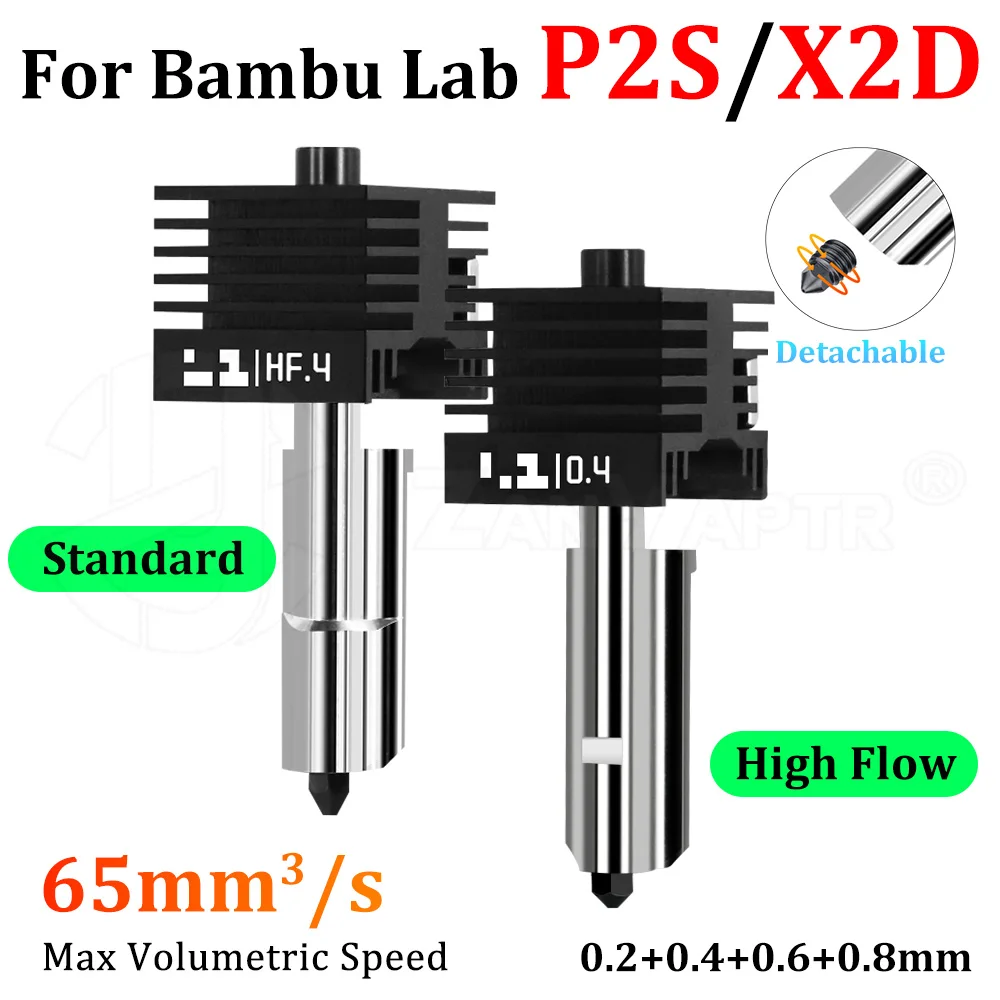
At the core of this hotend's appeal is its capability for high-speed printing. The high-flow variant boasts a max volumetric speed of 65mm³/s, a substantial figure for rapid material extrusion. This metric, volumetric speed, directly dictates how much plastic can be melted and pushed through the nozzle per second, directly impacting overall print duration. It's a key factor for efficiency.
Picture this: a large, intricate model that might typically take 20 hours to print can see its completion time slashed. With the enhanced volumetric flow, users experience a speed increase of up to 30%, translating into significant time savings on substantial projects. This improvement is particularly noticeable when tackling large infill patterns or models requiring extensive material deposition, allowing for quicker iteration and production cycles.
Compared to the standard P2S hotend, the high-flow version specifically targets the thermal and mechanical limitations of faster extrusion. While the toolhead itself can move at impressive speeds up to 1000mm/s, the hotend's ability to melt and extrude material at a matching pace is what truly dictates print speed. This upgrade ensures the hotend is not the limiting factor in maximizing the printer's mechanical capabilities.
Durability and material compatibility are paramount for any serious 3D printing component. This hotend features a hardened steel nozzle, a crucial element for longevity. Hardened steel resists abrasive wear far better than brass or stainless steel nozzles.
For those who frequently print with fiber-reinforced materials such as carbon fiber nylon, glass fiber PETG, or even glow-in-the-dark filaments, a hardened steel nozzle is an absolute necessity. These composite filaments contain abrasive particles that rapidly erode softer nozzle materials, leading to inconsistent extrusion and premature nozzle failure. The robust construction of this hotend's nozzle ensures stable and precise printing, even with these challenging materials, extending the lifespan of the consumable part significantly.
Unlike softer brass nozzles which might last only a few dozen hours when printing abrasives, hardened steel provides hundreds of hours of reliable performance. This material choice allows tinkerers to confidently experiment with a wider array of engineering-grade and specialty filaments, broadening the scope of their projects without constant nozzle replacements. It’s a smart long-term investment.
One of the most user-friendly aspects of this hotend is its quick-detachable design. The P2S hot end integrates a unique heating component design that minimizes complex electronic connections between the hotend and the tool head. This design facilitates a 30-second quick-release, making nozzle and hotend swaps remarkably fast and straightforward.
Imagine needing to switch from a 0.4mm nozzle for detailed work to a 0.8mm nozzle for a rapid prototype or a large, strong part. This quick-change capability means less downtime and more printing. It eliminates the frustration of intricate wiring or fiddly screws often associated with hotend maintenance on other printer platforms. Such a design promotes easier experimentation with different nozzle sizes and materials.
This modularity also simplifies troubleshooting and maintenance. Should a clog occur or a heating element fail, the entire assembly can be swiftly removed and either serviced or replaced, minimizing the impact on printing schedules. This contrasts sharply with older designs where hotend replacement could involve extensive disassembly and re-wiring, a process that could deter less experienced users from attempting repairs. It’s a very clever solution.
The hotend is available with a range of nozzle diameters: 0.2mm, 0.4mm, 0.6mm, and 0.8mm. This selection caters to a diverse set of printing needs, from extremely fine detail to robust, fast prints. A 0.2mm nozzle is ideal for miniatures, highly detailed figurines, or parts requiring extremely tight tolerances, producing very smooth surfaces and intricate features.
Conversely, the 0.8mm nozzle is perfect for large-scale functional prototypes, structural components, or any application where print speed and material strength are prioritized over minute detail. Larger nozzles allow for thicker extrusion lines, which can significantly reduce print times for voluminous objects and often result in stronger parts due to better layer adhesion and fewer layer lines. The versatility is a boon for any maker.
Having access to this range of nozzle sizes within a quick-change system means that a single printer can effectively serve multiple roles. It allows users to optimize their setup for each specific print job, whether it's a finely detailed architectural model or a durable tool holder. This adaptability encourages more creative projects and more efficient use of printing resources.
This P2S hotend is not merely a replacement part; it is an upgrade that enhances the fundamental capabilities of the Bambu Lab P2S printer. Its hardened steel nozzle and high-flow design directly address the demands of advanced materials and high-speed production, which are increasingly important for makers and tinkerers. The quick-detachable system fosters a more experimental and less intimidating approach to maintenance and customization, encouraging users to modify and improve their machine over time. Accessing community troubleshooting becomes easier when components are simple to swap, and experimenting with custom parts is less daunting. This hotend truly provides the capability to do more, faster, and with greater material freedom.
Imagine the satisfaction of seeing complex, engineering-grade parts emerge from your printer in a fraction of the time, or confidently printing with abrasive filaments that would have destroyed a lesser hotend. This component empowers users to push their creative boundaries, tackling projects that demand both speed and material resilience, all while enjoying a streamlined, user-friendly maintenance experience. The freedom to swap nozzles quickly opens up a world of possibilities, making the printer a truly versatile tool in any maker's workshop.
Unlocking Rapid Fabrication
At the core of this hotend's appeal is its capability for high-speed printing. The high-flow variant boasts a max volumetric speed of 65mm³/s, a substantial figure for rapid material extrusion. This metric, volumetric speed, directly dictates how much plastic can be melted and pushed through the nozzle per second, directly impacting overall print duration. It's a key factor for efficiency.
Picture this: a large, intricate model that might typically take 20 hours to print can see its completion time slashed. With the enhanced volumetric flow, users experience a speed increase of up to 30%, translating into significant time savings on substantial projects. This improvement is particularly noticeable when tackling large infill patterns or models requiring extensive material deposition, allowing for quicker iteration and production cycles.
Compared to the standard P2S hotend, the high-flow version specifically targets the thermal and mechanical limitations of faster extrusion. While the toolhead itself can move at impressive speeds up to 1000mm/s, the hotend's ability to melt and extrude material at a matching pace is what truly dictates print speed. This upgrade ensures the hotend is not the limiting factor in maximizing the printer's mechanical capabilities.
The Heart of Material Versatility
Durability and material compatibility are paramount for any serious 3D printing component. This hotend features a hardened steel nozzle, a crucial element for longevity. Hardened steel resists abrasive wear far better than brass or stainless steel nozzles.
For those who frequently print with fiber-reinforced materials such as carbon fiber nylon, glass fiber PETG, or even glow-in-the-dark filaments, a hardened steel nozzle is an absolute necessity. These composite filaments contain abrasive particles that rapidly erode softer nozzle materials, leading to inconsistent extrusion and premature nozzle failure. The robust construction of this hotend's nozzle ensures stable and precise printing, even with these challenging materials, extending the lifespan of the consumable part significantly.
Unlike softer brass nozzles which might last only a few dozen hours when printing abrasives, hardened steel provides hundreds of hours of reliable performance. This material choice allows tinkerers to confidently experiment with a wider array of engineering-grade and specialty filaments, broadening the scope of their projects without constant nozzle replacements. It’s a smart long-term investment.
Seamless Swaps and Sustained Performance
One of the most user-friendly aspects of this hotend is its quick-detachable design. The P2S hot end integrates a unique heating component design that minimizes complex electronic connections between the hotend and the tool head. This design facilitates a 30-second quick-release, making nozzle and hotend swaps remarkably fast and straightforward.
Imagine needing to switch from a 0.4mm nozzle for detailed work to a 0.8mm nozzle for a rapid prototype or a large, strong part. This quick-change capability means less downtime and more printing. It eliminates the frustration of intricate wiring or fiddly screws often associated with hotend maintenance on other printer platforms. Such a design promotes easier experimentation with different nozzle sizes and materials.
This modularity also simplifies troubleshooting and maintenance. Should a clog occur or a heating element fail, the entire assembly can be swiftly removed and either serviced or replaced, minimizing the impact on printing schedules. This contrasts sharply with older designs where hotend replacement could involve extensive disassembly and re-wiring, a process that could deter less experienced users from attempting repairs. It’s a very clever solution.
Precision Across Scales
The hotend is available with a range of nozzle diameters: 0.2mm, 0.4mm, 0.6mm, and 0.8mm. This selection caters to a diverse set of printing needs, from extremely fine detail to robust, fast prints. A 0.2mm nozzle is ideal for miniatures, highly detailed figurines, or parts requiring extremely tight tolerances, producing very smooth surfaces and intricate features.
Conversely, the 0.8mm nozzle is perfect for large-scale functional prototypes, structural components, or any application where print speed and material strength are prioritized over minute detail. Larger nozzles allow for thicker extrusion lines, which can significantly reduce print times for voluminous objects and often result in stronger parts due to better layer adhesion and fewer layer lines. The versatility is a boon for any maker.
Having access to this range of nozzle sizes within a quick-change system means that a single printer can effectively serve multiple roles. It allows users to optimize their setup for each specific print job, whether it's a finely detailed architectural model or a durable tool holder. This adaptability encourages more creative projects and more efficient use of printing resources.
The Upgrade Advantage for the Maker
This P2S hotend is not merely a replacement part; it is an upgrade that enhances the fundamental capabilities of the Bambu Lab P2S printer. Its hardened steel nozzle and high-flow design directly address the demands of advanced materials and high-speed production, which are increasingly important for makers and tinkerers. The quick-detachable system fosters a more experimental and less intimidating approach to maintenance and customization, encouraging users to modify and improve their machine over time. Accessing community troubleshooting becomes easier when components are simple to swap, and experimenting with custom parts is less daunting. This hotend truly provides the capability to do more, faster, and with greater material freedom.
Imagine the satisfaction of seeing complex, engineering-grade parts emerge from your printer in a fraction of the time, or confidently printing with abrasive filaments that would have destroyed a lesser hotend. This component empowers users to push their creative boundaries, tackling projects that demand both speed and material resilience, all while enjoying a streamlined, user-friendly maintenance experience. The freedom to swap nozzles quickly opens up a world of possibilities, making the printer a truly versatile tool in any maker's workshop.