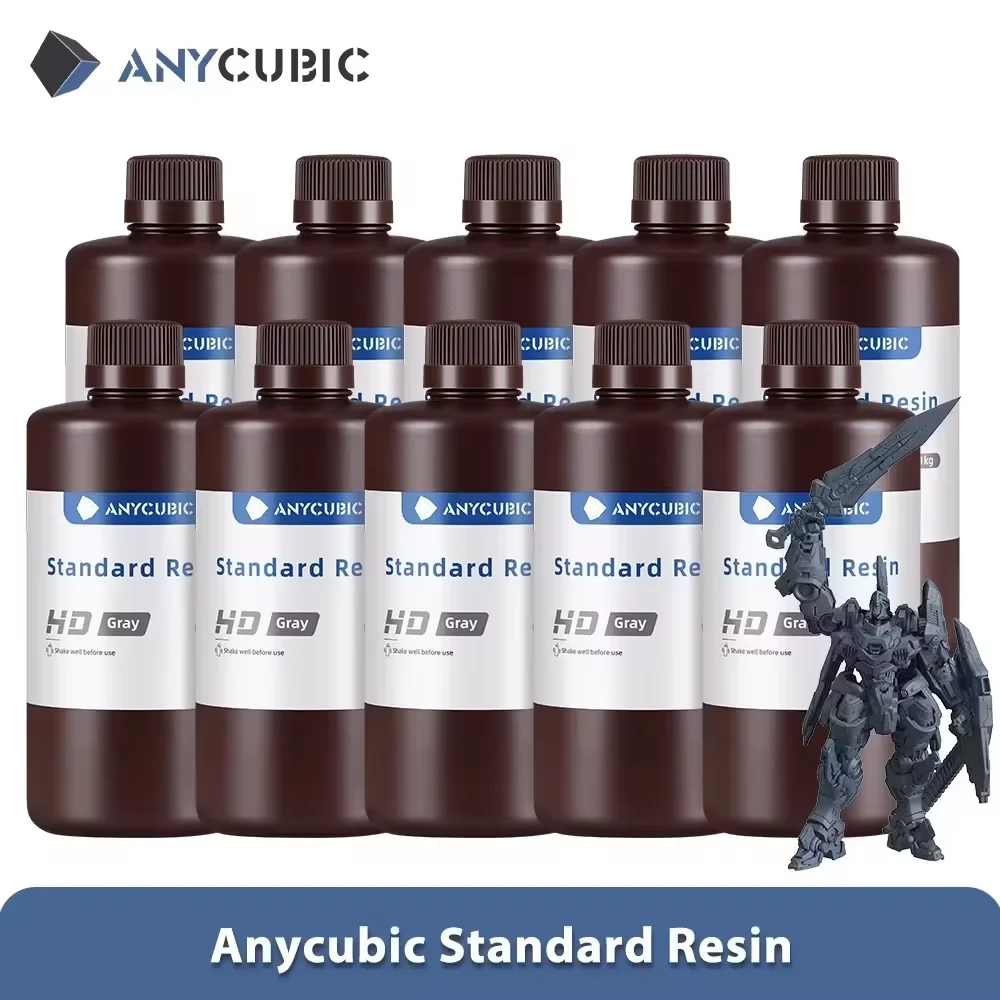
Anycubic Standard 405nm UV Resin
Official Store Deal
Expert Analysis Overview
The Anycubic Standard 405nm UV Resin is a foundational photopolymer solution engineered for entry-level and intermediate 3D printing enthusiasts seeking consistent, high-detail results without prohibitive costs. This resin establishes itself as a reliable workhorse in the desktop stereolithography (SLA) and digital light processing (DLP) landscape, specifically optimized for 405nm UV light sources common in LCD 3D printers like the Anycubic Photon Mono series. Its formulation prioritizes a balanced performance profile, addressing critical aspects from print success rates to the mechanical properties of the cured models. The material's consistency is a significant factor.
When a layer is exposed, the resin quickly transitions from a liquid to a solid state. This process is highly repeatable. The precise control over curing depth and speed directly impacts the dimensional accuracy of the final print, a paramount concern for prototyping and functional part creation. Compared to resins requiring longer exposure times, this formulation helps prevent over-curing, which can lead to loss of fine detail and increased brittleness.
During the printing process, after each layer cures, the build plate lifts, and the resin needs to quickly re-level itself before the next layer begins. A well-balanced viscosity, like that of the Anycubic Standard resin, allows for efficient re-coating of the build plate, maintaining consistent layer thickness. This contributes significantly to the overall print success rate and the uniformity of the final model's surface finish. Resins that are too thick can cause suction issues and print failures, while those that are too thin might not hold detail effectively.
Imagine printing a miniature figurine or a functional bracket; the Shore D 82 hardness ensures that fine details, such as weapon edges or small connecting tabs, remain intact and do not easily bend or break. This level of rigidity is particularly beneficial for display models, architectural prototypes, or parts that need to maintain their shape under light loads. Compared to more flexible resins, this standard formulation offers superior resistance to indentation and abrasion, making models more robust for everyday interaction.
Consider a scenario where a printed part might experience minor stress, such as a clip or a snap-fit component. The enhanced flexural strength and modulus after post-curing provide improved resilience, reducing the likelihood of breakage during assembly or use. This makes the resin suitable for parts that need a degree of structural integrity but are not subjected to extreme mechanical stress. It resists bending well. Unlike brittle resins that snap with minimal force, this material offers a more forgiving response to incidental impacts or slight deformations.
When a print begins, the first few layers must adhere firmly to the build plate to prevent the model from detaching mid-print, a frequent cause of failure. The Anycubic Standard resin's properties facilitate this initial bond, while also ensuring that subsequent layers fuse seamlessly, creating a monolithic structure without delamination. This reliability minimizes wasted resin and print time, a significant advantage for both beginners and experienced users. It just works.
Imagine printing a highly detailed miniature with tiny scales or intricate filigree; this resin captures those nuances effectively, producing models that require minimal post-processing for aesthetic appeal. The resulting surface is smooth to the touch, often requiring only light sanding if any, before painting or further finishing. This level of detail surpasses many entry-level resins, offering a premium look and feel to the final product. Models look great.
Each color is formulated to provide consistent pigmentation, ensuring uniform color distribution throughout the printed model. This is particularly useful for functional prototypes where color coding might be necessary, or for artistic models where the base color is part of the design. The ability to choose from a broad spectrum directly impacts the versatility of the resin for different applications, from hobbyist miniatures to professional concept models.
For applications where long-term optical clarity is paramount, such as clear functional prototypes or lenses, this yellowing might be a consideration. However, for most standard applications, especially with opaque colors, this characteristic does not impact the structural integrity or general aesthetic appeal. Users prioritizing long-term clarity for transparent prints should consider specialized clear resins designed for UV stability, or apply UV-protective coatings to their models. This transparency trade-off is typical for standard formulations.
Maintaining a well-ventilated workspace is always recommended when working with any resin, but a less intense odor contributes to a more comfortable printing environment. This makes the resin more approachable for users who might be printing in home workshops or smaller spaces where strong chemical smells are undesirable. It improves the overall usability, especially for extended printing sessions. Ventilation is still key.
After printing, models require a thorough wash to remove any residual liquid resin, followed by a final UV cure. The resin's formulation allows for efficient washing, preventing sticky surfaces or uncured pockets that can compromise the final finish or mechanical properties. This streamlined cleanup process, combined with its balanced performance, makes it an excellent choice for entry-level users who are still refining their post-processing techniques. It makes the entire printing process less cumbersome.
Imagine the satisfaction of consistently producing intricate, dimensionally accurate parts for your projects, whether they are detailed miniatures, functional prototypes, or custom components. This resin empowers creators to bring their digital designs to life with confidence, knowing that each print will exhibit the clarity, strength, and finish required for their vision. The ease of use and reliable performance mean less time troubleshooting and more time creating, transforming your ideas into tangible realities with every successful print. This resin delivers on its promises, allowing you to focus on innovation and design rather than print failures.
Precision in Photopolymerization
Material Composition and Curing Dynamics
This standard resin is a liquid photopolymer, meaning it cures and solidifies when exposed to ultraviolet (UV) light at a specific wavelength, in this case, 405nm. The chemical composition is carefully balanced to ensure rapid polymerization under typical LCD printer light intensities, facilitating faster print times and reducing exposure duration per layer. This rapid curing minimizes light bleed, which is crucial for achieving sharp edges and intricate details in printed models.When a layer is exposed, the resin quickly transitions from a liquid to a solid state. This process is highly repeatable. The precise control over curing depth and speed directly impacts the dimensional accuracy of the final print, a paramount concern for prototyping and functional part creation. Compared to resins requiring longer exposure times, this formulation helps prevent over-curing, which can lead to loss of fine detail and increased brittleness.
The Role of Viscosity and Flow
The resin exhibits a viscosity of approximately 280 mPa·s (not post-cured), a critical parameter for successful resin printing. This moderate viscosity ensures the resin flows smoothly to fill intricate details and recesses on the build plate and between layers. Proper flow prevents air bubbles from getting trapped, which can cause print failures or surface imperfections. It flows well.During the printing process, after each layer cures, the build plate lifts, and the resin needs to quickly re-level itself before the next layer begins. A well-balanced viscosity, like that of the Anycubic Standard resin, allows for efficient re-coating of the build plate, maintaining consistent layer thickness. This contributes significantly to the overall print success rate and the uniformity of the final model's surface finish. Resins that are too thick can cause suction issues and print failures, while those that are too thin might not hold detail effectively.
Mechanical Integrity and Post-Processing
Hardness and Structural Resilience
Post-cured for 3 minutes, the resin achieves a Shore D hardness of 82. This high hardness indicates a rigid and durable material, suitable for models that require structural integrity and resistance to surface scratching or deformation under normal handling. Hardness is key for prototypes.Imagine printing a miniature figurine or a functional bracket; the Shore D 82 hardness ensures that fine details, such as weapon edges or small connecting tabs, remain intact and do not easily bend or break. This level of rigidity is particularly beneficial for display models, architectural prototypes, or parts that need to maintain their shape under light loads. Compared to more flexible resins, this standard formulation offers superior resistance to indentation and abrasion, making models more robust for everyday interaction.
Flexural Properties and Model Durability
The flexural strength is rated at 38 MPa (not post-cured) and improves to 49 MPa after 3 minutes of post-curing. The flexural modulus also sees an increase from 1014 MPa to 1476 MPa with post-curing. These metrics describe the material's resistance to bending and its stiffness. A higher flexural strength means the material can withstand more bending force before breaking.Consider a scenario where a printed part might experience minor stress, such as a clip or a snap-fit component. The enhanced flexural strength and modulus after post-curing provide improved resilience, reducing the likelihood of breakage during assembly or use. This makes the resin suitable for parts that need a degree of structural integrity but are not subjected to extreme mechanical stress. It resists bending well. Unlike brittle resins that snap with minimal force, this material offers a more forgiving response to incidental impacts or slight deformations.
Print Success and User Experience
Adhesion and Layer Consistency
One of the most common challenges in resin printing is ensuring proper adhesion to the print bed and consistent layer-to-layer bonding. This resin is formulated to deliver balanced performance in terms of stickiness with the print bed, promoting a high printing success rate. Initial layer adhesion is crucial.When a print begins, the first few layers must adhere firmly to the build plate to prevent the model from detaching mid-print, a frequent cause of failure. The Anycubic Standard resin's properties facilitate this initial bond, while also ensuring that subsequent layers fuse seamlessly, creating a monolithic structure without delamination. This reliability minimizes wasted resin and print time, a significant advantage for both beginners and experienced users. It just works.
Detail Resolution and Surface Finish
The resin's formulation supports excellent printing details and a smooth surface finish. The fine pigment dispersion and controlled curing characteristics allow for the reproduction of intricate geometries and textures with high fidelity. This is evident in the sample prints shown, which exhibit sharp edges and clear features on complex models like miniature figures and architectural structures.Imagine printing a highly detailed miniature with tiny scales or intricate filigree; this resin captures those nuances effectively, producing models that require minimal post-processing for aesthetic appeal. The resulting surface is smooth to the touch, often requiring only light sanding if any, before painting or further finishing. This level of detail surpasses many entry-level resins, offering a premium look and feel to the final product. Models look great.
Color Spectrum and Aesthetic Considerations
Pigmentation and Model Clarity
The Anycubic Standard resin is available in a wide array of colors, including black, white, gray, yellow, green, red, aqua blue, skin, maroon, orange, dental non-castable, and green dental. This extensive palette allows users to print models in their desired final color, reducing the need for extensive painting or post-processing for aesthetic purposes. Color options are varied.Each color is formulated to provide consistent pigmentation, ensuring uniform color distribution throughout the printed model. This is particularly useful for functional prototypes where color coding might be necessary, or for artistic models where the base color is part of the design. The ability to choose from a broad spectrum directly impacts the versatility of the resin for different applications, from hobbyist miniatures to professional concept models.
Long-Term Material Stability
While offering a wide range of colors, it is important to note a specific characteristic regarding transparent resin variants: they are prone to yellowing when affected by ultraviolet light over a long period. This is a common phenomenon with many transparent photopolymer resins due to UV exposure and oxidation. Transparency can change.For applications where long-term optical clarity is paramount, such as clear functional prototypes or lenses, this yellowing might be a consideration. However, for most standard applications, especially with opaque colors, this characteristic does not impact the structural integrity or general aesthetic appeal. Users prioritizing long-term clarity for transparent prints should consider specialized clear resins designed for UV stability, or apply UV-protective coatings to their models. This transparency trade-off is typical for standard formulations.
Operational Efficiency and Cleanup
Reduced Odor and Workspace Management
Resin printing often comes with concerns about fumes and odors. While all resins produce some odor, the Anycubic Standard resin is formulated with a classic formula that aims for a balanced performance, including considerations for user experience. This often translates to a less pungent odor compared to some more experimental or industrial resins. Odor is manageable.Maintaining a well-ventilated workspace is always recommended when working with any resin, but a less intense odor contributes to a more comfortable printing environment. This makes the resin more approachable for users who might be printing in home workshops or smaller spaces where strong chemical smells are undesirable. It improves the overall usability, especially for extended printing sessions. Ventilation is still key.
Simplified Post-Print Workflow
Ease of cleaning is another significant advantage of this resin. Models printed with Anycubic Standard resin are generally easy to clean with isopropyl alcohol (IPA) to remove uncured resin from the surface. This simplifies the post-processing workflow, saving time and effort. Cleanup is straightforward.After printing, models require a thorough wash to remove any residual liquid resin, followed by a final UV cure. The resin's formulation allows for efficient washing, preventing sticky surfaces or uncured pockets that can compromise the final finish or mechanical properties. This streamlined cleanup process, combined with its balanced performance, makes it an excellent choice for entry-level users who are still refining their post-processing techniques. It makes the entire printing process less cumbersome.
Imagine the satisfaction of consistently producing intricate, dimensionally accurate parts for your projects, whether they are detailed miniatures, functional prototypes, or custom components. This resin empowers creators to bring their digital designs to life with confidence, knowing that each print will exhibit the clarity, strength, and finish required for their vision. The ease of use and reliable performance mean less time troubleshooting and more time creating, transforming your ideas into tangible realities with every successful print. This resin delivers on its promises, allowing you to focus on innovation and design rather than print failures.