Anycubic PLA 3D Printer Filament
Official Store Deal
Expert Analysis Overview
The Anycubic PLA 3D Printer Filament is a dependable, high-quality consumable engineered for makers who prioritize consistent print results and material workability for their FDM 3D printers. This filament, available in a vibrant multicolor range and standard 1.75mm diameter, addresses common frustrations encountered with lesser materials, positioning itself as a cornerstone for reliable fabrication.
Filament diameter consistency is paramount for successful 3D printing. This Anycubic PLA boasts a diameter tolerance of 1.75mm ±0.02mm. Such tight manufacturing specifications ensure that the material feeds smoothly through the extruder, preventing under-extrusion or over-extrusion issues that plague less precisely made filaments.
When a filament maintains such a narrow tolerance, the extruder motor experiences less strain. This precise control over material flow directly translates into more consistent layer adhesion and dimensional accuracy in printed parts. Imagine creating interlocking components or gears; even a minor deviation in filament diameter can lead to parts that don't fit together or exhibit structural weaknesses. This precision mitigates those risks.
Compared to entry-level filaments, which often exhibit wider diameter variances, Anycubic's offering significantly reduces the need for constant flow rate adjustments in slicing software. This saves time and minimizes material waste from failed prints, a common frustration for both novice and experienced makers.
Moisture absorption is a primary enemy of filament quality, leading to bubbles and steam pockets during extrusion. The visual evidence clearly shows a bubble-free filament cross-section. This is crucial.
When moisture is present, it vaporizes rapidly in the hot end, creating steam bubbles that burst as the plastic is laid down. These ruptures manifest as visible pockmarks, poor layer adhesion, and compromised structural integrity in the finished print. A bubble-free filament ensures a denser, more uniform extrusion.
This meticulous manufacturing process, which likely includes stringent drying and packaging protocols, distinguishes it from many generic PLA options. Many budget filaments arrive with latent moisture, requiring immediate drying before use, an extra step Anycubic largely eliminates.
Smooth extrusion is not just a desirable trait; it is fundamental to print quality and machine longevity. The filament's consistent diameter and material composition contribute to smooth extrusion through the nozzle. This reduces friction.
Reduced friction within the hot end and nozzle minimizes wear on these critical components, extending their lifespan. Furthermore, a smooth flow prevents pressure fluctuations in the melt pool, which can cause stringing, blobs, or inconsistent line widths. The resulting prints exhibit clean lines and uniform surfaces, enhancing aesthetic appeal and functional performance.
Consider the contrast with filaments that exhibit high internal friction or inconsistent melt properties. These often lead to partial clogs, requiring frequent hot end maintenance or even replacement. Anycubic's focus on smooth extrusion translates to less downtime and more productive printing hours.
One of the most disheartening print failures is corner lifting, also known as warping. This filament is designed to be less prone to corner lifting. Warping occurs when the printed material cools unevenly, causing differential shrinkage and pulling the edges of the print up from the build plate.
The material properties of this PLA, likely optimized for thermal stability and adhesion, help maintain a strong bond with the print surface throughout the cooling process. This is particularly important for larger prints or objects with sharp corners, where internal stresses are more pronounced.
For makers engaged in prototyping or producing functional parts, preventing warp is critical. A part that lifts from the bed is often unusable, representing wasted time and material. This filament's formulation directly addresses this common challenge, improving print success rates significantly.
The images highlight nicely packed and neatly wound spools. The spooling quality is often an overlooked aspect of filament, but it is incredibly important. Each spool is evenly wound and carefully engineered to prevent tangles and ensure a consistent, smooth feed.
Poorly wound spools are a frequent cause of print failures, especially during long, unattended prints. When a filament tangles, it can snag, causing the extruder to skip steps, leading to under-extrusion, layer shifts, or even complete print stoppage. A neatly wound spool ensures uninterrupted material delivery, crucial for complex and time-consuming projects.
Unlike many generic brands that often ship spools with haphazard winding, leading to inevitable snags and ruined prints, Anycubic's attention to detail in packaging demonstrates a commitment to the user's overall printing experience. This reliability allows makers to confidently initiate overnight prints or remote monitoring sessions.
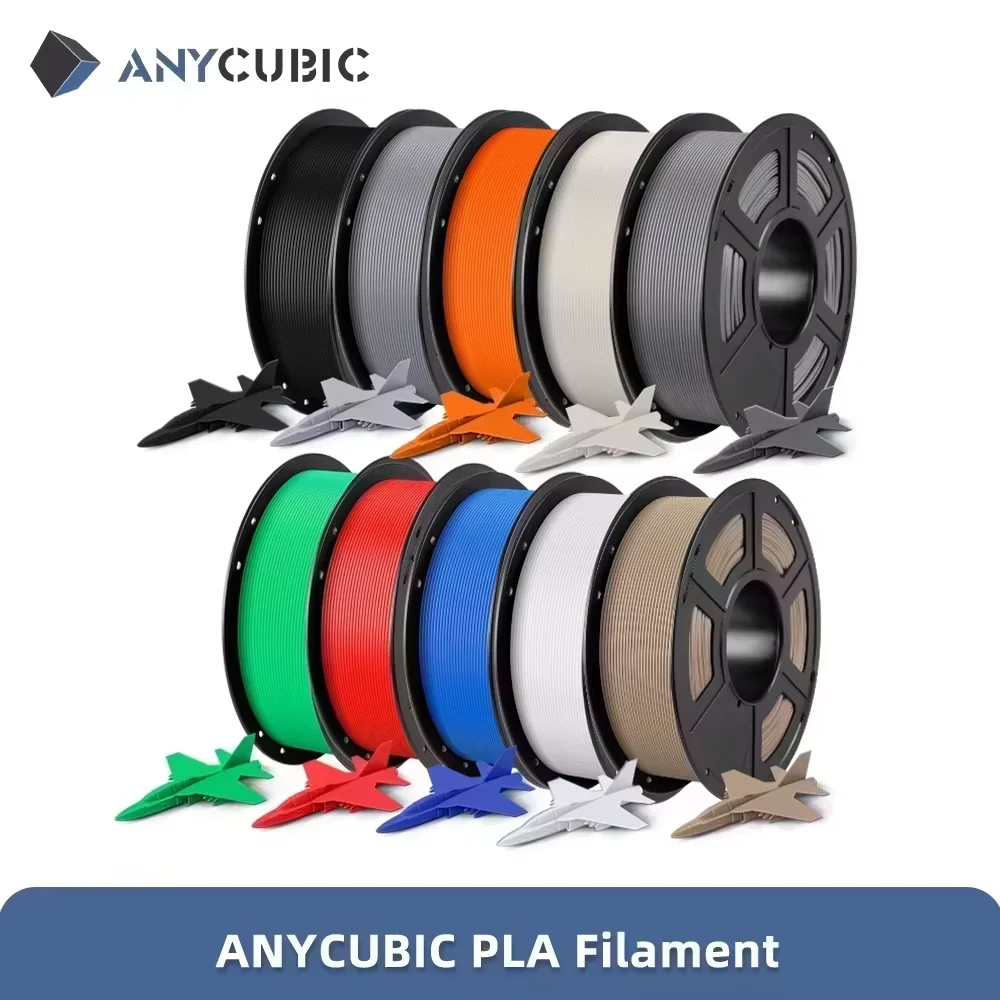
The vibrant colors offered by Anycubic PLA are a significant advantage for creative projects. The filament provides a broad range of hues, making it suitable for educational purposes, design, and artistic endeavors. Color accuracy is high.
For projects that demand visual impact, such as decorative items, prototypes for client presentations, or educational models, the availability of diverse and consistent colors is invaluable. The pigment saturation appears robust, ensuring that printed objects exhibit rich and true-to-life shades.
This extensive color palette stands in stark contrast to brands offering a limited selection of basic colors. It empowers makers to push their creative boundaries, allowing for greater customization and visual appeal in their finished products. The ability to choose from many colors enhances the final product's perceived quality.
Anycubic's PLA filament is made from renewable, plant-based materials, emphasizing a commitment to sustainability. This ensures a 3D printing experience that is both eco-friendly and user-safe, designed for low odor and zero irritating emissions. It is a responsible choice.
Utilizing plant-based materials, typically derived from corn starch, reduces reliance on petroleum-based plastics. This makes the filament biodegradable under industrial composting conditions, lessening its environmental footprint. The low odor profile is a welcome feature, particularly when printing in less ventilated spaces or shared environments, addressing a common concern with other filament types.
This eco-conscious approach sets Anycubic apart from manufacturers who prioritize cost over environmental responsibility. For makers who value sustainability, this filament offers a guilt-free option, aligning their hobby with broader ecological principles. It makes printing accessible without harsh fumes.
The filament's properties make it ideal for a wide array of applications. From intricate decorative pieces to functional prototypes, the material's consistency and vibrant colors enable diverse projects. Makers can confidently create custom enclosures, cosplay props, or educational Tools.
The examples shown in the visuals — intricate ornaments, small figurines, and functional prototypes — demonstrate the filament's versatility. The material's ease of use and reliable performance mean that complex geometries can be realized with a high degree of success, reducing the learning curve for new users and increasing efficiency for experienced ones.
Imagine bringing complex digital designs to life with minimal post-processing, thanks to the filament's smooth finish and dimensional accuracy. The ability to produce high-quality prints consistently empowers makers to iterate quickly on designs or fulfill custom orders with confidence. This material is a workhorse for any workshop.
Unpacking Material Consistency
Filament diameter consistency is paramount for successful 3D printing. This Anycubic PLA boasts a diameter tolerance of 1.75mm ±0.02mm. Such tight manufacturing specifications ensure that the material feeds smoothly through the extruder, preventing under-extrusion or over-extrusion issues that plague less precisely made filaments.
When a filament maintains such a narrow tolerance, the extruder motor experiences less strain. This precise control over material flow directly translates into more consistent layer adhesion and dimensional accuracy in printed parts. Imagine creating interlocking components or gears; even a minor deviation in filament diameter can lead to parts that don't fit together or exhibit structural weaknesses. This precision mitigates those risks.
Compared to entry-level filaments, which often exhibit wider diameter variances, Anycubic's offering significantly reduces the need for constant flow rate adjustments in slicing software. This saves time and minimizes material waste from failed prints, a common frustration for both novice and experienced makers.
The Absence of Bubbles
Moisture absorption is a primary enemy of filament quality, leading to bubbles and steam pockets during extrusion. The visual evidence clearly shows a bubble-free filament cross-section. This is crucial.
When moisture is present, it vaporizes rapidly in the hot end, creating steam bubbles that burst as the plastic is laid down. These ruptures manifest as visible pockmarks, poor layer adhesion, and compromised structural integrity in the finished print. A bubble-free filament ensures a denser, more uniform extrusion.
This meticulous manufacturing process, which likely includes stringent drying and packaging protocols, distinguishes it from many generic PLA options. Many budget filaments arrive with latent moisture, requiring immediate drying before use, an extra step Anycubic largely eliminates.
Optimizing the Printing Workflow
Smooth extrusion is not just a desirable trait; it is fundamental to print quality and machine longevity. The filament's consistent diameter and material composition contribute to smooth extrusion through the nozzle. This reduces friction.
Reduced friction within the hot end and nozzle minimizes wear on these critical components, extending their lifespan. Furthermore, a smooth flow prevents pressure fluctuations in the melt pool, which can cause stringing, blobs, or inconsistent line widths. The resulting prints exhibit clean lines and uniform surfaces, enhancing aesthetic appeal and functional performance.
Consider the contrast with filaments that exhibit high internal friction or inconsistent melt properties. These often lead to partial clogs, requiring frequent hot end maintenance or even replacement. Anycubic's focus on smooth extrusion translates to less downtime and more productive printing hours.
Mitigating Print Failures
One of the most disheartening print failures is corner lifting, also known as warping. This filament is designed to be less prone to corner lifting. Warping occurs when the printed material cools unevenly, causing differential shrinkage and pulling the edges of the print up from the build plate.
The material properties of this PLA, likely optimized for thermal stability and adhesion, help maintain a strong bond with the print surface throughout the cooling process. This is particularly important for larger prints or objects with sharp corners, where internal stresses are more pronounced.
For makers engaged in prototyping or producing functional parts, preventing warp is critical. A part that lifts from the bed is often unusable, representing wasted time and material. This filament's formulation directly addresses this common challenge, improving print success rates significantly.
Thoughtful Packaging and Presentation
The images highlight nicely packed and neatly wound spools. The spooling quality is often an overlooked aspect of filament, but it is incredibly important. Each spool is evenly wound and carefully engineered to prevent tangles and ensure a consistent, smooth feed.
Poorly wound spools are a frequent cause of print failures, especially during long, unattended prints. When a filament tangles, it can snag, causing the extruder to skip steps, leading to under-extrusion, layer shifts, or even complete print stoppage. A neatly wound spool ensures uninterrupted material delivery, crucial for complex and time-consuming projects.
Unlike many generic brands that often ship spools with haphazard winding, leading to inevitable snags and ruined prints, Anycubic's attention to detail in packaging demonstrates a commitment to the user's overall printing experience. This reliability allows makers to confidently initiate overnight prints or remote monitoring sessions.
A Spectrum of Creativity
The vibrant colors offered by Anycubic PLA are a significant advantage for creative projects. The filament provides a broad range of hues, making it suitable for educational purposes, design, and artistic endeavors. Color accuracy is high.
For projects that demand visual impact, such as decorative items, prototypes for client presentations, or educational models, the availability of diverse and consistent colors is invaluable. The pigment saturation appears robust, ensuring that printed objects exhibit rich and true-to-life shades.
This extensive color palette stands in stark contrast to brands offering a limited selection of basic colors. It empowers makers to push their creative boundaries, allowing for greater customization and visual appeal in their finished products. The ability to choose from many colors enhances the final product's perceived quality.
Sustainable Making
Anycubic's PLA filament is made from renewable, plant-based materials, emphasizing a commitment to sustainability. This ensures a 3D printing experience that is both eco-friendly and user-safe, designed for low odor and zero irritating emissions. It is a responsible choice.
Utilizing plant-based materials, typically derived from corn starch, reduces reliance on petroleum-based plastics. This makes the filament biodegradable under industrial composting conditions, lessening its environmental footprint. The low odor profile is a welcome feature, particularly when printing in less ventilated spaces or shared environments, addressing a common concern with other filament types.
This eco-conscious approach sets Anycubic apart from manufacturers who prioritize cost over environmental responsibility. For makers who value sustainability, this filament offers a guilt-free option, aligning their hobby with broader ecological principles. It makes printing accessible without harsh fumes.
Real-World Applications
The filament's properties make it ideal for a wide array of applications. From intricate decorative pieces to functional prototypes, the material's consistency and vibrant colors enable diverse projects. Makers can confidently create custom enclosures, cosplay props, or educational Tools.
The examples shown in the visuals — intricate ornaments, small figurines, and functional prototypes — demonstrate the filament's versatility. The material's ease of use and reliable performance mean that complex geometries can be realized with a high degree of success, reducing the learning curve for new users and increasing efficiency for experienced ones.
Imagine bringing complex digital designs to life with minimal post-processing, thanks to the filament's smooth finish and dimensional accuracy. The ability to produce high-quality prints consistently empowers makers to iterate quickly on designs or fulfill custom orders with confidence. This material is a workhorse for any workshop.