Anycubic Kobra 3 Double-Sided Build Plate
Official Store Deal
Expert Analysis Overview
The Anycubic Kobra 3 Double-Sided Build Plate is a critical upgrade for enthusiasts seeking enhanced print adhesion and diverse material compatibility. This component directly addresses common frustrations associated with first-layer adhesion and print removal, offering a specialized solution for the Anycubic Kobra 3 series. Its engineering focuses on material science and surface topography, crucial for achieving consistent, high-quality 3D prints across a spectrum of filaments.
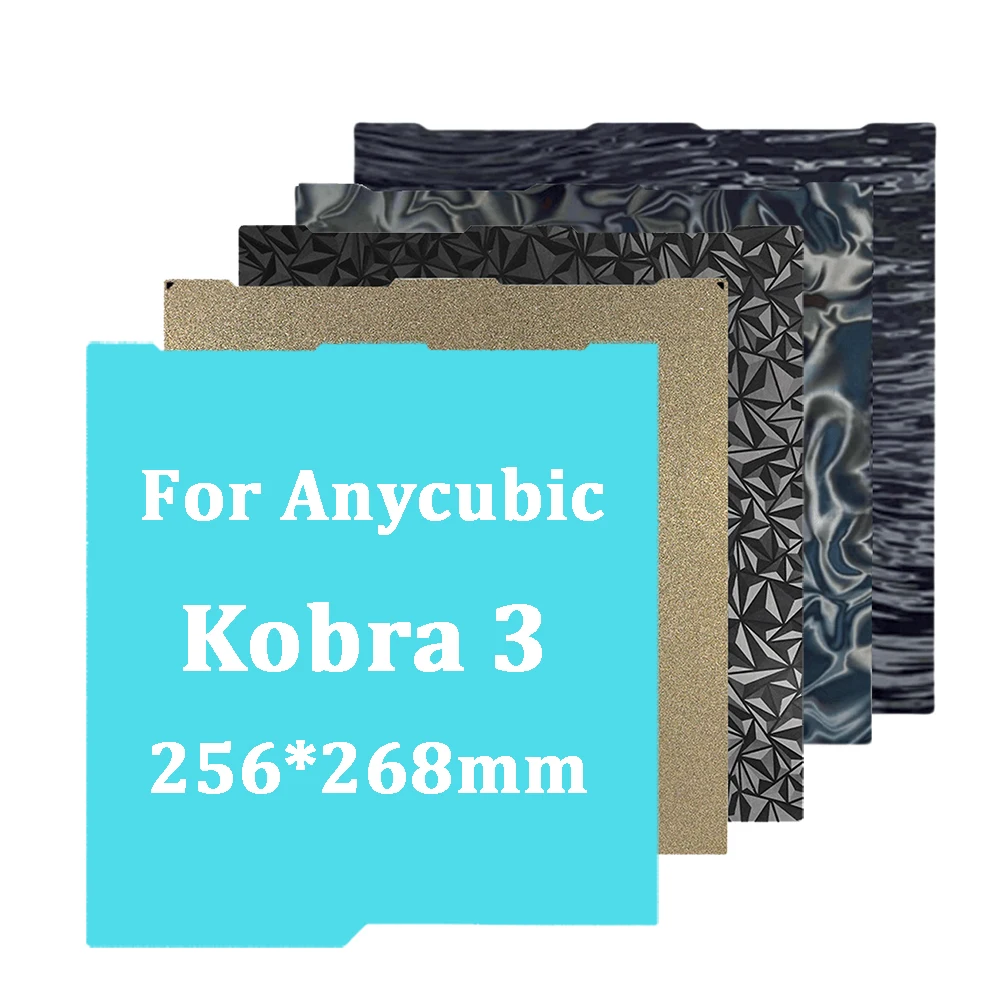
The build plate integrates multiple specialized surfaces, including PEY Starry Sky, PEO Light Column, PEO Phantom, and PEI Spray/Textured. Each surface is designed to cater to specific filament types and desired print finishes. The PEY Starry Sky surface, visible with its iridescent, glitter-like appearance, provides a unique aesthetic to the bottom of prints. This surface is particularly effective for PLA, PETG, and TPU, operating optimally within a temperature range of 30-90°C.
These varied textures and coatings directly influence first-layer adhesion, preventing warping and ensuring intricate details remain anchored during the print cycle. A strong first layer is paramount. Unlike standard smooth glass or basic magnetic sheets, these specialized surfaces offer distinct advantages for specific filament types, reducing the common frustrations of print detachment mid-print. The PEO surfaces, featuring patterns like 'Light Column' and 'Phantom,' offer a different aesthetic and adhesion profile, also suited for PLA, PETG, TPU, and ABS, with a higher temperature tolerance up to 120°C.
The textured PEI surface, often referred to as 'gold PEI,' provides a robust, high-adhesion platform. This surface excels with more demanding materials such as ABS, PC, PEEK, and Nylon, capable of withstanding temperatures up to 300°C. Its textured finish helps mask minor imperfections and provides a strong mechanical bond for the first layer. This versatility minimizes the need for multiple build plates for different materials.
Effective thermal management is integral to successful 3D printing. The spring steel construction of this build plate ensures rapid and even heat distribution across the entire print surface. This uniformity is vital for preventing localized warping and ensuring consistent material flow. The spring steel core also provides the necessary flexibility for easy print removal.
After a print concludes, the plate's inherent flexibility allows for simple detachment of models. By allowing the plate to cool to approximately 30°C, prints often self-release or can be gently flexed off without tools. This process significantly reduces the risk of damaging prints during removal, a common issue with rigid build surfaces. This ease of removal saves time and prevents print failures.
Compared to traditional fixed build surfaces that often require scraping tools, this magnetic spring steel system streamlines the post-printing workflow. The magnetic base ensures secure attachment to the heated bed, preventing any movement during printing. This stability is crucial for maintaining dimensional accuracy, especially during long print jobs. The integrated positioning hole design further simplifies installation, ensuring precise alignment every time.
The double-sided printing capability enhances efficiency and extends the lifespan of the build plate. Users can alternate between different surfaces or simply flip the plate when one side shows wear, maximizing utility. This design choice provides immediate flexibility.
Maintenance for these surfaces is straightforward. For most surfaces, a simple wipe with a damp cloth, paper towel, or isopropyl alcohol is sufficient to remove residues and prepare for the next print. The high temperature resistance of the PEO and PEI surfaces also contributes to their durability, resisting deformation even after prolonged use at elevated temperatures. This resistance to wear is a significant advantage.
Unlike consumable adhesion sheets that require frequent replacement, this durable build plate represents a long-term investment. Its robust construction and specialized coatings are designed for thousands of print hours. This reduces operational costs over the printer's lifespan. The ability to print a wide array of filaments reliably, from common PLA to engineering-grade materials, positions this build plate as an indispensable tool for serious 3D printing applications. It provides a consistent, reliable foundation for every project.
For precision prototyping, the consistency of the build surface is non-negotiable. The various textures on this plate offer distinct advantages for different applications. The smooth PEY and PEO surfaces are ideal for prints where a glossy, aesthetically pleasing bottom finish is desired, often mimicking injection-molded parts. The textured PEI, conversely, provides a matte finish that can hide minor layer lines and offers superior adhesion for larger, more complex models.
This build plate directly contributes to creating dimensionally accurate engineering parts. The stable adhesion minimizes warping, which is a primary cause of dimensional inaccuracies in 3D prints. When printing with materials like ABS or Nylon, which are prone to shrinkage, the high-temperature resistance and strong adhesion of the PEI surface are critical. It ensures the part remains anchored throughout the cooling process, preventing internal stresses from deforming the model.
Reliable printing of difficult materials is a core capability. The specific surface properties of PEY, PEO, and PEI are engineered to manage the unique adhesion requirements of various polymers. For instance, TPU, known for its flexibility and tendency to stick too aggressively to some surfaces, benefits from the controlled adhesion of PEY, allowing for easy removal without tearing the print. This specialized approach minimizes print failures, saving both material and time, which are valuable resources in any prototyping environment. The plate is a workhorse.
This build plate is engineered to minimize print failures, a common frustration for 3D printer users. By providing optimal adhesion for a wide range of filaments and facilitating easy, damage-free print removal, it addresses two of the most frequent causes of failed prints. The consistent performance across different materials means less time spent troubleshooting and more time spent creating. Imagine the satisfaction of consistently successful prints, regardless of filament choice, and the efficiency gained from a build plate that simplifies every step of the printing process. This component transforms the printing experience, enabling users to push the boundaries of their creative and engineering projects with confidence and precision.
Advanced Surface Engineering for Optimal Adhesion
The build plate integrates multiple specialized surfaces, including PEY Starry Sky, PEO Light Column, PEO Phantom, and PEI Spray/Textured. Each surface is designed to cater to specific filament types and desired print finishes. The PEY Starry Sky surface, visible with its iridescent, glitter-like appearance, provides a unique aesthetic to the bottom of prints. This surface is particularly effective for PLA, PETG, and TPU, operating optimally within a temperature range of 30-90°C.
These varied textures and coatings directly influence first-layer adhesion, preventing warping and ensuring intricate details remain anchored during the print cycle. A strong first layer is paramount. Unlike standard smooth glass or basic magnetic sheets, these specialized surfaces offer distinct advantages for specific filament types, reducing the common frustrations of print detachment mid-print. The PEO surfaces, featuring patterns like 'Light Column' and 'Phantom,' offer a different aesthetic and adhesion profile, also suited for PLA, PETG, TPU, and ABS, with a higher temperature tolerance up to 120°C.
The textured PEI surface, often referred to as 'gold PEI,' provides a robust, high-adhesion platform. This surface excels with more demanding materials such as ABS, PC, PEEK, and Nylon, capable of withstanding temperatures up to 300°C. Its textured finish helps mask minor imperfections and provides a strong mechanical bond for the first layer. This versatility minimizes the need for multiple build plates for different materials.
Thermal Management and Print Release Dynamics
Effective thermal management is integral to successful 3D printing. The spring steel construction of this build plate ensures rapid and even heat distribution across the entire print surface. This uniformity is vital for preventing localized warping and ensuring consistent material flow. The spring steel core also provides the necessary flexibility for easy print removal.
After a print concludes, the plate's inherent flexibility allows for simple detachment of models. By allowing the plate to cool to approximately 30°C, prints often self-release or can be gently flexed off without tools. This process significantly reduces the risk of damaging prints during removal, a common issue with rigid build surfaces. This ease of removal saves time and prevents print failures.
Compared to traditional fixed build surfaces that often require scraping tools, this magnetic spring steel system streamlines the post-printing workflow. The magnetic base ensures secure attachment to the heated bed, preventing any movement during printing. This stability is crucial for maintaining dimensional accuracy, especially during long print jobs. The integrated positioning hole design further simplifies installation, ensuring precise alignment every time.
Operational Workflow and Longevity
The double-sided printing capability enhances efficiency and extends the lifespan of the build plate. Users can alternate between different surfaces or simply flip the plate when one side shows wear, maximizing utility. This design choice provides immediate flexibility.
Maintenance for these surfaces is straightforward. For most surfaces, a simple wipe with a damp cloth, paper towel, or isopropyl alcohol is sufficient to remove residues and prepare for the next print. The high temperature resistance of the PEO and PEI surfaces also contributes to their durability, resisting deformation even after prolonged use at elevated temperatures. This resistance to wear is a significant advantage.
Unlike consumable adhesion sheets that require frequent replacement, this durable build plate represents a long-term investment. Its robust construction and specialized coatings are designed for thousands of print hours. This reduces operational costs over the printer's lifespan. The ability to print a wide array of filaments reliably, from common PLA to engineering-grade materials, positions this build plate as an indispensable tool for serious 3D printing applications. It provides a consistent, reliable foundation for every project.
Precision and Reliability in Prototyping
For precision prototyping, the consistency of the build surface is non-negotiable. The various textures on this plate offer distinct advantages for different applications. The smooth PEY and PEO surfaces are ideal for prints where a glossy, aesthetically pleasing bottom finish is desired, often mimicking injection-molded parts. The textured PEI, conversely, provides a matte finish that can hide minor layer lines and offers superior adhesion for larger, more complex models.
This build plate directly contributes to creating dimensionally accurate engineering parts. The stable adhesion minimizes warping, which is a primary cause of dimensional inaccuracies in 3D prints. When printing with materials like ABS or Nylon, which are prone to shrinkage, the high-temperature resistance and strong adhesion of the PEI surface are critical. It ensures the part remains anchored throughout the cooling process, preventing internal stresses from deforming the model.
Reliable printing of difficult materials is a core capability. The specific surface properties of PEY, PEO, and PEI are engineered to manage the unique adhesion requirements of various polymers. For instance, TPU, known for its flexibility and tendency to stick too aggressively to some surfaces, benefits from the controlled adhesion of PEY, allowing for easy removal without tearing the print. This specialized approach minimizes print failures, saving both material and time, which are valuable resources in any prototyping environment. The plate is a workhorse.
This build plate is engineered to minimize print failures, a common frustration for 3D printer users. By providing optimal adhesion for a wide range of filaments and facilitating easy, damage-free print removal, it addresses two of the most frequent causes of failed prints. The consistent performance across different materials means less time spent troubleshooting and more time spent creating. Imagine the satisfaction of consistently successful prints, regardless of filament choice, and the efficiency gained from a build plate that simplifies every step of the printing process. This component transforms the printing experience, enabling users to push the boundaries of their creative and engineering projects with confidence and precision.