ANENG TH203 Smart Industrial Infrared Thermometer
Official Store Deal
Expert Analysis Overview
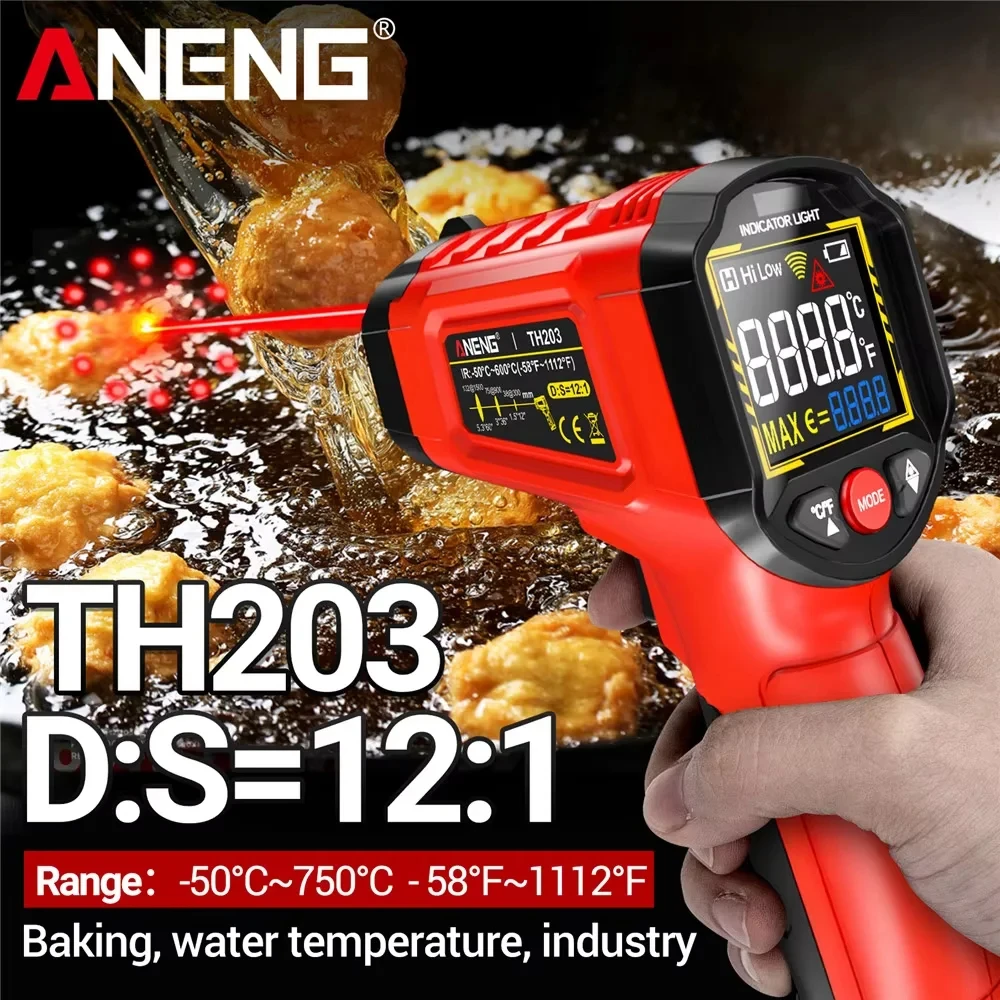
The ANENG TH203 Smart Industrial Infrared Thermometer is a precise diagnostic instrument aimed at professionals requiring rapid, non-contact temperature assessment across diverse environments. This device moves beyond basic temperature readings, offering advanced features crucial for detailed inspections and preventative maintenance. Its design prioritizes both accuracy and user experience, making it a valuable addition to any toolkit.
This infrared thermometer boasts a wide temperature range, spanning from -50℃ to 600℃ (-58℉ to 1112℉). This broad spectrum allows for versatility across numerous applications, from checking HVAC systems to monitoring industrial machinery. A wide range is essential.
The object distance ratio (D:S) of 12:1 indicates that at 12 units of distance, the measurement spot size is 1 unit. This ratio is a standard for general-purpose infrared thermometers, providing a reasonable balance between distance and accuracy for most common inspection tasks. Understanding this ratio helps ensure accurate readings.
Adjustable emissivity, with a default of 0.95, is a significant feature. Unlike fixed-emissivity models, this allows the user to calibrate the device for different surface types, from shiny metals to painted walls, thereby improving measurement accuracy. Generic thermometers often lack this critical adjustment, leading to skewed data on varied materials.
For home inspectors, the ANENG TH203's thermal sensitivity is particularly useful for detecting hidden leaks. Temperature differentials on walls or ceilings can often indicate moisture intrusion or compromised insulation. A slight temperature drop might signal a water leak behind drywall.
Scanning surfaces quickly reveals these anomalies. The non-contact nature means no damage to finished surfaces. This capability significantly streamlines the diagnostic process, pinpointing areas that require further investigation without invasive methods. Standard visual inspections cannot achieve this.
Similarly, identifying electrical hotspots is a core function. Overheating electrical components, such as circuit breakers, wiring connections, or motor housings, can be precursors to equipment failure or fire hazards. Rapid scanning of electrical panels can prevent serious issues. This is a critical safety check.
The ANENG TH203 features a VA reverse color screen. This display technology offers superior contrast and wider viewing angles compared to traditional LCDs, especially in varying light conditions. Readings are clear and legible.
The reverse color scheme enhances visibility in both bright sunlight and dimly lit areas, a common challenge in field work. This design choice minimizes eye strain during prolonged use, a practical benefit for professionals. Many basic models struggle with readability outdoors.
An ergonomic design is evident in the pistol-grip form factor. This shape ensures a comfortable and secure hold, reducing fatigue during extended periods of use. The device fits well in the hand.
High and low temperature alerts are integrated into the device. Users can set specific thresholds, and the thermometer will provide an audible or visual indication when measurements fall outside these parameters. This feature is invaluable for monitoring critical temperatures without constant direct observation. It provides immediate feedback.
Long-pressing the MODE key activates the high/low temperature alarm. This allows for quick setup in dynamic environments. The LED indicator alarm provides a clear visual cue for abnormalities, even in noisy settings. This is more efficient than manual checks.
Data retention is another practical function. The device can hold the last measured reading on the screen, allowing the user to record the data without rushing. This prevents errors in transcription. It simplifies data logging.
Automatic power-off conserves battery life. After a period of inactivity, the device shuts down, ensuring it is ready for the next use without unexpected battery drain. This extends operational time. It is a thoughtful design element.
The ANENG TH203 is well-suited for a home inspector's diverse needs. Its ability to quickly scan large areas for temperature variations makes it ideal for energy audits. Identifying drafts or insulation gaps becomes straightforward. This saves considerable time.
When generating client reports, the precise digital readings and the ability to detect anomalies provide concrete data. This data supports findings and recommendations, adding credibility to the inspection process. Visual evidence strengthens reports.
For instance, documenting a cold spot on an exterior wall might indicate a breach in the thermal envelope. The ANENG TH203 provides the numerical evidence. This specific capability elevates the quality of professional reports. It offers tangible proof.
Proper technique is crucial for accurate readings, especially with liquids. The device's instructions advise against letting smoke or water vapor come into contact with the temperature sensing area when measuring boiling liquids. This prevents inaccurate readings.
Maintaining an angle between 45℃ and 60℃ to the surface of the liquid is recommended. This minimizes interference from steam, ensuring the infrared sensor captures the true surface temperature. Correct positioning is key. Ignoring these guidelines can lead to significant measurement errors, rendering the data unreliable. Basic users often overlook such details.
Environmental factors like dust, humidity, and extreme ambient temperatures can influence infrared readings. Understanding these limitations allows for more informed interpretations of the data. The device performs best in controlled conditions. Awareness of these variables is part of expert use.
The visible materials imply a robust construction suitable for industrial and field use. The housing appears to be made from a durable plastic, designed to withstand the rigors of daily professional activity. It feels substantial.
Battery access is straightforward, with a clearly visible battery slot. This design facilitates quick battery changes, minimizing downtime during critical inspections. Easy access is a practical benefit. Many devices make battery replacement a chore.
The overall build quality suggests a tool that can endure bumps and minor drops, which are inevitable in dynamic work environments. This contributes to the device's longevity. It is built for work.
Considering its features, the ANENG TH203 offers a strong return on investment for professionals. The ability to perform rapid, non-contact diagnostics reduces labor time and the need for more invasive, time-consuming methods. Time saved translates directly to cost savings.
Its accuracy and specialized functions, like adjustable emissivity and high/low alerts, surpass those of entry-level consumer models. This makes it a more reliable tool for critical tasks. It is a professional-grade instrument.
Investing in such a device minimizes the risk of missed issues, which could lead to costly repairs or safety hazards down the line. Preventative detection is invaluable. This tool pays for itself through efficiency and accuracy.
Imagine confidently walking into any inspection, knowing you possess a tool capable of instantly identifying thermal irregularities that others might miss. Visualize quickly scanning an electrical panel, pinpointing an overheating circuit before it becomes a hazard. Picture the ease of documenting precise temperature data for your client reports, adding an undeniable layer of professionalism to your service. This thermometer empowers you to deliver thorough, data-backed assessments, enhancing both your efficiency and your reputation in the field. It is a tool that elevates your capabilities, making every inspection more comprehensive and every client interaction more informed. The ANENG TH203 becomes an indispensable extension of your expertise, allowing you to see beyond the visible and diagnose with certainty, ensuring safety and integrity in every structure you evaluate.
Precision in Thermal Diagnostics
This infrared thermometer boasts a wide temperature range, spanning from -50℃ to 600℃ (-58℉ to 1112℉). This broad spectrum allows for versatility across numerous applications, from checking HVAC systems to monitoring industrial machinery. A wide range is essential.
The object distance ratio (D:S) of 12:1 indicates that at 12 units of distance, the measurement spot size is 1 unit. This ratio is a standard for general-purpose infrared thermometers, providing a reasonable balance between distance and accuracy for most common inspection tasks. Understanding this ratio helps ensure accurate readings.
Adjustable emissivity, with a default of 0.95, is a significant feature. Unlike fixed-emissivity models, this allows the user to calibrate the device for different surface types, from shiny metals to painted walls, thereby improving measurement accuracy. Generic thermometers often lack this critical adjustment, leading to skewed data on varied materials.
Uncovering Hidden Thermal Anomalies
For home inspectors, the ANENG TH203's thermal sensitivity is particularly useful for detecting hidden leaks. Temperature differentials on walls or ceilings can often indicate moisture intrusion or compromised insulation. A slight temperature drop might signal a water leak behind drywall.
Scanning surfaces quickly reveals these anomalies. The non-contact nature means no damage to finished surfaces. This capability significantly streamlines the diagnostic process, pinpointing areas that require further investigation without invasive methods. Standard visual inspections cannot achieve this.
Similarly, identifying electrical hotspots is a core function. Overheating electrical components, such as circuit breakers, wiring connections, or motor housings, can be precursors to equipment failure or fire hazards. Rapid scanning of electrical panels can prevent serious issues. This is a critical safety check.
Ergonomics and Display Clarity
The ANENG TH203 features a VA reverse color screen. This display technology offers superior contrast and wider viewing angles compared to traditional LCDs, especially in varying light conditions. Readings are clear and legible.
The reverse color scheme enhances visibility in both bright sunlight and dimly lit areas, a common challenge in field work. This design choice minimizes eye strain during prolonged use, a practical benefit for professionals. Many basic models struggle with readability outdoors.
An ergonomic design is evident in the pistol-grip form factor. This shape ensures a comfortable and secure hold, reducing fatigue during extended periods of use. The device fits well in the hand.
Operational Intelligence and Alerts
High and low temperature alerts are integrated into the device. Users can set specific thresholds, and the thermometer will provide an audible or visual indication when measurements fall outside these parameters. This feature is invaluable for monitoring critical temperatures without constant direct observation. It provides immediate feedback.
Long-pressing the MODE key activates the high/low temperature alarm. This allows for quick setup in dynamic environments. The LED indicator alarm provides a clear visual cue for abnormalities, even in noisy settings. This is more efficient than manual checks.
Data retention is another practical function. The device can hold the last measured reading on the screen, allowing the user to record the data without rushing. This prevents errors in transcription. It simplifies data logging.
Automatic power-off conserves battery life. After a period of inactivity, the device shuts down, ensuring it is ready for the next use without unexpected battery drain. This extends operational time. It is a thoughtful design element.
Applications in Home Inspection
The ANENG TH203 is well-suited for a home inspector's diverse needs. Its ability to quickly scan large areas for temperature variations makes it ideal for energy audits. Identifying drafts or insulation gaps becomes straightforward. This saves considerable time.
When generating client reports, the precise digital readings and the ability to detect anomalies provide concrete data. This data supports findings and recommendations, adding credibility to the inspection process. Visual evidence strengthens reports.
For instance, documenting a cold spot on an exterior wall might indicate a breach in the thermal envelope. The ANENG TH203 provides the numerical evidence. This specific capability elevates the quality of professional reports. It offers tangible proof.
Navigating Measurement Nuances
Proper technique is crucial for accurate readings, especially with liquids. The device's instructions advise against letting smoke or water vapor come into contact with the temperature sensing area when measuring boiling liquids. This prevents inaccurate readings.
Maintaining an angle between 45℃ and 60℃ to the surface of the liquid is recommended. This minimizes interference from steam, ensuring the infrared sensor captures the true surface temperature. Correct positioning is key. Ignoring these guidelines can lead to significant measurement errors, rendering the data unreliable. Basic users often overlook such details.
Environmental factors like dust, humidity, and extreme ambient temperatures can influence infrared readings. Understanding these limitations allows for more informed interpretations of the data. The device performs best in controlled conditions. Awareness of these variables is part of expert use.
Durability and Field Readiness
The visible materials imply a robust construction suitable for industrial and field use. The housing appears to be made from a durable plastic, designed to withstand the rigors of daily professional activity. It feels substantial.
Battery access is straightforward, with a clearly visible battery slot. This design facilitates quick battery changes, minimizing downtime during critical inspections. Easy access is a practical benefit. Many devices make battery replacement a chore.
The overall build quality suggests a tool that can endure bumps and minor drops, which are inevitable in dynamic work environments. This contributes to the device's longevity. It is built for work.
Value Proposition for the Professional
Considering its features, the ANENG TH203 offers a strong return on investment for professionals. The ability to perform rapid, non-contact diagnostics reduces labor time and the need for more invasive, time-consuming methods. Time saved translates directly to cost savings.
Its accuracy and specialized functions, like adjustable emissivity and high/low alerts, surpass those of entry-level consumer models. This makes it a more reliable tool for critical tasks. It is a professional-grade instrument.
Investing in such a device minimizes the risk of missed issues, which could lead to costly repairs or safety hazards down the line. Preventative detection is invaluable. This tool pays for itself through efficiency and accuracy.
Imagine confidently walking into any inspection, knowing you possess a tool capable of instantly identifying thermal irregularities that others might miss. Visualize quickly scanning an electrical panel, pinpointing an overheating circuit before it becomes a hazard. Picture the ease of documenting precise temperature data for your client reports, adding an undeniable layer of professionalism to your service. This thermometer empowers you to deliver thorough, data-backed assessments, enhancing both your efficiency and your reputation in the field. It is a tool that elevates your capabilities, making every inspection more comprehensive and every client interaction more informed. The ANENG TH203 becomes an indispensable extension of your expertise, allowing you to see beyond the visible and diagnose with certainty, ensuring safety and integrity in every structure you evaluate.