ANENG TH203 Industrial Infrared Thermometer
Official Store Deal
Expert Analysis Overview
Precision Temperature Diagnostics for the Modern Carpenter
The ANENG TH203 is a reliable, non-contact infrared thermometer essential for any carpenter or tradesperson seeking precise temperature diagnostics in their workshop or on job sites. This device offers quick, accurate readings, making it an invaluable tool for a range of applications from material preparation to equipment maintenance. Its design prioritizes ease of use and clear data presentation, ensuring that critical temperature information is always readily available.
Core Functionality and Design Philosophy
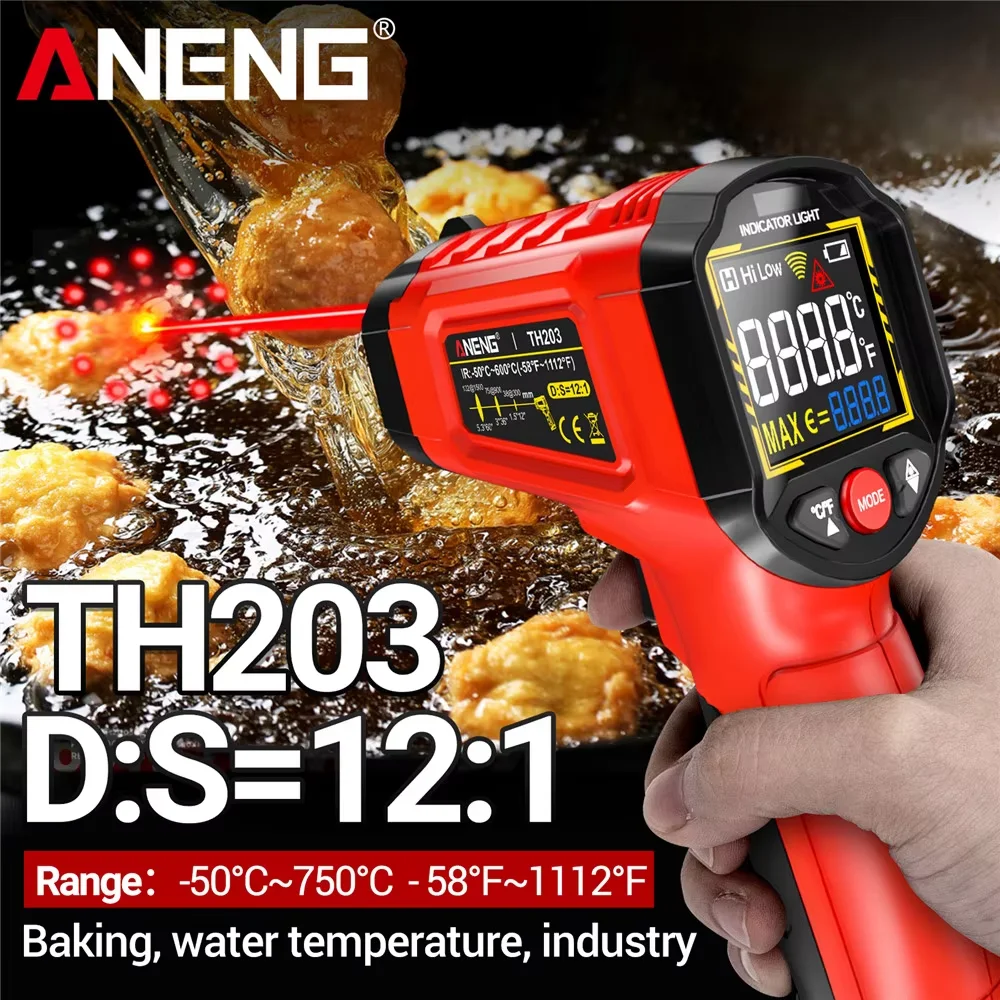
This infrared thermometer is built around the principle of non-contact temperature measurement, utilizing an infrared sensor to detect thermal radiation emitted by an object. The visible red laser dot serves as a targeting aid, indicating the approximate center of the measurement area. This method is particularly useful for measuring surfaces that are difficult to reach, dangerously hot, or sensitive to contact.
The device's housing features a prominent red and black color scheme, suggesting a robust, tool-like aesthetic. Its ergonomic grip is designed for comfortable handling during extended use, a crucial factor for professionals who rely on their Tools throughout the workday. The large, backlit VA reverse screen display enhances readability in diverse lighting conditions, from dimly lit workshops to bright outdoor environments.
Unlike traditional contact thermometers that require physical interaction, the ANENG TH203 allows for safe distance measurements. This capability is paramount when dealing with hot glues, freshly stained wood, or operational machinery where direct contact could be hazardous or impractical. The non-invasive nature of infrared measurement also prevents contamination or damage to delicate surfaces, preserving the integrity of materials being worked on.
Operational Range and Accuracy in Practice
With a broad temperature range of -50°C to 600°C (-58°F to 1112°F), the ANENG TH203 covers a significant spectrum of temperatures relevant to carpentry and general industrial tasks. This range allows for monitoring everything from the ambient temperature of a curing epoxy to the operating temperature of a power tool's motor. The versatility ensures that a single tool can address multiple diagnostic needs.
The stated D:S ratio of 12:1 is a critical specification for an infrared thermometer. The Distance-to-Spot ratio indicates that at a distance of 12 units, the measurement spot size is 1 unit. For example, if the thermometer is 12 inches away from an object, it will measure the temperature of a 1-inch diameter spot. This ratio is respectable for general-purpose applications, allowing for reasonably precise targeting from a safe working distance.
For a carpenter, understanding the D:S ratio is vital. When checking the temperature of a specific joint or a small component, positioning the thermometer too far away can lead to inaccurate readings by including surrounding areas in the measurement. A 12:1 ratio enables effective spot measurement for tasks like verifying the temperature of a specific section of a heated press or pinpointing cold spots in a room's insulation from a practical distance, without needing to be right on top of the target.
Advanced Features for Enhanced Utility
The ANENG TH203 incorporates a high/low temperature alert system, a feature that significantly improves workflow efficiency. Users can set predefined temperature thresholds, and the device will provide a visual (and likely audible, though not explicitly stated) alarm if the measured temperature falls outside this range. This is particularly useful for processes requiring consistent temperature, such as wood drying or glue curing.
The inclusion of a VA reverse screen display is a thoughtful design choice. This type of display offers high contrast and wide viewing angles, making it easy to read the temperature values even when the device is held at an awkward angle or in challenging lighting. The large digital readouts, including MAX temperature and emissivity settings, are clearly presented, minimizing misinterpretation of data.
Compared to basic infrared thermometers, the high/low alert system acts as a proactive monitoring tool. Instead of constantly watching the display, a carpenter can set the desired range and focus on other tasks, knowing the thermometer will signal any deviations. This functionality transforms the device from a simple measurement tool into a smart assistant, preventing costly errors due to incorrect temperatures in material processing or equipment operation.
Durability and Ergonomics in the Workshop
The physical construction, with its prominent red and black plastic, suggests a design intended for the rigors of a workshop environment. Tools used by carpenters often face accidental drops, dust, and general wear and tear. While specific impact ratings are not provided, the visual appearance implies a certain level of resilience against minor bumps and knocks. The ergonomic design, with a contoured grip, ensures the device feels secure in hand, reducing the likelihood of accidental drops.
For a carpenter often working at heights or in confined spaces, the ability to drop a tool without immediate catastrophic failure is a practical concern. While no tool is indestructible, the visible material choices and form factor suggest a more forgiving build than delicate scientific instruments. The battery slot, accessible via a sliding cover, appears robust enough to withstand repeated battery changes without becoming flimsy.
This focus on durability and user comfort sets it apart from more fragile, laboratory-grade instruments. It is designed to be a working tool, not a display piece. The secure grip minimizes hand fatigue during prolonged use, a small but significant detail for professionals who spend hours with tools in hand. This practical approach to design ensures the thermometer can withstand the demands of daily use on a busy job site.
Versatile Applications Beyond the Bench
While primarily a carpenter's tool, the ANENG TH203's capabilities extend to various other applications, as illustrated in the product images. It can be used for automotive engine inspection, checking for overheating components, or verifying HVAC system performance. Its utility in measuring water and oil temperatures, with a clear warning about avoiding steam, highlights its broad applicability in diverse settings.
For a carpenter, this versatility means the tool isn't confined to woodworking tasks alone. It can be used to diagnose issues with workshop heating or cooling systems, check the temperature of lubricants in machinery, or even monitor cooking temperatures for personal use. The ability to perform multiple functions with one device adds significant value, reducing the need for specialized single-purpose tools.
This multi-purpose nature differentiates it from highly specialized industrial pyrometers. While it may not offer the extreme precision or advanced features of those devices, its broad utility at an accessible price point makes it an excellent all-around diagnostic tool for the general tradesperson or dedicated DIY enthusiast. It bridges the gap between basic household thermometers and highly specialized industrial equipment.
Emissivity and Measurement Precision
The ANENG TH203 features adjustable emissivity, a crucial setting for accurate infrared temperature measurement. Emissivity is a measure of an object's ability to emit infrared energy, ranging from 0.01 to 1.00. Different materials have different emissivities; for example, polished metal has a low emissivity, while wood or painted surfaces have higher emissivities. The default setting is 0.95, suitable for many organic materials and painted surfaces.
Adjusting the emissivity ensures that the thermometer provides the most accurate reading for the specific material being measured. If the emissivity is set incorrectly, the temperature reading can be significantly off. For a carpenter, this means being able to accurately measure the temperature of different types of wood, metal components, or various finishes, by adjusting the setting to match the material's properties.
This level of control over emissivity is a professional-grade feature often absent in cheaper, entry-level infrared thermometers. It allows for greater confidence in the accuracy of readings across a wide array of materials encountered in carpentry and construction. Without adjustable emissivity, the thermometer would only be reliably accurate on a limited range of surfaces, making it less useful for diverse projects.
Power Management and User Interface
The device is powered by two AAA batteries, a common and easily replaceable power source. The battery slot is conveniently located and designed for straightforward access, minimizing downtime during battery changes. The inclusion of a low power prompt ensures that users are warned before the batteries completely deplete, preventing unexpected interruptions during critical measurements.
An auto power-off function is also integrated, preserving battery life by automatically shutting down the device after a period of inactivity. This is a practical feature for busy professionals who might occasionally forget to turn off their tools. The overall user interface, with clearly labeled buttons for mode selection and high/low alerts, is intuitive and easy to navigate, even for first-time users.
These power management features contribute to the overall cost-effectiveness and convenience of the ANENG TH203. Unlike devices with proprietary batteries or complex charging routines, the use of standard AAA cells and intelligent power-saving functions means less hassle and lower operational costs over the long term. It's a tool designed to be ready when needed, without unnecessary complications.
Imagine the efficiency gained when quickly diagnosing an overheating bearing on a table saw, ensuring your wood glue is curing at the optimal temperature, or pinpointing drafts around a newly installed window frame. This thermometer streamlines these tasks, allowing for faster problem-solving and higher quality work, ultimately saving time and preventing costly rework. It provides the confidence that comes from precise, immediate data, empowering better decisions on every project. The ANENG TH203 is a practical addition that will quickly become indispensable in your toolkit, making complex temperature assessments simple and quick, allowing you to focus on the craft itself.