ANENG TH202 Non-Contact Infrared Thermometer
Official Store Deal
Expert Analysis Overview
Precision Thermal Assessment: The ANENG TH202 Infrared Thermometer
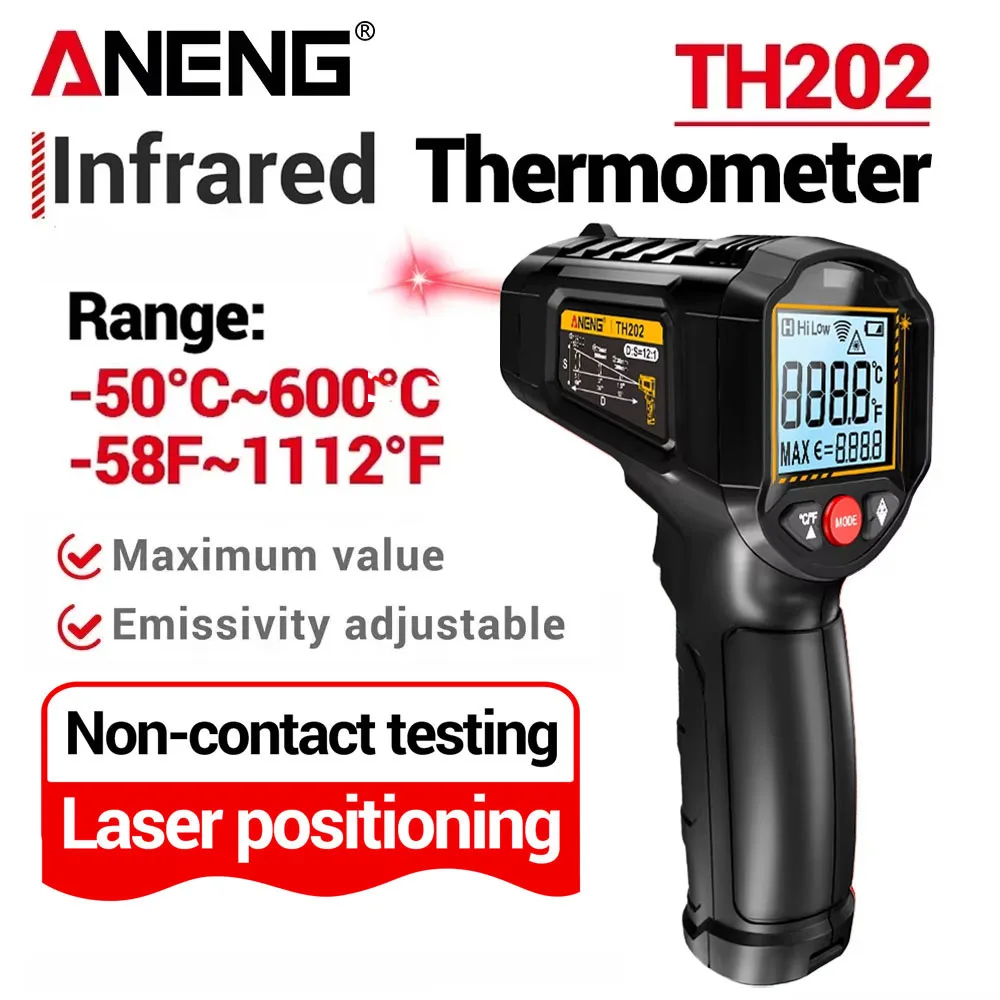
The ANENG TH202 is a dedicated non-contact infrared thermometer engineered for rapid and accurate temperature acquisition across a broad spectrum of applications. This device is designed for users requiring efficient thermal diagnostics without physical contact, a critical safety and convenience feature in many industrial, culinary, and domestic settings. Its robust feature set, including adjustable emissivity and a wide temperature range, positions it as a significant upgrade over conventional contact thermometers, offering enhanced capability and operational safety.
Operational Range and Thermal Sensitivity
The ANENG TH202 infrared thermometer boasts an impressive operational temperature range, spanning from -50°C to 600°C (-58°F to 1112°F). This extensive range ensures its utility across diverse thermal environments, from cryogenic storage monitoring to high-temperature industrial processes. The device captures thermal radiation. It converts this energy into a digital temperature reading. This broad capability is a cornerstone of its versatility.
Compared to basic spot thermometers, which often have narrower ranges, the TH202's specifications allow for a more comprehensive thermal assessment. For instance, a standard bimetallic thermometer might struggle with extreme cold or heat, whereas this infrared unit maintains its measurement integrity. This range is crucial for professionals. It supports varied diagnostic requirements.
Optical Resolution and Measurement Integrity
Central to the ANENG TH202's performance is its 12:1 Distance-to-Spot (D:S) ratio. This optical resolution dictates the size of the measurement area relative to the distance from the target. A 12:1 ratio means that at a distance of 12 inches, the device measures a 1-inch diameter spot. This is a respectable ratio for general-purpose infrared thermometers, allowing for precise targeting of smaller objects from a safe distance.
This D:S ratio directly impacts measurement accuracy, particularly when assessing temperatures of smaller components or areas that are difficult to access. A higher D:S ratio minimizes the influence of surrounding temperatures on the target reading, ensuring that the acquired data pertains specifically to the intended surface. Lower D:S ratios, common in less advanced models, often necessitate closer proximity, which can be impractical or hazardous. The laser pointer further refines targeting. It ensures the user measures the correct area.
Emissivity Adjustment for Material Accuracy
One of the most critical features for a metrologist is the adjustable emissivity function. Emissivity is a material property that describes its efficiency in emitting thermal energy. Different materials emit infrared radiation at varying rates, and without proper compensation, temperature readings can be significantly skewed. The ANENG TH202 allows users to adjust this parameter, typically between 0.10 and 0.99, to match the specific surface being measured.
This capability is paramount for obtaining accurate temperature data across a variety of surfaces, from highly reflective polished metals to matte painted surfaces or human skin. The inclusion of an emissivity table, as depicted, provides a practical guide for setting the correct value, thereby enhancing the reliability of measurements. Without adjustable emissivity, many entry-level infrared thermometers provide only approximate readings, especially on non-ideal surfaces. This adjustment ensures scientific rigor.
Rapid Acquisition and Alarm Functionality
The device is characterized by its fast and accurate spot sensing, ensuring quick data acquisition. This speed is vital in dynamic environments where temperatures may fluctuate rapidly or when numerous measurements are required in a short timeframe. The anti-interference design contributes to more stable performance, reducing the likelihood of erroneous readings from external electromagnetic sources.
Furthermore, the ANENG TH202 incorporates high and low temperature alarm functions. These programmable thresholds alert the user visually when a measured temperature falls outside a predefined safe or desired range. This feature is invaluable for monitoring critical processes, preventing overheating in machinery, or ensuring food safety by indicating temperatures that are too high or too low. Such alarms provide immediate feedback. They enhance operational safety and efficiency. This proactive alert system surpasses the capabilities of basic thermometers that only display current readings.
Power Management and Portability
Powering the ANENG TH202 are two AAA 1.5V batteries, a common and easily replaceable power source. The inclusion of an automatic shutdown feature, activating after approximately 10 seconds of inactivity, significantly conserves battery life. This intelligent power management extends the operational duration of the device, reducing the frequency of battery replacements and ensuring it is ready for use when needed.
Its compact, pistol-grip design enhances portability and ergonomic handling. The lightweight construction makes it suitable for extended use without user fatigue. Unlike bulkier industrial units, this device offers convenient one-handed operation. This design facilitates quick, on-the-go measurements. The accessible battery compartment simplifies maintenance.
Versatile Application Scenarios
The ANENG TH202 is marketed for multiple scenarios, underscoring its broad utility. These include industrial temperature measurement, refrigerator temperature detection, food temperature detection, and kitchen baking. Its non-contact nature is particularly beneficial in food preparation, where hygiene is paramount, and in industrial settings, where hot or moving parts pose a hazard. The device is a versatile tool.
For instance, in industrial contexts, it can quickly identify hot spots in electrical panels or machinery, indicating potential failures. In culinary applications, it ensures precise temperature control for optimal cooking and food safety. This adaptability makes it a valuable instrument for both professional technicians and home users. It streamlines various temperature monitoring tasks. The ability to measure without contact is a significant advantage.
The Metrologist's Perspective on Value
From a metrological standpoint, the ANENG TH202 offers a compelling balance of features for its price point. While it lacks advanced data logging capabilities or explicit calibration certification often found in higher-end laboratory-grade instruments, its core functionalities—wide range, adjustable emissivity, and a reasonable D:S ratio—provide a solid foundation for accurate non-contact temperature measurement. The device is a practical choice. It delivers reliable performance for everyday tasks.
Its ability to provide repeatable results, coupled with the high/low alarm functions, makes it a dependable tool for routine checks and preventative maintenance. The strategic transparency regarding its limitations, such as the absence of advanced data logging, is a logical trade-off for its affordability and ease of use. This instrument is an excellent entry point for precise thermal diagnostics. It offers significant capability for its cost.
Imagine the confidence in quickly verifying the temperature of a critical component in a manufacturing line, ensuring food is cooked to perfection, or identifying energy inefficiencies in your home. The ANENG TH202 empowers users with immediate, actionable thermal data, streamlining tasks and enhancing safety across numerous environments. This device simplifies complex temperature monitoring, making precision accessible.