ANENG B16 Digital Voltage Tester Pen with NCV and Screwdriver
Official Store Deal
Expert Analysis Overview
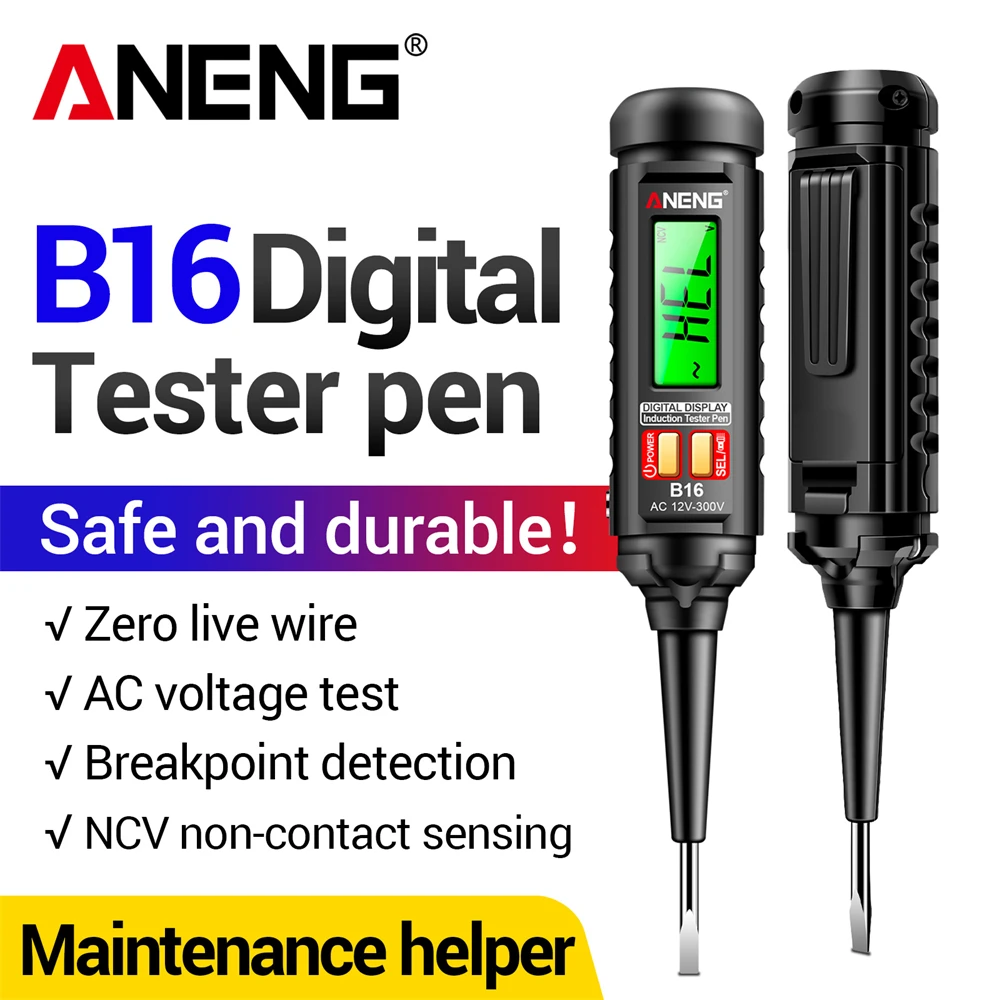
The ANENG B16 Digital Voltage Tester Pen is a compact, multi-functional electrical diagnostic tool designed for homeowners, DIY enthusiasts, and even professional electricians seeking a quick and reliable method for basic circuit verification. This device integrates non-contact voltage (NCV) detection, live/neutral wire identification, and line breakpoint finding capabilities into a convenient pen-style form factor, complete with an integrated screwdriver tip. Its utility extends beyond simple voltage checks, offering a practical solution for common electrical troubleshooting tasks around the home or on a job site. It simplifies complex electrical diagnostics.
The ANENG B16's primary function revolves around its ability to detect AC voltage within a range of 12V to 300V. This broad spectrum covers most standard residential and light commercial electrical systems. The device utilizes a non-contact voltage sensing method, which is a critical safety feature. This allows users to identify the presence of voltage without direct metallic contact with the conductor, significantly reducing the risk of electrical shock. A visual indicator, typically an LED or screen display, combined with an audible alarm, signals the presence of voltage. This feedback mechanism is immediate.
For a home inspector, the ability to quickly scan outlets, switches, and junction boxes for live circuits without needing to expose bare wires is invaluable. It streamlines preliminary safety checks. This non-invasive approach is far safer than traditional methods requiring direct probe contact. Unlike older, simpler voltage testers that demand physical contact, the ANENG B16 offers a layer of protection, making it accessible even for those with less electrical experience. It minimizes direct exposure to potential hazards.
The NCV mode is a cornerstone of the ANENG B16's design, offering a crucial safety advantage. This technology detects the electromagnetic field emitted by AC voltage, allowing the tester to identify live wires from a distance. The screen displays an 'EF' (Electric Field) indicator, and the alarm sounds as the device approaches a live conductor. Signal strength indicates proximity to the live line. This feature is particularly useful for quickly checking if a circuit is de-energized before beginning work, or for identifying which wires in a bundle are live without stripping insulation.
For a home inspector, this translates into efficient and safer preliminary assessments. It allows for rapid scanning of multiple points. Imagine inspecting an older property where wiring might be concealed or poorly documented; the NCV function provides a rapid assessment of potential hazards. This contrasts sharply with traditional contact testers, which require direct engagement with electrical components, increasing the risk of accidental contact with live parts. The ANENG B16 prioritizes user safety.
One of the more advanced features of the ANENG B16 is its line breakpoint finding capability. This function allows the device to detect breaks or disconnections within a live electrical line. When the NCV mode is active, the screen shows 'EF' along the line. As the tester moves along a wire, a strong signal indicates continuity, while a sudden drop or absence of a signal, accompanied by an alarm, pinpoints the location of a break. This is a powerful diagnostic tool.
This capability is exceptionally beneficial for troubleshooting common household electrical issues, such as identifying a break in an extension cord, a faulty appliance cable, or even tracing a break in a wall-mounted wire (within reasonable depth). It saves significant time and effort. Instead of blindly cutting into walls or disassembling entire appliances, the ANENG B16 can narrow down the fault location, enabling more targeted repairs. This surpasses the utility of basic voltage pens that only indicate live presence, offering a more comprehensive diagnostic approach. It helps locate problems precisely.
Accurately distinguishing between the 'zero line' (neutral) and the 'fire line' (live/hot) is fundamental to safe electrical work. The ANENG B16 provides a clear method for this identification. In voltage measurement mode, touching the touch pole of the pen with a hand and inserting the pen into a socket allows the device to differentiate. A green screen display with a voltage value of 0V, accompanied by no audible or visual alarms, indicates the zero line. Conversely, a red screen display with a high voltage value (e.g., ~220V), along with sound and light alarms, identifies the fire line. This distinction is crucial.
For any electrical task, knowing which wire is live is paramount for safety and correct wiring. It prevents dangerous misconnections. A home inspector can use this to verify proper outlet wiring, ensuring that live and neutral connections are not reversed, which can be a significant safety hazard. This feature provides a clear, unambiguous indication, unlike simpler testers that might only show voltage presence without specifying the line type. It enhances diagnostic accuracy considerably.
The physical design of the ANENG B16 emphasizes portability and ease of use. Its pen-like form factor, measuring approximately 16cm (6.3 inches) in length, makes it highly convenient to carry in a pocket or tool belt. The non-slip handle ensures a secure grip, even in challenging conditions. An integrated pen clip further enhances its portability, allowing it to be securely attached to clothing or a clipboard. It is a tool for daily carry.
This compact design means the tester is always within reach for quick checks. It fits into tight spaces. For a home inspector constantly moving between different areas of a property, a lightweight and easily accessible tool like this is a significant advantage, reducing the need to carry bulkier equipment for routine checks. This design philosophy contrasts with larger, multi-meter style devices that, while offering more features, often sacrifice portability and quick deployment. The ANENG B16 is built for convenience.
Adding to its versatility, the ANENG B16 incorporates a chrome-vanadium steel screwdriver bit. This 'word screwdriver' (flathead) is a thoughtful inclusion, transforming the tester into a dual-purpose tool. It allows for minor adjustments or the removal of cover plates without needing to switch tools. The bit is robust. This integration is particularly useful for tasks like opening electrical outlet covers or light switch plates for inspection, where a screwdriver is frequently required alongside voltage testing. It reduces tool clutter.
Furthermore, the device includes a built-in flashlight. This small but powerful LED assists in night work or when operating in dimly lit areas, such as inside electrical panels, attics, or crawl spaces. It provides essential illumination. The flashlight function is activated by a short press of the function/flashlight key, making it readily available when needed. This combination of a tester, screwdriver, and flashlight makes the ANENG B16 a highly practical and efficient tool for quick inspections and minor electrical tasks. It offers true multi-functionality.
A prominent feature of the ANENG B16 is its LCD digital display, which comes with a bright backlight. This display provides clear, numerical voltage readings and various indicators, such as 'EF' for NCV mode and distinct color changes (green for zero line, red for fire line). The backlight ensures readability in all lighting conditions, from bright daylight to dark basements. Readability is never an issue.
For a home inspector, clear and unambiguous readings are crucial for accurate diagnostics. It minimizes interpretation errors. The digital display eliminates the guesswork associated with older, analog-style testers or simple LED indicators, providing precise voltage values. This enhanced clarity allows for more confident decision-making during an inspection, ensuring that electrical conditions are correctly assessed. It offers superior data presentation compared to basic testers. The screen provides critical information instantly.
The ANENG B16 is powered by two AAA batteries, a common and easily replaceable power source. It also features an automatic power-off function, which activates after approximately 3 minutes of inactivity. This conserves battery life. An additional battery undervoltage indication alerts the user when the batteries are running low, ensuring the device doesn't unexpectedly fail during an inspection. This prevents interruptions.
The device's construction utilizes ABS plastic and chrome-vanadium steel for the bit, suggesting a reasonable level of durability for its intended use. ABS is known for its impact resistance, while chrome-vanadium steel offers strength and wear resistance for the screwdriver tip. It is built to last. This combination of materials ensures that the tester can withstand the rigors of regular use in various environments, from a workshop to a construction site. The design balances robustness with its lightweight nature. It offers practical resilience.
For a home inspector, the ANENG B16 is more than just a voltage tester; it is a strategic asset for preliminary electrical assessments. Its NCV capability allows for rapid, safe scanning of electrical panels, outlets, and wiring to identify live circuits or potential hazards without direct contact. This significantly speeds up the initial walkthrough. The line breakpoint finding feature enables the identification of hidden electrical issues behind walls or within appliances, providing valuable insights into potential wiring faults that might otherwise go unnoticed. It reveals unseen problems. The clear zero/fire line identification ensures accurate assessment of outlet wiring, a common point of concern in older properties. This tool provides a quick, actionable overview of electrical safety and functionality, allowing the inspector to either confirm safe conditions or flag areas requiring further, more in-depth investigation by a licensed electrician. It empowers informed decisions.
Imagine confidently assessing a property's electrical system, quickly identifying live circuits, and even pinpointing a hidden break in a wall without invasive procedures. This tool provides that capability. The ANENG B16 allows for efficient, safe, and preliminary electrical diagnostics, enhancing the thoroughness of any home inspection. It becomes an indispensable part of the toolkit, offering peace of mind and professional insight. This device ensures that no potential electrical issue goes unexamined, providing a comprehensive initial assessment that protects both the inspector and the future homeowner. It is a smart investment for any professional.
Unveiling Electrical Integrity: Core Detection Capabilities
The ANENG B16's primary function revolves around its ability to detect AC voltage within a range of 12V to 300V. This broad spectrum covers most standard residential and light commercial electrical systems. The device utilizes a non-contact voltage sensing method, which is a critical safety feature. This allows users to identify the presence of voltage without direct metallic contact with the conductor, significantly reducing the risk of electrical shock. A visual indicator, typically an LED or screen display, combined with an audible alarm, signals the presence of voltage. This feedback mechanism is immediate.
For a home inspector, the ability to quickly scan outlets, switches, and junction boxes for live circuits without needing to expose bare wires is invaluable. It streamlines preliminary safety checks. This non-invasive approach is far safer than traditional methods requiring direct probe contact. Unlike older, simpler voltage testers that demand physical contact, the ANENG B16 offers a layer of protection, making it accessible even for those with less electrical experience. It minimizes direct exposure to potential hazards.
Non-Contact Voltage (NCV) Sensing: A Safety Imperative
The NCV mode is a cornerstone of the ANENG B16's design, offering a crucial safety advantage. This technology detects the electromagnetic field emitted by AC voltage, allowing the tester to identify live wires from a distance. The screen displays an 'EF' (Electric Field) indicator, and the alarm sounds as the device approaches a live conductor. Signal strength indicates proximity to the live line. This feature is particularly useful for quickly checking if a circuit is de-energized before beginning work, or for identifying which wires in a bundle are live without stripping insulation.
For a home inspector, this translates into efficient and safer preliminary assessments. It allows for rapid scanning of multiple points. Imagine inspecting an older property where wiring might be concealed or poorly documented; the NCV function provides a rapid assessment of potential hazards. This contrasts sharply with traditional contact testers, which require direct engagement with electrical components, increasing the risk of accidental contact with live parts. The ANENG B16 prioritizes user safety.
Pinpointing Hidden Faults: Line Breakpoint Finding
One of the more advanced features of the ANENG B16 is its line breakpoint finding capability. This function allows the device to detect breaks or disconnections within a live electrical line. When the NCV mode is active, the screen shows 'EF' along the line. As the tester moves along a wire, a strong signal indicates continuity, while a sudden drop or absence of a signal, accompanied by an alarm, pinpoints the location of a break. This is a powerful diagnostic tool.
This capability is exceptionally beneficial for troubleshooting common household electrical issues, such as identifying a break in an extension cord, a faulty appliance cable, or even tracing a break in a wall-mounted wire (within reasonable depth). It saves significant time and effort. Instead of blindly cutting into walls or disassembling entire appliances, the ANENG B16 can narrow down the fault location, enabling more targeted repairs. This surpasses the utility of basic voltage pens that only indicate live presence, offering a more comprehensive diagnostic approach. It helps locate problems precisely.
Identifying the Current Path: Zero and Fire Line Distinction
Accurately distinguishing between the 'zero line' (neutral) and the 'fire line' (live/hot) is fundamental to safe electrical work. The ANENG B16 provides a clear method for this identification. In voltage measurement mode, touching the touch pole of the pen with a hand and inserting the pen into a socket allows the device to differentiate. A green screen display with a voltage value of 0V, accompanied by no audible or visual alarms, indicates the zero line. Conversely, a red screen display with a high voltage value (e.g., ~220V), along with sound and light alarms, identifies the fire line. This distinction is crucial.
For any electrical task, knowing which wire is live is paramount for safety and correct wiring. It prevents dangerous misconnections. A home inspector can use this to verify proper outlet wiring, ensuring that live and neutral connections are not reversed, which can be a significant safety hazard. This feature provides a clear, unambiguous indication, unlike simpler testers that might only show voltage presence without specifying the line type. It enhances diagnostic accuracy considerably.
Ergonomics and Practicality: Design and User Experience
The physical design of the ANENG B16 emphasizes portability and ease of use. Its pen-like form factor, measuring approximately 16cm (6.3 inches) in length, makes it highly convenient to carry in a pocket or tool belt. The non-slip handle ensures a secure grip, even in challenging conditions. An integrated pen clip further enhances its portability, allowing it to be securely attached to clothing or a clipboard. It is a tool for daily carry.
This compact design means the tester is always within reach for quick checks. It fits into tight spaces. For a home inspector constantly moving between different areas of a property, a lightweight and easily accessible tool like this is a significant advantage, reducing the need to carry bulkier equipment for routine checks. This design philosophy contrasts with larger, multi-meter style devices that, while offering more features, often sacrifice portability and quick deployment. The ANENG B16 is built for convenience.
Integrated Screwdriver and Illumination: Beyond Basic Testing
Adding to its versatility, the ANENG B16 incorporates a chrome-vanadium steel screwdriver bit. This 'word screwdriver' (flathead) is a thoughtful inclusion, transforming the tester into a dual-purpose tool. It allows for minor adjustments or the removal of cover plates without needing to switch tools. The bit is robust. This integration is particularly useful for tasks like opening electrical outlet covers or light switch plates for inspection, where a screwdriver is frequently required alongside voltage testing. It reduces tool clutter.
Furthermore, the device includes a built-in flashlight. This small but powerful LED assists in night work or when operating in dimly lit areas, such as inside electrical panels, attics, or crawl spaces. It provides essential illumination. The flashlight function is activated by a short press of the function/flashlight key, making it readily available when needed. This combination of a tester, screwdriver, and flashlight makes the ANENG B16 a highly practical and efficient tool for quick inspections and minor electrical tasks. It offers true multi-functionality.
Clear Visual Feedback: The LCD Digital Display
A prominent feature of the ANENG B16 is its LCD digital display, which comes with a bright backlight. This display provides clear, numerical voltage readings and various indicators, such as 'EF' for NCV mode and distinct color changes (green for zero line, red for fire line). The backlight ensures readability in all lighting conditions, from bright daylight to dark basements. Readability is never an issue.
For a home inspector, clear and unambiguous readings are crucial for accurate diagnostics. It minimizes interpretation errors. The digital display eliminates the guesswork associated with older, analog-style testers or simple LED indicators, providing precise voltage values. This enhanced clarity allows for more confident decision-making during an inspection, ensuring that electrical conditions are correctly assessed. It offers superior data presentation compared to basic testers. The screen provides critical information instantly.
Operational Efficiency and Longevity: Power Management and Durability
The ANENG B16 is powered by two AAA batteries, a common and easily replaceable power source. It also features an automatic power-off function, which activates after approximately 3 minutes of inactivity. This conserves battery life. An additional battery undervoltage indication alerts the user when the batteries are running low, ensuring the device doesn't unexpectedly fail during an inspection. This prevents interruptions.
The device's construction utilizes ABS plastic and chrome-vanadium steel for the bit, suggesting a reasonable level of durability for its intended use. ABS is known for its impact resistance, while chrome-vanadium steel offers strength and wear resistance for the screwdriver tip. It is built to last. This combination of materials ensures that the tester can withstand the rigors of regular use in various environments, from a workshop to a construction site. The design balances robustness with its lightweight nature. It offers practical resilience.
The Home Inspector's Edge: Strategic Application
For a home inspector, the ANENG B16 is more than just a voltage tester; it is a strategic asset for preliminary electrical assessments. Its NCV capability allows for rapid, safe scanning of electrical panels, outlets, and wiring to identify live circuits or potential hazards without direct contact. This significantly speeds up the initial walkthrough. The line breakpoint finding feature enables the identification of hidden electrical issues behind walls or within appliances, providing valuable insights into potential wiring faults that might otherwise go unnoticed. It reveals unseen problems. The clear zero/fire line identification ensures accurate assessment of outlet wiring, a common point of concern in older properties. This tool provides a quick, actionable overview of electrical safety and functionality, allowing the inspector to either confirm safe conditions or flag areas requiring further, more in-depth investigation by a licensed electrician. It empowers informed decisions.
Imagine confidently assessing a property's electrical system, quickly identifying live circuits, and even pinpointing a hidden break in a wall without invasive procedures. This tool provides that capability. The ANENG B16 allows for efficient, safe, and preliminary electrical diagnostics, enhancing the thoroughness of any home inspection. It becomes an indispensable part of the toolkit, offering peace of mind and professional insight. This device ensures that no potential electrical issue goes unexamined, providing a comprehensive initial assessment that protects both the inspector and the future homeowner. It is a smart investment for any professional.