Adjustable PWM Signal Generator Module
Official Store Deal
Expert Analysis Overview
Precision Pulse Control for the Workshop
The Adjustable PWM Signal Generator Module is a compact, versatile electronic component engineered for precise control over pulse-width modulation signals. This device is a critical asset for any workshop, enabling fine-tuned adjustments of frequency and duty cycle for a myriad of applications. Its standalone operation, coupled with a clear digital display, positions it as a practical upgrade from less intuitive, fixed-output solutions. This module offers the capability to drive motors, control lighting, or test custom circuits with dependable accuracy.
Core Functionality and Digital Readout
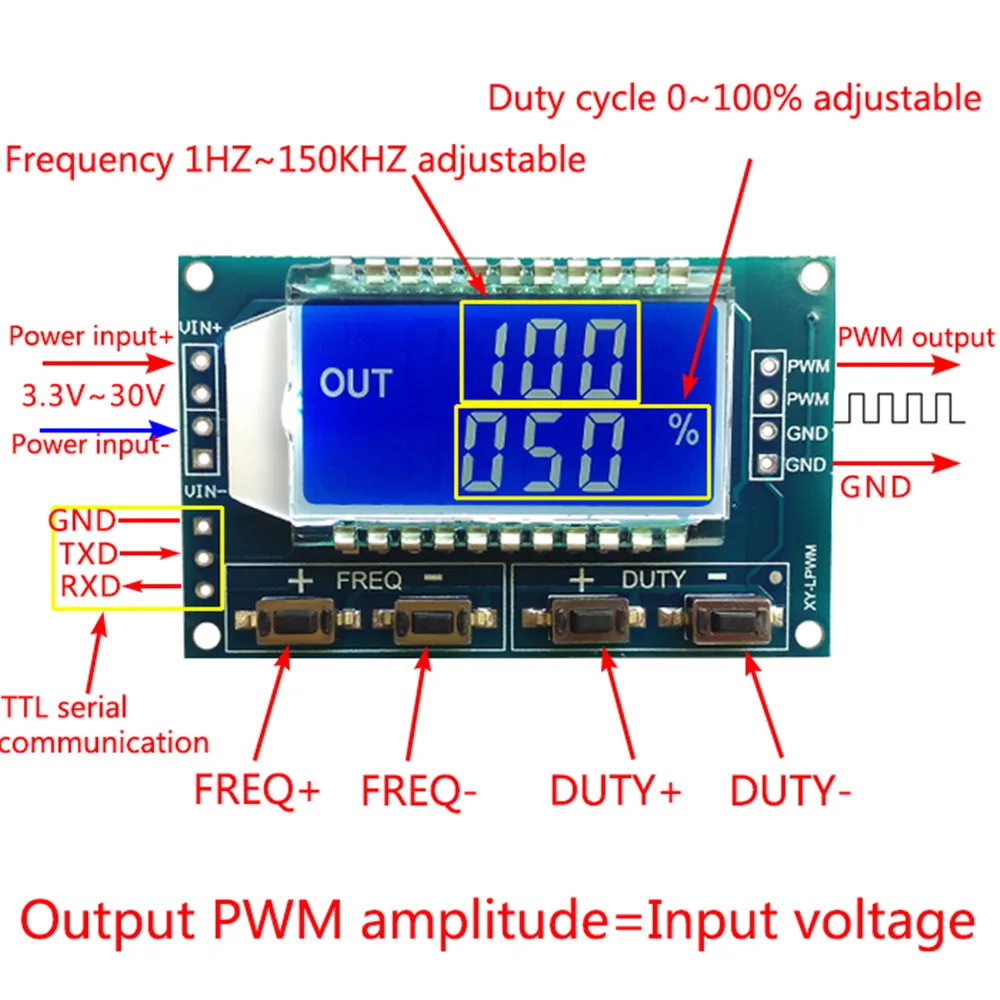
The module features a liquid crystal display (LCD) that presents both frequency and duty cycle values simultaneously. This dual display is a significant advantage. Users can quickly ascertain the current operational parameters without cycling through menus or relying on external measurement devices. The clear blue backlight ensures visibility in various lighting conditions, a common challenge in many workshop environments. This direct readout capability simplifies setup and verification tasks.
Unlike older analog signal generators, where settings are often estimated from dial positions, this digital interface provides exact numerical feedback. The precision offered by the digital display means that repeatable results are achievable with minimal effort. For projects requiring consistent signal characteristics, this level of accuracy is invaluable. It removes guesswork from the equation.
Consider a scenario where a motor's speed needs precise adjustment for a sanding jig. The ability to dial in an exact duty cycle and frequency, then see those values clearly displayed, ensures the motor operates consistently. This eliminates the frustration of inconsistent performance often found with less precise control methods. The module's design prioritizes operational clarity.
Frequency and Duty Cycle Range
This signal generator offers an impressive frequency range of 1Hz to 150KHz. This wide spectrum covers most common applications encountered in electronics and mechanical control. From very slow pulses for actuators to high-frequency signals for switching power supplies, the module handles it. The duty cycle is adjustable from 0% to 100%, providing complete control over the pulse width.
Such a broad range of adjustment capabilities makes this module exceptionally adaptable. Generic fixed-frequency generators often limit project scope. This module, however, supports experimentation across a vast array of frequencies. It is a true workhorse.
For a carpenter integrating electronics into custom machinery, this flexibility is paramount. Controlling the speed of a DC motor, for instance, requires precise duty cycle adjustment. A 0-100% range allows for subtle speed variations, from a complete stop to full power. This level of granular control ensures optimal performance for various tasks, from delicate carving to aggressive milling.
Power Input and Output Characteristics
The module operates on a wide voltage input range of 3.3V to 30V DC. This broad compatibility means it can be powered by various sources, including common bench power supplies, battery packs, or existing circuit power rails. The output PWM amplitude directly matches the input voltage. This ensures the output signal is compatible with the driving requirements of many components.
This wide input voltage simplifies integration into existing systems. There is no need for complex voltage regulators or multiple power supplies. A single power source often suffices. This reduces overall system complexity and component count.
Compared to modules requiring specific 5V or 12V inputs, this flexibility is a major benefit. It means fewer power conversion steps are needed, which can reduce heat and improve efficiency. For a project with varied power requirements, this adaptability streamlines the power delivery aspect significantly. It's a practical consideration.
User Interface and Control
Control of the frequency and duty cycle is managed via four tactile push buttons: Freq+, Freq-, Duty+, and Duty-. These dedicated buttons provide intuitive adjustment. A short press makes incremental changes, while a long press allows for rapid scrolling through values. This dual-speed adjustment mechanism is efficient for both fine-tuning and broad adjustments.
This direct button interface is far more user-friendly than software-only configurations or potentiometer-based adjustments. Physical buttons offer tactile feedback. They allow for precise control without requiring a separate computer or complex programming. This makes the module suitable for standalone applications.
Imagine adjusting a motor's speed on a workbench. The physical buttons allow for immediate, hands-on control, much like adjusting a router's speed dial. This direct interaction enhances the user experience and speeds up the prototyping process. It's about getting the job done quickly.
TTL Serial Communication
Beyond manual control, the module also supports TTL serial communication (TXD, RXD). This feature allows for remote control and integration with microcontrollers like Arduino or ESP32. Users can send commands to set frequency and duty cycle, or read current parameters, programmatically. This opens up possibilities for automated systems and more complex control schemes.
This serial interface transforms the module from a simple manual controller into a programmable component. It allows for dynamic adjustment based on sensor inputs or predefined sequences. This capability is crucial for advanced automation projects. It expands the module's utility significantly.
Unlike basic PWM generators that are purely manual, the addition of TTL serial communication offers a pathway to sophisticated embedded systems. This means the module can be integrated into custom CNC machines, automated lighting systems, or robotic platforms. The ability to interface with a microcontroller adds a layer of intelligence to the output. It offers substantial flexibility.
Build Quality and Practicality
The module's compact PCB design (52mm x 32mm) makes it easy to integrate into tight enclosures or existing circuit boards. The components appear well-soldered, indicating a standard level of manufacturing quality. While it is a bare PCB, which requires careful handling to avoid short circuits, its small footprint is a practical advantage for many projects. The display is securely mounted.
This small size is particularly beneficial for embedded applications where space is at a premium. It can fit into control panels or project boxes without demanding excessive room. The robust nature of the push buttons suggests they will withstand repeated use in a workshop environment. Durability matters.
Compared to larger, enclosed signal generators, this module's compact form factor is ideal for custom builds. While it doesn't offer the ruggedness of a fully cased industrial device, its design is appropriate for hobbyist and prototyping use. Protecting it within an enclosure is a straightforward task for any builder. This ensures longevity.
Operational Modes and Display Clarity
The module features two primary display modes: "OUT" for normal operation and "SET" for parameter configuration. This clear distinction helps users understand whether they are viewing active output parameters or adjusting settings. The display itself is bright and easy to read, even from an angle. The percentage sign next to the duty cycle value is a helpful visual cue.
This dual-mode display prevents confusion during setup. Knowing whether the displayed values are live output or pending settings is critical for accurate operation. The intuitive labeling simplifies the user experience. It reduces the learning curve.
For a craftsman focused on a project, clear visual feedback is essential. The distinct "OUT" and "SET" indicators ensure that adjustments are made intentionally and correctly. This clarity prevents accidental misconfigurations that could damage components or waste time. It is a thoughtful design choice.
Value Proposition for the Builder
This module represents significant value for its price point. It combines a wide frequency and duty cycle range with a clear digital display and serial communication capabilities. For anyone needing precise PWM control in their projects, this offers a cost-effective solution without sacrificing essential features. Its versatility makes it a valuable addition to any electronics toolkit.
Investing in a dedicated, high-end signal generator can be prohibitive for many hobbyists or small workshops. This module provides much of the core functionality at a fraction of the cost. It democratizes access to precise signal generation. This enables more ambitious projects.
Imagine the satisfaction of building custom lighting effects for a display cabinet or creating a sophisticated motor control system for a woodworking machine. This module provides the fundamental building block for such innovations, empowering creators to bring their ideas to life with precision and reliability. It truly expands creative potential. The clear display makes reading values as straightforward as reading a tape measure, ensuring accuracy in every adjustment. This module stands ready to be the brain of your next precision control project, offering reliable performance and intuitive adjustment for years of creative building.