AC Adjustable Power Supply 3V-24V 3A with Universal Adapter
Official Store Deal
Expert Analysis Overview
The Adjustable DC Power Supply (3V-24V, 3A) is a highly adaptable utility device engineered for electronics technicians and hobbyists requiring precise voltage control for diverse applications. Its design prioritizes versatility, offering a broad output range and multiple connector options to service a wide array of low-voltage electronic devices. This unit addresses a common pain point in electronics repair: the need for numerous dedicated power bricks for different devices. Instead, a single, configurable unit can manage varied power requirements, simplifying the workbench and reducing clutter.
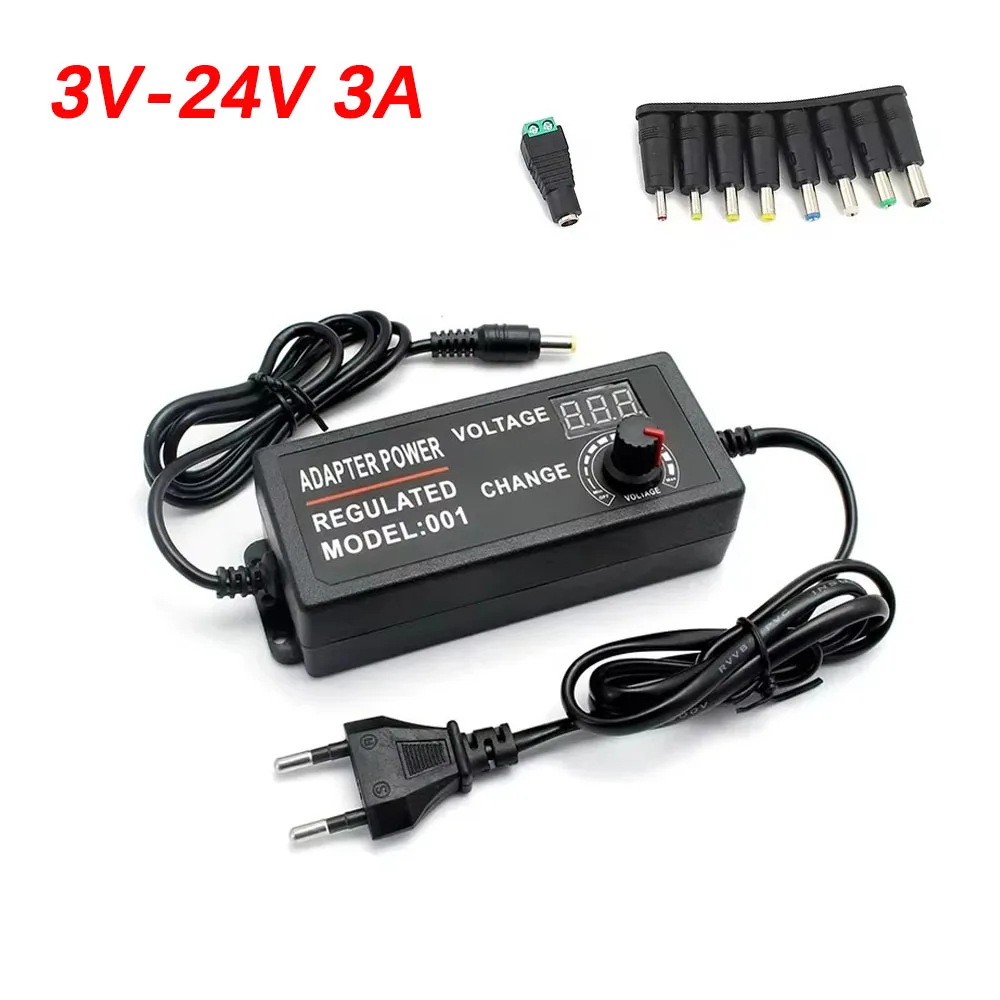
The core of this power supply is its variable voltage output, ranging from 3V to 24V DC, with a maximum current delivery of 3A. This flexibility is paramount for diagnostic work and powering devices with specific, non-standard voltage requirements. The unit features a clear digital LED display for real-time voltage readout, complemented by a rotary potentiometer for fine-tuning the output. This digital interface allows for immediate verification of output, crucial when working with sensitive circuits where over-voltage can cause irreparable damage. Precision matters.
Unlike basic fixed-voltage adapters, this adjustable model eliminates the need for multiple dedicated power sources, streamlining the workbench for varied projects. For a repair technician, this means fewer tools to manage and quicker setup times between different jobs. The ability to dial in specific voltages prevents accidental damage to components during testing, a frequent concern with generic, unregulated power sources. This capability extends the lifespan of both the power supply and the devices it powers.
Furthermore, the unit's capacity to deliver up to 3A is sufficient for many common electronic devices, including LED strips, small motors, CCTV cameras, and various DIY projects. While not suitable for high-power applications like charging laptop batteries or powering large amplifiers, its sweet spot lies in the low-to-medium power segment. This current rating ensures that most small electronics receive adequate power without overstressing the supply. It is a workhorse for the bench.
The power supply is housed in a plastic enclosure, measuring approximately 133mm x 50mm x 32mm. This compact form factor is beneficial for space-constrained work environments. The material choice implies a focus on cost-effectiveness and lightweight design, which is typical for consumer-grade electronics tools. While plastic may not offer the same ruggedness as a metal chassis, it provides adequate insulation and protection for the internal components under normal operating conditions. The casing is functional.
Internal component selection, though not directly visible, must support the advertised voltage and current regulation. The presence of short circuit protection and overtemperature protection is a critical safety feature. These safeguards prevent damage to the power supply itself and, more importantly, to the connected device in the event of a fault. Without these protections, a short circuit could lead to component failure or even fire. Such integrated safety measures are non-negotiable for reliable bench equipment. This protects valuable equipment.
Compared to unbranded, unprotected power adapters, the inclusion of these safety features significantly elevates the product's reliability and user confidence. For technicians working on expensive client equipment, this layer of protection is invaluable. It mitigates the risk of compounding an existing problem with a new one caused by the power source. This is a fundamental differentiator from cheaper, less secure alternatives.
One of the standout features is the inclusion of multiple interchangeable DC barrel jack tips, typically 8 or 9 different sizes. This broad compatibility is essential for a universal power supply. The primary output connector is a 5.5mm x 2.5mm DC plug, which is also compatible with 5.5mm x 2.1mm sockets. This covers a vast majority of standard low-voltage DC input ports found on consumer electronics. The tips are color-coded for easy identification.
This array of connectors means that a technician does not need to stock a separate adapter for every device with a different barrel jack size. If a device requires a 4.0mm x 1.7mm or a 3.5mm x 1.35mm plug, the necessary tip is readily available. This significantly reduces the time spent searching for the correct adapter or fabricating a custom one. It is a time-saver. The convenience of having these tips on hand cannot be overstated in a busy repair shop.
Furthermore, the inclusion of a DC female terminal adapter allows for direct wiring of devices that do not use standard barrel jacks, or for custom test setups. This screw-terminal block simplifies connecting bare wires, ensuring a secure and reliable electrical connection. This feature is particularly useful for prototyping or for repairing devices where the original power input jack has been damaged. It expands the utility beyond pre-made connectors. The wiring method is firm.
The power supply accepts a wide input voltage range of AC 100V-240V, making it suitable for use in various regions without requiring a separate voltage converter. This global compatibility is further enhanced by the availability of both EU and US plug types, as indicated by the product images. This is a practical consideration for international users or those who travel with their equipment. It works almost anywhere.
This broad input range ensures stable operation regardless of minor fluctuations in the mains power supply, a common issue in some electrical grids. The internal circuitry is designed to regulate this varying AC input into a consistent DC output. This robustness contributes to the overall reliability of the unit. A stable input yields a stable output.
Compared to power supplies designed for a single voltage standard (e.g., 120V US only), this unit offers superior flexibility. It eliminates the need for step-up or step-down transformers when operating in different countries, simplifying logistics and reducing potential points of failure. This global readiness is a significant advantage for a universal tool. It is truly adaptable.
The product description specifies self-cooling as the cooling method. For a unit operating at up to 72W (24V * 3A), self-cooling typically implies passive heat dissipation through the plastic casing and internal heatsinks, without the use of active fans. This design choice results in silent operation, which is a benefit in quiet workshop environments. No fan noise means less distraction.
However, self-cooling also means that adequate ventilation around the unit is crucial, especially when operating at higher voltages and currents for extended periods. Overheating can degrade component lifespan and lead to premature failure. The plastic shell, while insulating, is not as efficient at dissipating heat as a metal enclosure would be. Users should ensure the unit is not covered or placed in an enclosed space during heavy use. Airflow is important.
For most intermittent diagnostic and repair tasks, self-cooling should be sufficient. However, for continuous operation at peak load, monitoring the unit's temperature is advisable. Unlike actively cooled power supplies, which can maintain lower operating temperatures under stress, passive cooling relies heavily on ambient conditions. This is a trade-off for silent operation and a lower manufacturing cost. Consider the environment.
This adjustable power supply presents a compelling value proposition for electronics repair. It allows technicians to fix expensive equipment with affordable components by providing a versatile and precise power source for fault finding and testing. Instead of purchasing a specific power adapter for every device that comes in for repair, this single unit, combined with its array of tips, covers a broad spectrum of needs. This reduces overhead costs significantly.
Ensuring clean signal transmission is critical in electronics. While this unit is not a precision laboratory power supply, its regulated output provides a stable DC voltage, which is essential for preventing noise and instability in sensitive circuits. The digital display aids in verifying this stability. A stable power source is the foundation of accurate diagnostics. It delivers reliable power.
Assessing the long-term reliability of connections is also facilitated. The robust DC output plug (5.5x2.5mm, compatible with 5.5x2.1mm) and the secure terminal block adapter suggest a design intended for repeated use. The quality of the physical connections directly impacts the integrity of the power delivery over time. Loose or poorly fitting connectors can lead to intermittent power, arcing, and eventual damage. These connections are solid.
In a scenario where a technician is troubleshooting a device with an unknown power requirement, this adjustable supply allows for a safe ramp-up of voltage, observing current draw and device behavior. This systematic approach minimizes the risk of further damage. It is an indispensable tool for methodical diagnostics. The precise control prevents guesswork.
Imagine a workbench where every device, from a vintage radio to a modern IoT gadget, can be powered and tested with a single, reliable unit. The frustration of hunting for the right adapter or improvising with unreliable power sources becomes a distant memory. This adjustable power supply streamlines workflows, enhances diagnostic accuracy, and ultimately contributes to more successful and efficient repairs. It empowers the technician with control and versatility, ensuring that valuable time is spent on actual repairs rather than power source management. This tool becomes an extension of the technician's expertise, enabling a broader range of repair capabilities and a more organized workspace.
Precision Power Delivery Architecture
The core of this power supply is its variable voltage output, ranging from 3V to 24V DC, with a maximum current delivery of 3A. This flexibility is paramount for diagnostic work and powering devices with specific, non-standard voltage requirements. The unit features a clear digital LED display for real-time voltage readout, complemented by a rotary potentiometer for fine-tuning the output. This digital interface allows for immediate verification of output, crucial when working with sensitive circuits where over-voltage can cause irreparable damage. Precision matters.
Unlike basic fixed-voltage adapters, this adjustable model eliminates the need for multiple dedicated power sources, streamlining the workbench for varied projects. For a repair technician, this means fewer tools to manage and quicker setup times between different jobs. The ability to dial in specific voltages prevents accidental damage to components during testing, a frequent concern with generic, unregulated power sources. This capability extends the lifespan of both the power supply and the devices it powers.
Furthermore, the unit's capacity to deliver up to 3A is sufficient for many common electronic devices, including LED strips, small motors, CCTV cameras, and various DIY projects. While not suitable for high-power applications like charging laptop batteries or powering large amplifiers, its sweet spot lies in the low-to-medium power segment. This current rating ensures that most small electronics receive adequate power without overstressing the supply. It is a workhorse for the bench.
Enclosure Integrity and Component Selection
The power supply is housed in a plastic enclosure, measuring approximately 133mm x 50mm x 32mm. This compact form factor is beneficial for space-constrained work environments. The material choice implies a focus on cost-effectiveness and lightweight design, which is typical for consumer-grade electronics tools. While plastic may not offer the same ruggedness as a metal chassis, it provides adequate insulation and protection for the internal components under normal operating conditions. The casing is functional.
Internal component selection, though not directly visible, must support the advertised voltage and current regulation. The presence of short circuit protection and overtemperature protection is a critical safety feature. These safeguards prevent damage to the power supply itself and, more importantly, to the connected device in the event of a fault. Without these protections, a short circuit could lead to component failure or even fire. Such integrated safety measures are non-negotiable for reliable bench equipment. This protects valuable equipment.
Compared to unbranded, unprotected power adapters, the inclusion of these safety features significantly elevates the product's reliability and user confidence. For technicians working on expensive client equipment, this layer of protection is invaluable. It mitigates the risk of compounding an existing problem with a new one caused by the power source. This is a fundamental differentiator from cheaper, less secure alternatives.
Universal Connectivity and Adaptability
One of the standout features is the inclusion of multiple interchangeable DC barrel jack tips, typically 8 or 9 different sizes. This broad compatibility is essential for a universal power supply. The primary output connector is a 5.5mm x 2.5mm DC plug, which is also compatible with 5.5mm x 2.1mm sockets. This covers a vast majority of standard low-voltage DC input ports found on consumer electronics. The tips are color-coded for easy identification.
This array of connectors means that a technician does not need to stock a separate adapter for every device with a different barrel jack size. If a device requires a 4.0mm x 1.7mm or a 3.5mm x 1.35mm plug, the necessary tip is readily available. This significantly reduces the time spent searching for the correct adapter or fabricating a custom one. It is a time-saver. The convenience of having these tips on hand cannot be overstated in a busy repair shop.
Furthermore, the inclusion of a DC female terminal adapter allows for direct wiring of devices that do not use standard barrel jacks, or for custom test setups. This screw-terminal block simplifies connecting bare wires, ensuring a secure and reliable electrical connection. This feature is particularly useful for prototyping or for repairing devices where the original power input jack has been damaged. It expands the utility beyond pre-made connectors. The wiring method is firm.
Input Power Flexibility
The power supply accepts a wide input voltage range of AC 100V-240V, making it suitable for use in various regions without requiring a separate voltage converter. This global compatibility is further enhanced by the availability of both EU and US plug types, as indicated by the product images. This is a practical consideration for international users or those who travel with their equipment. It works almost anywhere.
This broad input range ensures stable operation regardless of minor fluctuations in the mains power supply, a common issue in some electrical grids. The internal circuitry is designed to regulate this varying AC input into a consistent DC output. This robustness contributes to the overall reliability of the unit. A stable input yields a stable output.
Compared to power supplies designed for a single voltage standard (e.g., 120V US only), this unit offers superior flexibility. It eliminates the need for step-up or step-down transformers when operating in different countries, simplifying logistics and reducing potential points of failure. This global readiness is a significant advantage for a universal tool. It is truly adaptable.
Thermal Management and Operational Longevity
The product description specifies self-cooling as the cooling method. For a unit operating at up to 72W (24V * 3A), self-cooling typically implies passive heat dissipation through the plastic casing and internal heatsinks, without the use of active fans. This design choice results in silent operation, which is a benefit in quiet workshop environments. No fan noise means less distraction.
However, self-cooling also means that adequate ventilation around the unit is crucial, especially when operating at higher voltages and currents for extended periods. Overheating can degrade component lifespan and lead to premature failure. The plastic shell, while insulating, is not as efficient at dissipating heat as a metal enclosure would be. Users should ensure the unit is not covered or placed in an enclosed space during heavy use. Airflow is important.
For most intermittent diagnostic and repair tasks, self-cooling should be sufficient. However, for continuous operation at peak load, monitoring the unit's temperature is advisable. Unlike actively cooled power supplies, which can maintain lower operating temperatures under stress, passive cooling relies heavily on ambient conditions. This is a trade-off for silent operation and a lower manufacturing cost. Consider the environment.
Value Proposition for the Electronics Technician
This adjustable power supply presents a compelling value proposition for electronics repair. It allows technicians to fix expensive equipment with affordable components by providing a versatile and precise power source for fault finding and testing. Instead of purchasing a specific power adapter for every device that comes in for repair, this single unit, combined with its array of tips, covers a broad spectrum of needs. This reduces overhead costs significantly.
Ensuring clean signal transmission is critical in electronics. While this unit is not a precision laboratory power supply, its regulated output provides a stable DC voltage, which is essential for preventing noise and instability in sensitive circuits. The digital display aids in verifying this stability. A stable power source is the foundation of accurate diagnostics. It delivers reliable power.
Assessing the long-term reliability of connections is also facilitated. The robust DC output plug (5.5x2.5mm, compatible with 5.5x2.1mm) and the secure terminal block adapter suggest a design intended for repeated use. The quality of the physical connections directly impacts the integrity of the power delivery over time. Loose or poorly fitting connectors can lead to intermittent power, arcing, and eventual damage. These connections are solid.
In a scenario where a technician is troubleshooting a device with an unknown power requirement, this adjustable supply allows for a safe ramp-up of voltage, observing current draw and device behavior. This systematic approach minimizes the risk of further damage. It is an indispensable tool for methodical diagnostics. The precise control prevents guesswork.
Imagine a workbench where every device, from a vintage radio to a modern IoT gadget, can be powered and tested with a single, reliable unit. The frustration of hunting for the right adapter or improvising with unreliable power sources becomes a distant memory. This adjustable power supply streamlines workflows, enhances diagnostic accuracy, and ultimately contributes to more successful and efficient repairs. It empowers the technician with control and versatility, ensuring that valuable time is spent on actual repairs rather than power source management. This tool becomes an extension of the technician's expertise, enabling a broader range of repair capabilities and a more organized workspace.