5x20mm Ceramic Slow Blow Tube Fuses with Axial Leads
Official Store Deal
Expert Analysis Overview
Circuit Safeguards: The Essential Role of 5x20mm Ceramic Slow Blow Fuses
These 5x20mm ceramic slow blow tube fuses are critical overcurrent protection devices designed for a wide array of electronic and electrical circuits. They are specifically engineered to prevent damage to sensitive components and wiring by interrupting the circuit when a sustained overcurrent condition occurs. This protection is paramount for maintaining system integrity and preventing potential fire hazards. The ceramic construction offers superior breaking capacity compared to glass alternatives, making them suitable for applications where higher fault currents might be present. This is a robust solution.
Their primary function is to act as a sacrificial component, melting and opening the circuit before excessive current can harm more expensive or vital parts of an electrical system. The slow blow characteristic is particularly beneficial for circuits that experience temporary current surges, such as those with motors, transformers, or capacitive loads, allowing these transient events to pass without nuisance tripping. This ensures operational continuity for inductive loads. Without proper fusing, a simple fault could escalate into significant equipment failure or a dangerous electrical fire.
Unlike fast-blow fuses, which react almost instantaneously to overcurrents, slow blow fuses incorporate a time-delay mechanism. This delay is achieved through a thicker or specially designed fuse element that can withstand a momentary overload without rupturing. This distinction is crucial for equipment that draws a higher current during startup or specific operational phases, preventing unnecessary interruptions while still providing reliable protection against prolonged faults. The right fuse prevents costly downtime.
The Engineering Behind Overcurrent Protection
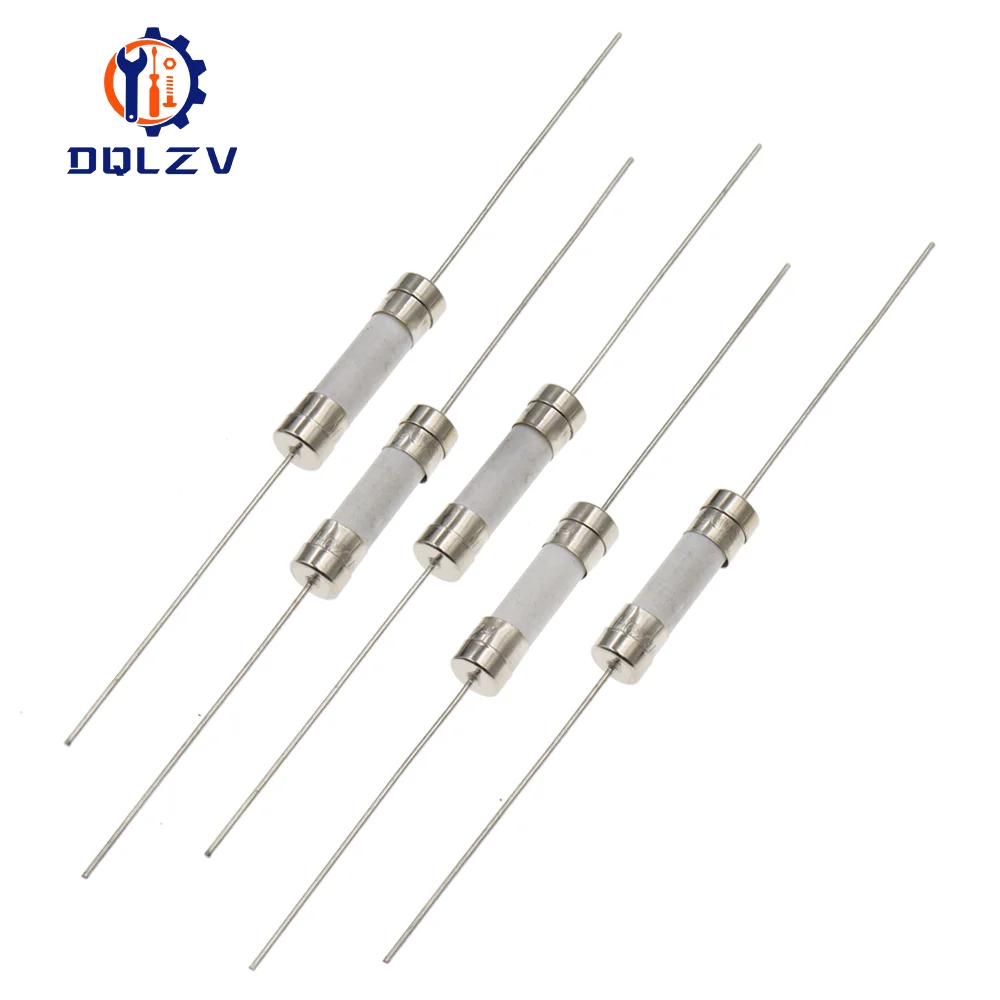
The visible components of these fuses include a ceramic tube body, nickel-plated brass end caps, and axial lead wires. The ceramic body is a key differentiator, providing excellent thermal stability and mechanical strength. This material choice allows the fuse to safely contain the arc that forms when the fuse element melts under fault conditions, especially at higher currents. Arc containment is vital for safety.
The implication of ceramic construction extends to its ability to handle higher interrupting currents. When a fuse blows, an electrical arc is generated. Ceramic, being an excellent insulator and heat dissipator, can quench this arc more effectively than glass. This capability is essential for applications where the potential fault current from the power source is substantial, ensuring the fuse safely clears the fault without exploding or causing further damage. This design enhances operational safety.
In contrast, standard glass tube fuses, while transparent for visual inspection, are generally limited to lower breaking capacities. They are more prone to shattering or exploding under high fault currents, posing a risk to surrounding components and personnel. The ceramic fuse, therefore, represents an upgrade in safety and reliability for circuits demanding more robust overcurrent protection. It offers superior performance.
Deciphering the Slow Blow Characteristic
The slow blow, or time-delay, functionality of these fuses is achieved by a specific design of the internal fuse element. This element is typically constructed to have a larger thermal mass or a coiled configuration, allowing it to absorb a certain amount of energy over a short period before melting. This design prevents premature blowing during harmless inrush currents. It's a smart design choice.
In a real-world application, consider a power supply unit that draws a momentary surge of current when first switched on to charge its input capacitors. A fast-blow fuse of the same nominal current rating would likely blow immediately. However, a slow blow fuse allows this brief, acceptable inrush current to pass, only activating if the overcurrent condition persists beyond a safe duration. This prevents nuisance tripping.
This characteristic fundamentally differs from quick-blow fuses, which are designed to react almost instantly to any current exceeding their rating. Quick-blow fuses are ideal for protecting highly sensitive electronic components that cannot tolerate even brief overcurrents. Slow blow fuses, conversely, are tailored for equipment with inherent transient current demands, balancing protection with operational resilience. They provide necessary tolerance.
Critical Ratings: Voltage, Amperage, and Breaking Capacity
The product title specifies a 250V voltage rating and a wide range of amperage ratings from 0.5A to 30A. The 250V rating indicates the maximum voltage the fuse can safely interrupt without arcing across the blown element. Exceeding this voltage can lead to sustained arcing, even after the fuse has blown, which defeats its protective purpose and creates a severe fire risk. Voltage matching is non-negotiable.
Selecting the correct amperage rating is equally critical. The fuse's nominal current rating should be slightly higher than the circuit's normal operating current but lower than the maximum current the protected components or wiring can safely handle. For instance, a 10A fuse protects a circuit designed for up to 10A continuous operation, ensuring it blows before the wiring overheats. Proper sizing is essential.
The consequences of incorrect fuse selection are severe. An undersized fuse will lead to frequent, frustrating nuisance blowing, disrupting operation. Conversely, an oversized fuse will fail to protect the circuit, allowing excessive current to flow, which can cause component damage, insulation breakdown, and ultimately, electrical fires. The fuse must be precisely matched to the load and circuit capacity to ensure effective fire prevention and equipment longevity. Safety depends on accuracy.
Installation Integrity and Longevity
The axial lead design of these fuses makes them highly versatile for various installation methods. They can be soldered directly onto printed circuit boards (PCBs) for permanent integration into electronic devices, or they can be inserted into inline fuse holders for easier replacement in applications like automotive wiring or appliance power cords. The leads are robust.
Proper installation techniques are paramount to ensure reliable contact and prevent localized heating. When soldering, care must be taken to avoid excessive heat transfer to the fuse body, which could prematurely degrade the fuse element. For fuse holders, ensuring a snug fit and clean contacts prevents resistance buildup, which could lead to false blowing or inefficient current transfer. A secure connection is vital.
The long-term benefits of using correctly rated, quality fuses are substantial. They act as the first line of defense against electrical faults, significantly extending the lifespan of expensive equipment by preventing damage from overcurrents. Their reliable operation minimizes maintenance costs and reduces the risk of catastrophic failures. This investment protects assets.
Maintaining Electrical System Health
Fuses play an indispensable role in preventing damage to sensitive electronic components such as integrated circuits, microcontrollers, and power transistors. These components are often designed with tight operating current tolerances, and even brief excursions beyond these limits can cause irreversible damage. A fuse ensures these limits are respected. It's a simple, effective barrier.
When a fuse blows, it serves as a clear indicator that a fault condition has occurred within the circuit. This prompts investigation into the root cause, whether it's a short circuit, an overloaded component, or a power supply issue. Replacing a blown fuse without identifying and rectifying the underlying problem will only lead to repeated fuse failures. Diagnosis is key.
The economic advantage of fuse replacement over component repair is undeniable. A fuse is a relatively inexpensive, easily replaceable part. In contrast, repairing or replacing damaged circuit boards or power supplies can be time-consuming and costly, often requiring specialized skills and tools. Investing in proper fusing is a cost-effective strategy for long-term system health. It saves money and effort.
Imagine the peace of mind knowing your valuable electronics are shielded by a meticulously engineered safeguard. These ceramic slow blow fuses stand ready to protect, ensuring your systems operate reliably and safely, day in and day out. They are the silent guardians, allowing your devices to perform without the constant threat of electrical overload, preserving their functionality and extending their service life for years to come.