5V Optocoupled Relay Module for Arduino & Microcontrollers
Official Store Deal
Expert Analysis Overview
The Heart of Automation: Switching Power
The 5V Optocoupled Relay Module is a fundamental switching component, indispensable for solar energy enthusiasts and automation builders seeking reliable, isolated control over higher voltage or current loads. This device acts as a digital bridge, allowing low-power microcontrollers to command robust electrical circuits. It's a critical interface.
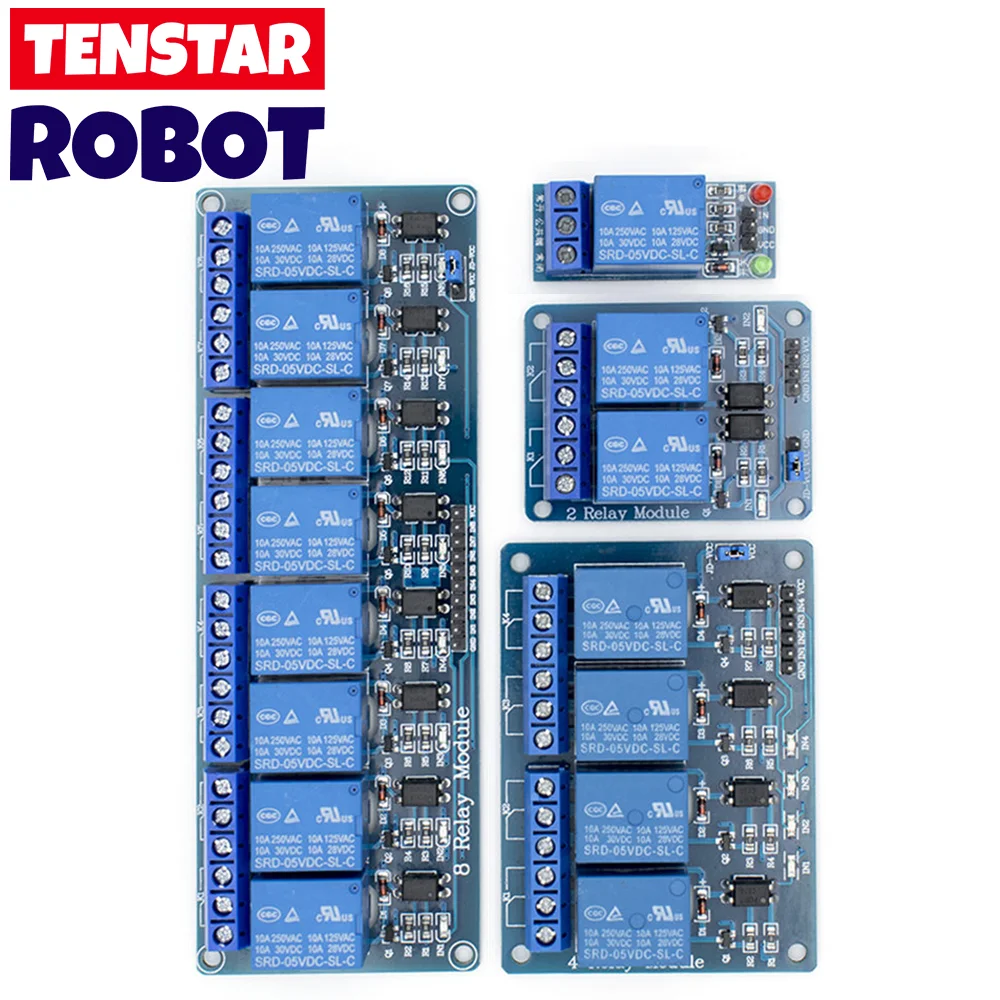
This module integrates one, two, four, or eight individual mechanical relays, specifically the SRD-05VDC-SL-C model, each capable of handling significant power. These relays feature a single pole, double throw (SPDT) configuration, meaning they have a common (COM), normally open (NO), and normally closed (NC) contact. This provides flexibility for various switching scenarios. The blue PCB is rigid.
In a solar energy context, imagine automating the activation of a DC water pump directly from a 12V battery bank, triggered by a light sensor connected to an Arduino. The module enables this seamless transition from low-voltage logic to high-power action. It provides essential control. Compared to attempting direct wiring of high-power components to a microcontroller, which is inherently dangerous and risks frying the sensitive digital logic, this relay module offers a safe and standardized solution. Solid-state relays (SSRs) exist, but mechanical relays like these are often preferred for their zero voltage drop across contacts when closed, leading to higher efficiency for the switched load itself, especially in DC applications where even small voltage drops can mean significant power loss over time.
Galvanic Isolation: The Optocoupler Advantage
A key distinguishing feature of this module is the integrated optocoupler for each relay channel. An optocoupler, or opto-isolator, uses a beam of light (typically from an LED) to transmit a signal across a small gap to a phototransistor, effectively creating an electrical barrier. This barrier is crucial.
This design provides galvanic isolation between the low-voltage control circuit (your microcontroller) and the high-voltage/high-current load circuit. This means there is no direct electrical connection between the two sides. This isolation protects the sensitive microcontroller from voltage spikes, electrical noise, and ground loops that can originate from the switched load, which is particularly relevant in noisy industrial or outdoor solar environments. System stability improves significantly.
Unlike many simpler relay modules that might lack this isolation, this optocoupled version prevents potential damage to the microcontroller. Without an optocoupler, a large inductive load switching off can generate a back-EMF spike that travels back to the microcontroller, potentially causing resets, erratic behavior, or permanent damage. This module mitigates that risk, ensuring the longevity and reliability of your control system. It's a smart design choice.
Seamless Integration: Bridging Control and Load
The module operates on a standard 5V DC input for its control logic and relay coils, making it directly compatible with popular microcontrollers like Arduino Uno, ESP32, and even Raspberry Pi (with appropriate 3.3V to 5V logic level shifting if direct connection causes issues, though often not strictly necessary for simple on/off). The relays themselves are rated for substantial loads.
Each relay can switch up to 10 Amps at 250V AC or 10 Amps at 30V DC. This broad capability allows it to manage a wide array of devices in a solar power system. Imagine using it to switch a 12V DC cooling fan for a battery bank, control a 24V DC pump for a solar thermal system, or even activate an AC-powered appliance (like a small refrigerator or lighting circuit) connected to an inverter. The possibilities are vast. Its versatility is a major benefit.
This switching capacity far exceeds what can be achieved with basic transistor switches, which are typically limited to much lower currents and voltages. The module provides a robust and safe intermediary for high-power applications. It handles the heavy lifting. Compared to building a discrete relay circuit with individual components, this pre-assembled module simplifies wiring, reduces component count, and ensures proper driver circuitry for reliable operation, saving valuable project development time and effort.
Durability Under the Sun: Construction and Longevity
The physical construction of these modules is designed for practical use in hobbyist and light industrial applications. The vibrant blue PCB is a common sight. The board feels solid.
Each module features clearly labeled screw terminals for connecting the high-power load, ensuring secure and reliable electrical connections. This is crucial for applications where vibration might be a factor or where high currents demand excellent contact. The input side typically uses standard header pins, allowing for easy connection to breadboards or jumper wires from a microcontroller. Indicator LEDs are also present.
Individual LEDs for each relay channel illuminate when the relay is activated, providing immediate visual feedback on the relay's state. A separate power LED confirms the module is receiving power. This visual confirmation is invaluable during troubleshooting or system monitoring. The components are well-soldered. The overall build quality, characterized by the sturdy PCB and robust terminals, generally surpasses that of many flimsy, unmounted components often found in DIY kits. This ensures a longer operational lifespan, even in less-than-ideal environments. It's a reliable choice.
Powering Projects: Investment in Control
Considering its capabilities, this relay module represents an extremely cost-effective investment for anyone looking to add automated control to their electrical projects, particularly in the realm of solar energy. The price point is very accessible.
For a small outlay, users gain the ability to safely control significant power, opening up a world of automation possibilities without breaking the bank. This makes advanced solar automation, such as intelligent load shedding or dynamic system management, accessible to a wider audience. It democratizes control. Compared to proprietary smart home solutions that often lock users into specific ecosystems and carry higher price tags, these modules offer unparalleled flexibility and open-source compatibility. Users can tailor their automation exactly to their needs, fostering innovation and learning.
Off-Grid Potential: Managing Energy Flow
For the solar energy hobbyist, the implications of this relay module are profound, especially for off-grid or hybrid systems. It facilitates intelligent energy management.
Picture a scenario where a microcontroller monitors battery voltage and solar panel output. This relay module can then be programmed to automatically switch on a ventilation fan in a battery enclosure when temperatures rise, or to divert excess solar power to a resistive heating element when batteries are full. It can also manage multiple loads, prioritizing essential devices during low sunlight conditions. Imagine optimizing energy usage. This module becomes a workhorse for creating truly autonomous and efficient off-grid power systems, allowing for dynamic load management and proactive system maintenance. It's a key enabler for self-sufficiency. This level of control is simply not possible with passive components alone; active switching is required.
Efficiency Considerations: Minimizing Losses
While mechanical relays offer distinct advantages, understanding their efficiency characteristics is important for solar applications where every watt-hour counts. They do draw some power.
Each relay coil, when activated, draws a small amount of current, typically in the range of 15-20mA at 5V. In a multi-channel module, if all relays are active simultaneously, this quiescent current can add up. For systems designed for extreme low-power consumption, especially those running solely on battery power for extended periods, this parasitic draw needs to be factored into the overall power budget. It's a small but measurable consumption.
However, it's crucial to differentiate this coil consumption from the efficiency of the switched circuit itself. Once a mechanical relay's contacts are closed, they offer extremely low resistance, resulting in minimal power loss (near zero) across the contacts to the load. This is a significant advantage over solid-state relays, which, while having no mechanical parts and faster switching, typically exhibit a small voltage drop (e.g., 0.5V to 1.5V) across their switching element, leading to continuous power dissipation (heat) when conducting current. For high-current DC loads, this can translate to more substantial energy losses over time compared to a mechanical relay. This makes mechanical relays highly efficient for the actual power delivery to the load.
Compatibility Across Ecosystems
The module's adherence to a 5V DC control voltage ensures broad compatibility across the most popular microcontroller platforms, making it a versatile tool for any maker's workbench. It speaks a common language.
Whether developing projects with an Arduino Uno, a NodeMCU (ESP8266), an ESP32, or even a Raspberry Pi (with appropriate voltage leveling for the Pi's 3.3V GPIO pins), integration is straightforward. The input pins are typically active-low, meaning a low signal (GND) from the microcontroller activates the relay, while a high signal (VCC) or floating pin deactivates it. This is a common configuration. This wide compatibility ensures that users can easily incorporate these modules into existing projects or new designs without significant hardware modifications, simplifying the development process and reducing the learning curve. It promotes rapid prototyping. This ubiquitous nature solidifies its position as a go-to component for diverse automation tasks, from simple home automation to complex industrial controls.
Imagine the satisfaction of a fully automated solar system, where every component works in harmony, managed by your own intelligent control system. Picture a scenario where your off-grid cabin effortlessly manages its power, switching loads, optimizing battery usage, and ensuring reliable energy delivery, all thanks to the precise control offered by these robust relay modules. This level of autonomy and efficiency is not just a dream; it's an achievable reality with the right components. Embrace the future of sustainable automation.