5V G3MB-202P Solid State Relay Module
Official Store Deal
Expert Analysis Overview
The 5V G3MB-202P Solid State Relay Module is a critical component for integrating low-voltage control systems with higher-voltage AC loads, specifically designed for hobbyists and automation engineers utilizing microcontrollers. This module offers a silent, reliable alternative to traditional mechanical relays, ensuring precise switching for a range of applications. Its solid-state design eliminates moving parts, significantly extending operational lifespan compared to electromechanical counterparts.
This module operates with a 5V low-level trigger, making it directly compatible with popular development boards such as Arduino, Raspberry Pi, and ESP32. The input logic is straightforward: a low signal (typically 0V to 1.5V) activates the relay, while a high signal (3V to 5V) deactivates it. This simplifies the control interface, reducing the complexity of external driver circuits. The module's input terminals are clearly labeled, facilitating quick and error-free connections. It is a simple interface.
The G3MB-202P is rated for switching AC loads up to 240V at 2A. This capability makes it suitable for controlling a variety of household appliances, lighting systems, and small motors. The integrated resistive fuse provides an essential layer of overcurrent protection, a critical safety feature that prevents damage to both the relay and the connected load in the event of a fault. Without this fuse, a short circuit could lead to catastrophic failure, including potential fire hazards.
Compared to standard mechanical relays, the solid-state nature of this module offers several distinct advantages. Mechanical relays produce an audible click with each activation, which can be undesirable in noise-sensitive environments. They also suffer from contact wear and arcing, leading to a finite number of switching cycles before failure. The G3MB-202P, by contrast, operates silently and boasts a virtually unlimited switching lifespan, making it ideal for applications requiring frequent, rapid switching.
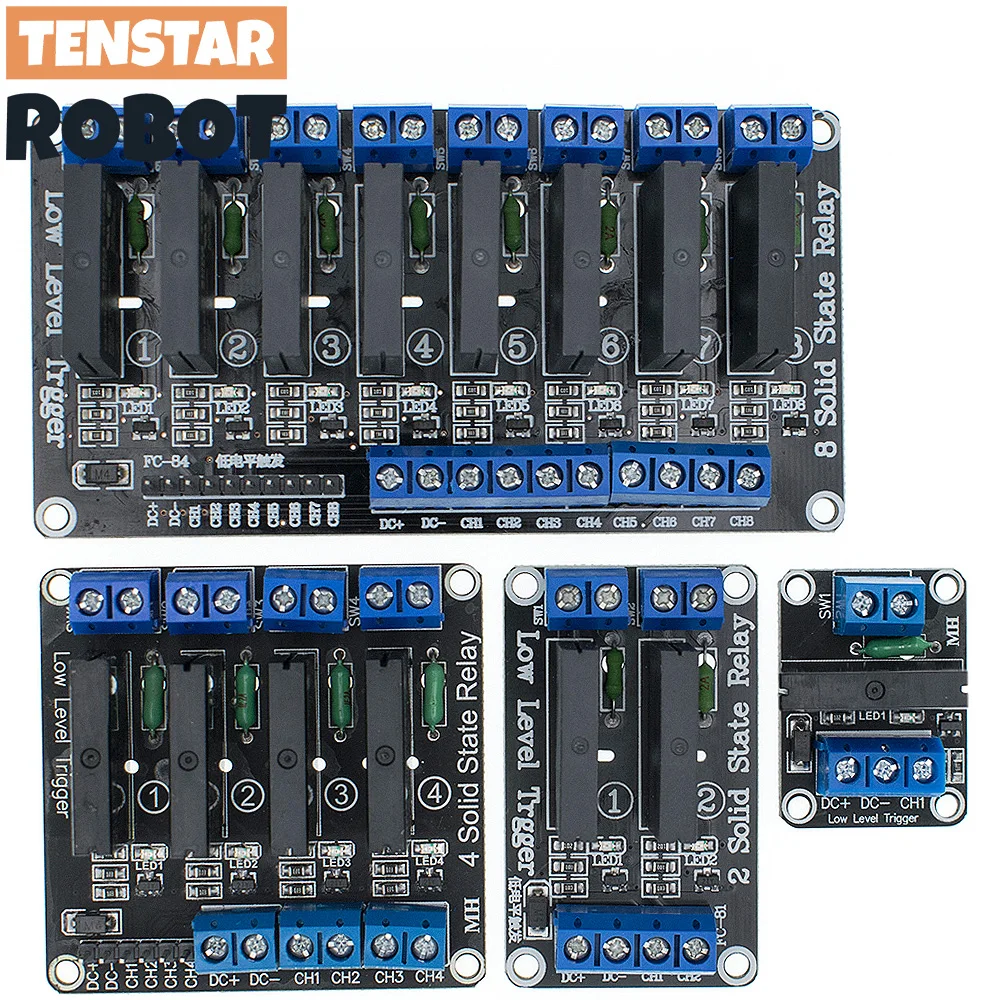
The G3MB-202P module is available in various channel configurations: 1, 2, 4, and 8 channels. This modularity allows users to select the exact number of control outputs required for their project, optimizing both space and cost. A single-channel module is perfect for controlling a solitary light fixture or a small fan. For more complex setups, a four-channel board can manage multiple independent circuits, such as a multi-zone lighting system or a series of automated vents.
Imagine automating a small grow tent. A four-channel module could simultaneously control a grow light, an exhaust fan, a humidifier, and a water pump, all from a single microcontroller. The ability to choose the appropriate channel count prevents unnecessary expenditure on unused relays and keeps the project footprint compact. This flexibility is a significant benefit for custom automation projects, from smart home integrations to industrial prototyping.
This range of configurations offers a distinct advantage over single-purpose, fixed-channel solutions. Instead of purchasing multiple single-channel relays or a large, expensive multi-channel board with excess capacity, users can precisely match the module to their project's needs. This approach minimizes wasted resources and simplifies wiring, as all control signals for a given number of channels are consolidated onto a single PCB. It is highly adaptable.
The module features robust screw terminals for both DC input power and AC load connections. These terminals are designed to provide secure, low-resistance connections, crucial for maintaining circuit integrity and preventing loose wires that could lead to intermittent operation or, more critically, electrical hazards. The blue terminal blocks are visually distinct and appear to be of a quality that ensures a firm grip on various wire gauges.
Connecting the module to a microcontroller is straightforward. The DC+ and DCterminals supply power to the relay's internal circuitry, typically 5V. The individual channel input pins (CH1, CH2, etc.) receive the low-level trigger signals from the microcontroller's GPIO pins. For the AC load, the output terminals are clearly marked for connection in series with the load and the AC power source. Proper wire gauge selection for the 2A load is essential to prevent overheating and ensure safe operation.
Compared to push-in or spring-clip terminals, the screw-down design offers superior mechanical stability and electrical contact, especially for AC power connections where vibration or accidental tugs could compromise safety. The tactile feedback when tightening the screws provides confidence in the connection's security. This design choice prioritizes safety and long-term reliability over marginal installation speed gains, a wise trade-off for any electrical component.
The inherent design of a solid-state relay, with its absence of moving parts, contributes directly to its exceptional durability and extended operational life. Unlike mechanical relays that are limited by the number of physical switching cycles, SSRs can perform millions of operations without degradation. This makes them ideal for applications requiring continuous or very frequent switching, where mechanical wear would quickly lead to failure.
Thermal management is a key consideration for SSRs, as they dissipate heat during operation. The visible heat sinks on the G3MB-202P modules are crucial for drawing heat away from the internal semiconductor components, ensuring they operate within their safe temperature limits. For continuous operation at or near the 2A maximum load, proper ventilation around the module is recommended to prevent thermal runaway and maintain long-term reliability. The heat sinks are substantial.
This focus on longevity and thermal stability sets the G3MB-202P apart from cheaper, un-fused, or poorly designed SSRs that might overheat and fail prematurely. The investment in a robust design, including the resistive fuse and adequate heat sinking, translates into a lower total cost of ownership due to reduced maintenance and replacement frequency. It is a reliable workhorse for its specified current rating.
The 240V 2A AC switching capability of this module opens up a wide array of automation possibilities. It can control standard incandescent or LED lighting, small heating elements in DIY incubators, or low-power AC motors in automated blinds. Its silent operation is particularly beneficial for home automation projects where audible clicks from relays would be disruptive.
Consider a scenario where a smart home system needs to control a porch light based on ambient light levels. The G3MB-202P can reliably switch the light on at dusk and off at dawn, all controlled by a simple light sensor and a microcontroller. The low-level trigger ensures seamless integration with the digital output pins of the control board, making the entire setup efficient and responsive. It handles these tasks with ease.
While its 2A current limit means it is not suitable for high-power appliances like electric kettles or large HVAC units, it excels within its specified range. For applications requiring higher current, industrial-grade SSRs or contactors would be necessary. However, for the vast majority of hobbyist and small-scale automation projects, the G3MB-202P provides ample capacity and a robust solution, bridging the gap between low-voltage control and mains power safely.
Imagine the satisfaction of building a fully automated system, knowing that each component is performing its task silently and reliably. This module empowers creators to bring their smart home, robotics, or industrial control concepts to life with confidence. The precise control and inherent safety features allow for seamless integration into complex projects, turning ambitious ideas into tangible, functional realities. This module is a cornerstone for dependable automation, providing the peace of mind that comes with robust electrical control.
Precision Control for AC Circuits
This module operates with a 5V low-level trigger, making it directly compatible with popular development boards such as Arduino, Raspberry Pi, and ESP32. The input logic is straightforward: a low signal (typically 0V to 1.5V) activates the relay, while a high signal (3V to 5V) deactivates it. This simplifies the control interface, reducing the complexity of external driver circuits. The module's input terminals are clearly labeled, facilitating quick and error-free connections. It is a simple interface.
The G3MB-202P is rated for switching AC loads up to 240V at 2A. This capability makes it suitable for controlling a variety of household appliances, lighting systems, and small motors. The integrated resistive fuse provides an essential layer of overcurrent protection, a critical safety feature that prevents damage to both the relay and the connected load in the event of a fault. Without this fuse, a short circuit could lead to catastrophic failure, including potential fire hazards.
Compared to standard mechanical relays, the solid-state nature of this module offers several distinct advantages. Mechanical relays produce an audible click with each activation, which can be undesirable in noise-sensitive environments. They also suffer from contact wear and arcing, leading to a finite number of switching cycles before failure. The G3MB-202P, by contrast, operates silently and boasts a virtually unlimited switching lifespan, making it ideal for applications requiring frequent, rapid switching.
Scalable Automation Solutions
The G3MB-202P module is available in various channel configurations: 1, 2, 4, and 8 channels. This modularity allows users to select the exact number of control outputs required for their project, optimizing both space and cost. A single-channel module is perfect for controlling a solitary light fixture or a small fan. For more complex setups, a four-channel board can manage multiple independent circuits, such as a multi-zone lighting system or a series of automated vents.
Imagine automating a small grow tent. A four-channel module could simultaneously control a grow light, an exhaust fan, a humidifier, and a water pump, all from a single microcontroller. The ability to choose the appropriate channel count prevents unnecessary expenditure on unused relays and keeps the project footprint compact. This flexibility is a significant benefit for custom automation projects, from smart home integrations to industrial prototyping.
This range of configurations offers a distinct advantage over single-purpose, fixed-channel solutions. Instead of purchasing multiple single-channel relays or a large, expensive multi-channel board with excess capacity, users can precisely match the module to their project's needs. This approach minimizes wasted resources and simplifies wiring, as all control signals for a given number of channels are consolidated onto a single PCB. It is highly adaptable.
Secure and Reliable Interfacing
The module features robust screw terminals for both DC input power and AC load connections. These terminals are designed to provide secure, low-resistance connections, crucial for maintaining circuit integrity and preventing loose wires that could lead to intermittent operation or, more critically, electrical hazards. The blue terminal blocks are visually distinct and appear to be of a quality that ensures a firm grip on various wire gauges.
Connecting the module to a microcontroller is straightforward. The DC+ and DC
Compared to push-in or spring-clip terminals, the screw-down design offers superior mechanical stability and electrical contact, especially for AC power connections where vibration or accidental tugs could compromise safety. The tactile feedback when tightening the screws provides confidence in the connection's security. This design choice prioritizes safety and long-term reliability over marginal installation speed gains, a wise trade-off for any electrical component.
Engineered for Longevity
The inherent design of a solid-state relay, with its absence of moving parts, contributes directly to its exceptional durability and extended operational life. Unlike mechanical relays that are limited by the number of physical switching cycles, SSRs can perform millions of operations without degradation. This makes them ideal for applications requiring continuous or very frequent switching, where mechanical wear would quickly lead to failure.
Thermal management is a key consideration for SSRs, as they dissipate heat during operation. The visible heat sinks on the G3MB-202P modules are crucial for drawing heat away from the internal semiconductor components, ensuring they operate within their safe temperature limits. For continuous operation at or near the 2A maximum load, proper ventilation around the module is recommended to prevent thermal runaway and maintain long-term reliability. The heat sinks are substantial.
This focus on longevity and thermal stability sets the G3MB-202P apart from cheaper, un-fused, or poorly designed SSRs that might overheat and fail prematurely. The investment in a robust design, including the resistive fuse and adequate heat sinking, translates into a lower total cost of ownership due to reduced maintenance and replacement frequency. It is a reliable workhorse for its specified current rating.
Versatile Automation Potential
The 240V 2A AC switching capability of this module opens up a wide array of automation possibilities. It can control standard incandescent or LED lighting, small heating elements in DIY incubators, or low-power AC motors in automated blinds. Its silent operation is particularly beneficial for home automation projects where audible clicks from relays would be disruptive.
Consider a scenario where a smart home system needs to control a porch light based on ambient light levels. The G3MB-202P can reliably switch the light on at dusk and off at dawn, all controlled by a simple light sensor and a microcontroller. The low-level trigger ensures seamless integration with the digital output pins of the control board, making the entire setup efficient and responsive. It handles these tasks with ease.
While its 2A current limit means it is not suitable for high-power appliances like electric kettles or large HVAC units, it excels within its specified range. For applications requiring higher current, industrial-grade SSRs or contactors would be necessary. However, for the vast majority of hobbyist and small-scale automation projects, the G3MB-202P provides ample capacity and a robust solution, bridging the gap between low-voltage control and mains power safely.
Imagine the satisfaction of building a fully automated system, knowing that each component is performing its task silently and reliably. This module empowers creators to bring their smart home, robotics, or industrial control concepts to life with confidence. The precise control and inherent safety features allow for seamless integration into complex projects, turning ambitious ideas into tangible, functional realities. This module is a cornerstone for dependable automation, providing the peace of mind that comes with robust electrical control.