3mm Diamond Reaming Drill Bits for Precision Engraving
Official Store Deal
Expert Analysis Overview
Precision Abrasive Tooling: Diamond Reaming Drill Bits
The 3mm Diamond Reaming Drill Bit is a specialized abrasive tool engineered for intricate material removal and detailing, primarily targeting hard, brittle substrates. This category of power tool accessories is designed for users requiring high precision and effective material shaping where conventional cutting tools would fail or cause damage. Its core utility lies in its ability to abrade rather than cut, making it indispensable for delicate work on challenging materials.
Material Science and Abrasive Performance
These bits feature a carbon steel core with an electroplated diamond coating. Carbon steel provides the necessary structural integrity and rigidity for the bit's slender forms, ensuring it can withstand the torsional and axial forces encountered during drilling and engraving. The choice of carbon steel is fundamental for maintaining the bit's shape under load.
The electroplated diamond layer is the active abrasive surface. Diamonds, being the hardest known material, allow these bits to effectively abrade extremely hard materials that would quickly dull or fracture standard high-speed steel (HSS) or even carbide bits. This diamond coating is crucial for its performance.
With a granularity of 150#, these bits offer a medium-coarse abrasive action. This specific grit size is well-suited for both initial material removal and refining contours, striking a balance between aggressive cutting and surface finish. Finer grits would be used for polishing, while coarser grits would be for rapid stock removal, making 150# a versatile choice for general engraving and reaming tasks.
Durability and Heat Management
Unlike conventional drill bits that rely on sharp cutting edges, diamond bits abrade material, generating less localized heat at the point of contact, but overall friction can still be significant. The carbon steel substrate, while robust, requires careful heat management during prolonged use. Overheating can degrade the electroplated bond holding the diamond particles, leading to premature wear.
Proper cooling, typically with water or a suitable cutting fluid, is paramount for extending the lifespan of these bits. This prevents the diamond particles from dislodging and maintains the integrity of the bit's structure. Sustained high temperatures are detrimental.
Compared to standard carbide bits, which can become brittle and chip when subjected to impact or excessive heat, the diamond-coated surface offers superior wear resistance on abrasive materials. This translates to a significantly longer operational life when used within its intended parameters, especially on ceramics, glass, or stone.
Geometry and Application Versatility
The collection includes various geometries, each optimized for specific tasks. The Type A bit, with its 0.8mm tip diameter and 80mm working length, is designed for fine detail work and reaching into confined spaces. Its slender profile allows for intricate carving and precise hole reaming.
Type B, featuring a 0.6mm tip diameter and a 65mm working length, offers even finer precision. The slightly wider 1.5mm section near the shank provides increased rigidity for the delicate tip, preventing excessive flex during operation. This bit is ideal for micro-engraving and creating very small, precise holes.
Type C presents a conical shape with a 5mm base diameter and a 10mm working length. This geometry is excellent for chamfering, deburring, and creating tapered holes or sculptural details. Its robust tip can withstand more aggressive material removal compared to the finer needle-point bits.
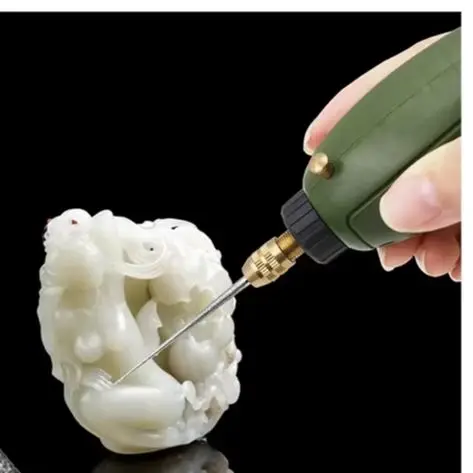
These diverse shapes allow for a broad range of applications, from intricate jade carving, as depicted, to detailing on glass, ceramics, and various types of stone. The 3mm shank diameter ensures compatibility with most mini rotary tools and precision drills, making them accessible to a wide user base. This standardization simplifies tool integration.
Precision in Hard Materials
One of the primary advantages of these diamond bits is their capability to work with materials that typically challenge other tools. Drilling through stainless steel, for instance, often leads to work-hardening with conventional bits, making the material even harder and more difficult to penetrate. Diamond bits, by their abrasive nature, bypass this issue, allowing for consistent material removal without inducing significant work-hardening. This ensures smoother, more predictable drilling.
Similarly, achieving clean cuts in hardwood, especially dense or exotic varieties, can be problematic with standard bits that might tear or splinter the wood grain. The fine abrasive action of these diamond bits, particularly the needle-point types, allows for precise material removal, resulting in cleaner edges and less splintering. This is particularly beneficial for detailed woodworking or inlay work.
For delicate materials like jade, glass, or ceramic, where chipping and cracking are constant concerns, the controlled abrasion offered by diamond bits is invaluable. The ability to slowly and precisely remove material minimizes stress on the workpiece, significantly reducing the risk of damage. This control is paramount for preserving the integrity of fragile items.
Value Proposition and Longevity
Considering the specialized nature of working with hard materials, the longevity of these diamond bits represents significant value. While the initial cost per bit may seem low, their ability to perform tasks that would rapidly destroy multiple conventional bits makes them a cost-effective solution in the long run. The durability of the diamond coating, when properly maintained, ensures a long service life.
This product is not merely a collection of drill bits; it is an investment in precision and capability for specialized crafting and repair tasks. Imagine the satisfaction of effortlessly detailing a custom jewelry piece, or precisely reaming a tiny hole in a delicate ceramic component without fear of breakage. The ability to execute such intricate work with confidence transforms challenging projects into achievable masterpieces, expanding the scope of what can be created or repaired.