3D Printer Silicone Hot Bed Leveling Spacers (4-Pack)
Official Store Deal
Expert Analysis Overview
The 3D Printer Silicone Hot Bed Leveling Spacers are a critical upgrade component designed for enhancing the thermal stability and leveling precision of FDM 3D printer hot beds, particularly for popular models like the Creality CR-10 series and Ender 3 series. These solid silicone columns replace traditional spring-based leveling systems, addressing common issues of bed wobble and inconsistent leveling over time. Their high-temperature resistance and stable compression characteristics make them an essential modification for users seeking to improve print quality and reduce maintenance.
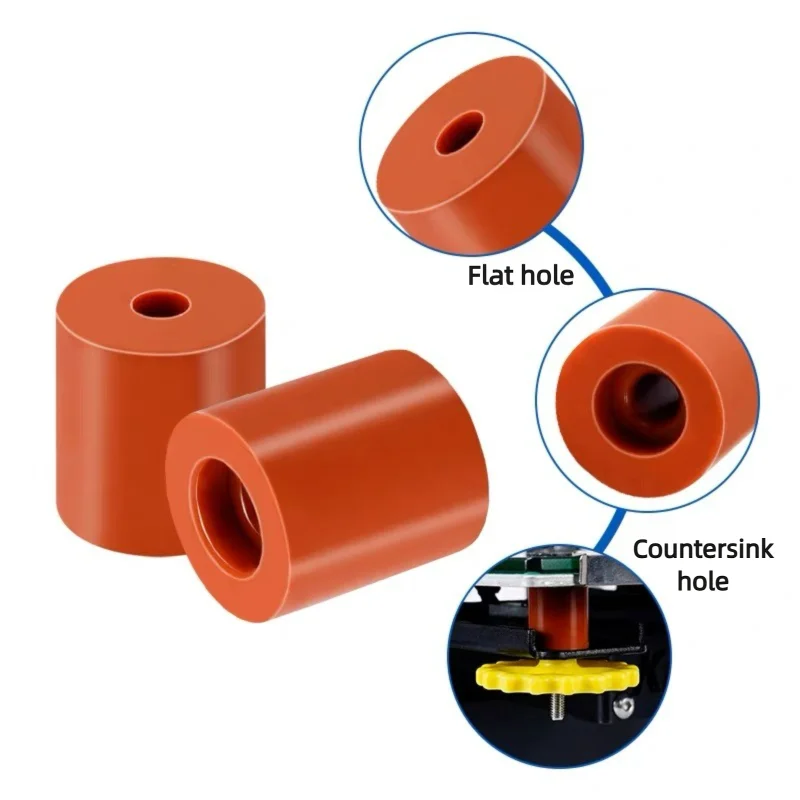
These silicone spacers are fabricated from a high-temperature resistant silicone compound, visible in their uniform orange-brown coloration. The material choice is deliberate. Silicone exhibits excellent thermal stability, maintaining its structural integrity and compressive properties even when exposed to the sustained high temperatures of a heated print bed, which can often reach 60-100°C for common filaments like PLA and ABS.
Unlike metallic springs that can lose tension or deform under prolonged heat cycles, silicone offers a consistent and predictable compression. This consistency is paramount for maintaining a level print surface throughout long print jobs. The material's inherent damping properties also help to absorb minor vibrations, contributing to a more stable printing platform.
Compared to standard metal springs, which are prone to fatigue and require frequent re-leveling, these silicone spacers provide a more durable and stable solution. This translates directly into fewer print failures due to bed leveling issues. The material's resilience ensures a longer service life, reducing the need for constant adjustments.
Detailed engineering diagrams illustrate the precise dimensions of these spacers, available in 16mm and 18mm heights, with options for flat or countersunk holes. The outer diameter is consistently 8.5mm, with an inner bore diameter of 4.5mm. These precise measurements are crucial.
Accurate dimensions ensure a snug fit around the leveling screws, minimizing lateral movement of the hot bed. The availability of different heights allows for compatibility with various printer setups and hot bed configurations, accommodating different build plate thicknesses or nozzle offsets. This adaptability is a key design consideration.
Standard spring-based systems often have a wider tolerance in their compression range, leading to less precise bed height adjustments. These solid spacers, by contrast, offer a fixed, stable height once installed and tightened. This provides a more rigid foundation for the print bed, which is vital for achieving first-layer adhesion and overall print accuracy, especially for large or complex models.
The primary function of these silicone spacers is to provide a more stable and consistent hot bed leveling experience. Traditional springs can compress unevenly, leading to a warped or unlevel print surface, particularly after numerous heating and cooling cycles or during vigorous print movements. This often results in poor first layer adhesion, warping, or failed prints.
By replacing springs with solid silicone columns, the print bed gains a significantly more rigid support structure. Once the leveling nuts are tightened, the silicone spacers provide a firm, unyielding support that resists changes in height. This rigidity is critical for maintaining consistent nozzle-to-bed distance across the entire print surface.
Users will experience a dramatic reduction in the frequency of bed re-leveling. This frees up valuable time and reduces frustration associated with print failures. The stable foundation allows for more reliable printing of difficult materials like ABS or Nylon, which are highly sensitive to bed adhesion and temperature consistency.
Installation of these spacers is straightforward, typically involving the removal of existing springs and the placement of the silicone columns over the leveling screws. The images clearly show the spacers being used in conjunction with standard leveling nuts and a glass print bed, demonstrating their direct compatibility with common 3D printer components. The countersunk hole variant is particularly useful for accommodating screw heads or providing a flush surface.
The product explicitly lists compatibility with Creality CR-10, CR-10S, Ender 3, Ender 3S, Ender 3 Pro, and Ender 3 V2 models. This broad compatibility covers a significant portion of the entry-level and mid-range FDM printer market. This makes them a widely applicable upgrade.
Unlike generic spacers that might require modifications or not fit correctly, these are designed for specific popular models. This ensures a hassle-free upgrade path for many 3D printer owners. The precise fit minimizes any potential for play or movement once installed, contributing to overall print stability.
The solid silicone construction inherently offers superior durability compared to metal springs, which can rust, fatigue, or deform. Silicone is resistant to many chemicals and environmental factors, ensuring a long operational lifespan even in demanding workshop environments. This material choice provides excellent value.
Investing in these silicone spacers translates into long-term savings by reducing the need for frequent replacement of springs or the frustration of failed prints. The initial cost is quickly offset by improved print success rates and reduced maintenance time. This is a cost-effective upgrade.
This product represents a significant upgrade over the stock components found in many budget 3D printers. While the initial investment might seem minor, the cumulative benefits in print quality, reliability, and reduced troubleshooting time offer a substantial return on investment. Imagine the satisfaction of consistently successful first layers, print after print, without the constant worry of bed leveling drift. This simple modification transforms a common point of failure into a pillar of reliability, allowing you to focus on design and creation rather than calibration. Your prints will exhibit superior layer consistency and dimensional accuracy, making complex projects achievable with greater confidence. This is an investment in your printer's capability and your own peace of mind, ensuring that your creative visions are realized with precision and fewer interruptions.
Engineering for Thermal Stability
These silicone spacers are fabricated from a high-temperature resistant silicone compound, visible in their uniform orange-brown coloration. The material choice is deliberate. Silicone exhibits excellent thermal stability, maintaining its structural integrity and compressive properties even when exposed to the sustained high temperatures of a heated print bed, which can often reach 60-100°C for common filaments like PLA and ABS.
Unlike metallic springs that can lose tension or deform under prolonged heat cycles, silicone offers a consistent and predictable compression. This consistency is paramount for maintaining a level print surface throughout long print jobs. The material's inherent damping properties also help to absorb minor vibrations, contributing to a more stable printing platform.
Compared to standard metal springs, which are prone to fatigue and require frequent re-leveling, these silicone spacers provide a more durable and stable solution. This translates directly into fewer print failures due to bed leveling issues. The material's resilience ensures a longer service life, reducing the need for constant adjustments.
Precision in Dimensional Control
Detailed engineering diagrams illustrate the precise dimensions of these spacers, available in 16mm and 18mm heights, with options for flat or countersunk holes. The outer diameter is consistently 8.5mm, with an inner bore diameter of 4.5mm. These precise measurements are crucial.
Accurate dimensions ensure a snug fit around the leveling screws, minimizing lateral movement of the hot bed. The availability of different heights allows for compatibility with various printer setups and hot bed configurations, accommodating different build plate thicknesses or nozzle offsets. This adaptability is a key design consideration.
Standard spring-based systems often have a wider tolerance in their compression range, leading to less precise bed height adjustments. These solid spacers, by contrast, offer a fixed, stable height once installed and tightened. This provides a more rigid foundation for the print bed, which is vital for achieving first-layer adhesion and overall print accuracy, especially for large or complex models.
Enhancing Print Bed Leveling Consistency
The primary function of these silicone spacers is to provide a more stable and consistent hot bed leveling experience. Traditional springs can compress unevenly, leading to a warped or unlevel print surface, particularly after numerous heating and cooling cycles or during vigorous print movements. This often results in poor first layer adhesion, warping, or failed prints.
By replacing springs with solid silicone columns, the print bed gains a significantly more rigid support structure. Once the leveling nuts are tightened, the silicone spacers provide a firm, unyielding support that resists changes in height. This rigidity is critical for maintaining consistent nozzle-to-bed distance across the entire print surface.
Users will experience a dramatic reduction in the frequency of bed re-leveling. This frees up valuable time and reduces frustration associated with print failures. The stable foundation allows for more reliable printing of difficult materials like ABS or Nylon, which are highly sensitive to bed adhesion and temperature consistency.
Installation and Compatibility
Installation of these spacers is straightforward, typically involving the removal of existing springs and the placement of the silicone columns over the leveling screws. The images clearly show the spacers being used in conjunction with standard leveling nuts and a glass print bed, demonstrating their direct compatibility with common 3D printer components. The countersunk hole variant is particularly useful for accommodating screw heads or providing a flush surface.
The product explicitly lists compatibility with Creality CR-10, CR-10S, Ender 3, Ender 3S, Ender 3 Pro, and Ender 3 V2 models. This broad compatibility covers a significant portion of the entry-level and mid-range FDM printer market. This makes them a widely applicable upgrade.
Unlike generic spacers that might require modifications or not fit correctly, these are designed for specific popular models. This ensures a hassle-free upgrade path for many 3D printer owners. The precise fit minimizes any potential for play or movement once installed, contributing to overall print stability.
Durability and Long-Term Value
The solid silicone construction inherently offers superior durability compared to metal springs, which can rust, fatigue, or deform. Silicone is resistant to many chemicals and environmental factors, ensuring a long operational lifespan even in demanding workshop environments. This material choice provides excellent value.
Investing in these silicone spacers translates into long-term savings by reducing the need for frequent replacement of springs or the frustration of failed prints. The initial cost is quickly offset by improved print success rates and reduced maintenance time. This is a cost-effective upgrade.
This product represents a significant upgrade over the stock components found in many budget 3D printers. While the initial investment might seem minor, the cumulative benefits in print quality, reliability, and reduced troubleshooting time offer a substantial return on investment. Imagine the satisfaction of consistently successful first layers, print after print, without the constant worry of bed leveling drift. This simple modification transforms a common point of failure into a pillar of reliability, allowing you to focus on design and creation rather than calibration. Your prints will exhibit superior layer consistency and dimensional accuracy, making complex projects achievable with greater confidence. This is an investment in your printer's capability and your own peace of mind, ensuring that your creative visions are realized with precision and fewer interruptions.