3D Printer Filament Vacuum Storage Kit
Official Store Deal
Expert Analysis Overview
Preserving Print Quality: A Maker's Imperative
The 3D Printer Filament Vacuum Storage Kit is an essential humidity control solution for any maker serious about filament longevity and print quality. This system addresses a critical challenge in 3D printing: moisture absorption by hygroscopic filaments like PLA, ABS, and PETG. Maintaining dry filament directly translates to superior print outcomes, minimizing common issues such as stringing, bubbling, and brittle prints. This kit empowers users to ensure their material is always in prime condition.The silent threat of moisture to 3D printing filaments is often underestimated. Unprotected filament can quickly absorb atmospheric moisture, especially in humid environments, even if not immediately apparent. This absorbed water vaporizes during the extrusion process, creating micro-bubbles within the molten plastic, which then compromise the print's strength, surface finish, and overall dimensional accuracy. The kit offers a proactive defense against this insidious degradation. It creates a low-humidity environment.
Moving beyond basic storage, this system offers a significant upgrade. Standard storage methods, such as simply leaving spools on a shelf or in loosely sealed containers, offer minimal to no protection against ambient humidity. Even basic containers with desiccant often fail to remove ambient air effectively, leaving a significant volume of moist air trapped with the filament. This vacuum system stands as a fundamental improvement, actively removing air to reduce moisture exposure dramatically. It's a fundamental improvement over passive solutions.
Engineering for Airtight Security
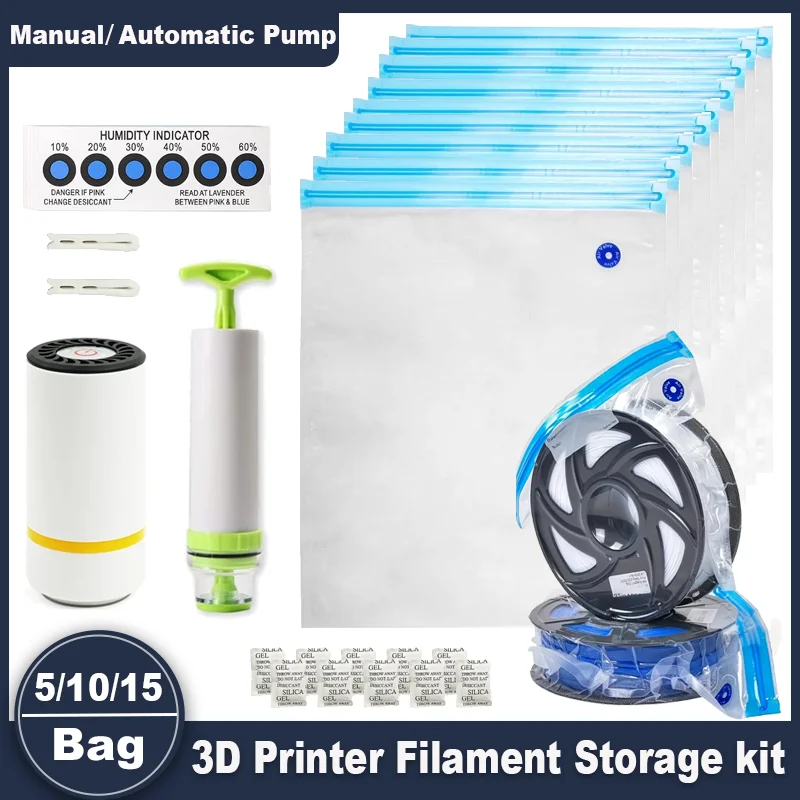
The vacuum bags feature a double zipper seal and are constructed from a thickened material. A distinct, one-way air valve is visible on each bag, designed specifically for pump integration. The transparent material allows for immediate visual inspection of the filament, checking for color changes or physical damage without opening the bag. These bags are built for repeated use, a crucial aspect for any active maker.The mechanics of protection provided by the double zipper are critical for long-term storage. This redundant seal significantly reduces the chance of air leakage over time, a common failure point in single-seal bags. This dual-layer approach enhances the bag's integrity and ensures a consistent vacuum is maintained, which is crucial for preserving filament quality over weeks or months. The thickened material resists punctures and tears, extending the lifespan of each bag even with frequent handling. This design choice is practical and robust.
Compared to generic zip-lock bags, which offer minimal air resistance and are prone to accidental opening or seal failure, these specialized bags provide a far more secure and durable enclosure. The integrated air valve simplifies the vacuum creation process, allowing for efficient air removal with the included pump—a feature entirely absent in common household storage solutions. It provides a reliable barrier against moisture ingress, a common frustration for hobbyists.
Monitoring the Microclimate: Humidity Control
The kit includes both humidity indicator cards and desiccant packs. These small cards display color changes based on ambient moisture levels, typically shifting from blue (dry) to pink (humid). The desiccant, usually silica gel, actively absorbs remaining moisture within the sealed environment, acting as a continuous scavenger for water vapor. This combination offers real-time feedback and active moisture removal, a dual strategy for optimal filament preservation.These humidity indicator cards provide an immediate visual cue regarding the dryness of the filament's storage environment. A quick glance tells the user if the desiccant needs regeneration or replacement, preventing guesswork and ensuring proactive maintenance. The desiccant packs work in conjunction with the vacuum seal to absorb any residual moisture trapped within the bag after air extraction, lowering the relative humidity to ideal levels for filament storage. This dual approach ensures optimal conditions, providing peace of mind. It's an intelligent system for filament care.
For serious makers experimenting with advanced and highly hygroscopic filaments such as Nylon, PVA, or certain flexible materials, precise humidity control is non-negotiable. These materials absorb moisture rapidly and can become unusable quickly without proper storage. This system offers a level of monitoring and active moisture removal that simple airtight containers with desiccant alone cannot match, especially over extended periods. It’s critical for challenging materials and high-quality outcomes.
Powering the Vacuum: Manual Precision
A manual hand pump is included with the kit, featuring a simple, ergonomic plunger design for efficient air extraction. The pump's operation appears straightforward: securely attach it to the bag's valve and pump until the desired vacuum is achieved. Its compact size suggests easy storage within a workshop drawer or toolbox, making it readily accessible. This pump is a core component of the system.The manual pump allows for precise control over the vacuum level within the bag. This hands-on approach prevents excessive pressure that could potentially deform delicate spools, especially those made from less rigid plastics or cardboard. Users can feel the air being removed, confirming the seal and the effectiveness of the vacuum process, providing a tangible sense of control. It’s a direct interaction that many makers appreciate.
While electric vacuum pumps offer speed and automation, the manual pump provides a cost-effective and reliable alternative that doesn't require an external power source. For makers who process filament batches rather than continuously, or those who value simplicity and independence from electrical outlets, the manual pump is perfectly adequate and highly functional. It offers fundamental functionality without unnecessary complexity.