3-in-1 Soil Moisture, pH, and Light Meter
Official Store Deal
Expert Analysis Overview
The 3-in-1 Soil Moisture, pH, and Light Meter is a foundational horticultural diagnostic tool designed for home gardeners and small-scale cultivators seeking immediate environmental insights without complex setups. This passive device eliminates the guesswork often associated with plant care, providing critical data points for optimal growth.
Effective plant cultivation hinges on understanding the immediate environment. This meter addresses three primary factors: soil moisture, pH balance, and ambient light intensity. Each reading contributes to a holistic view of the plant's health requirements.
Ignoring these elements can lead to significant plant stress. Overwatering causes root rot. Incorrect pH locks out nutrients. Insufficient light stunts growth. This simple device offers a clear path to preventing such common pitfalls.
Unlike relying solely on visual cues or the unreliable 'finger test' for soil moisture, this meter provides a quantifiable reading. It removes the ambiguity.
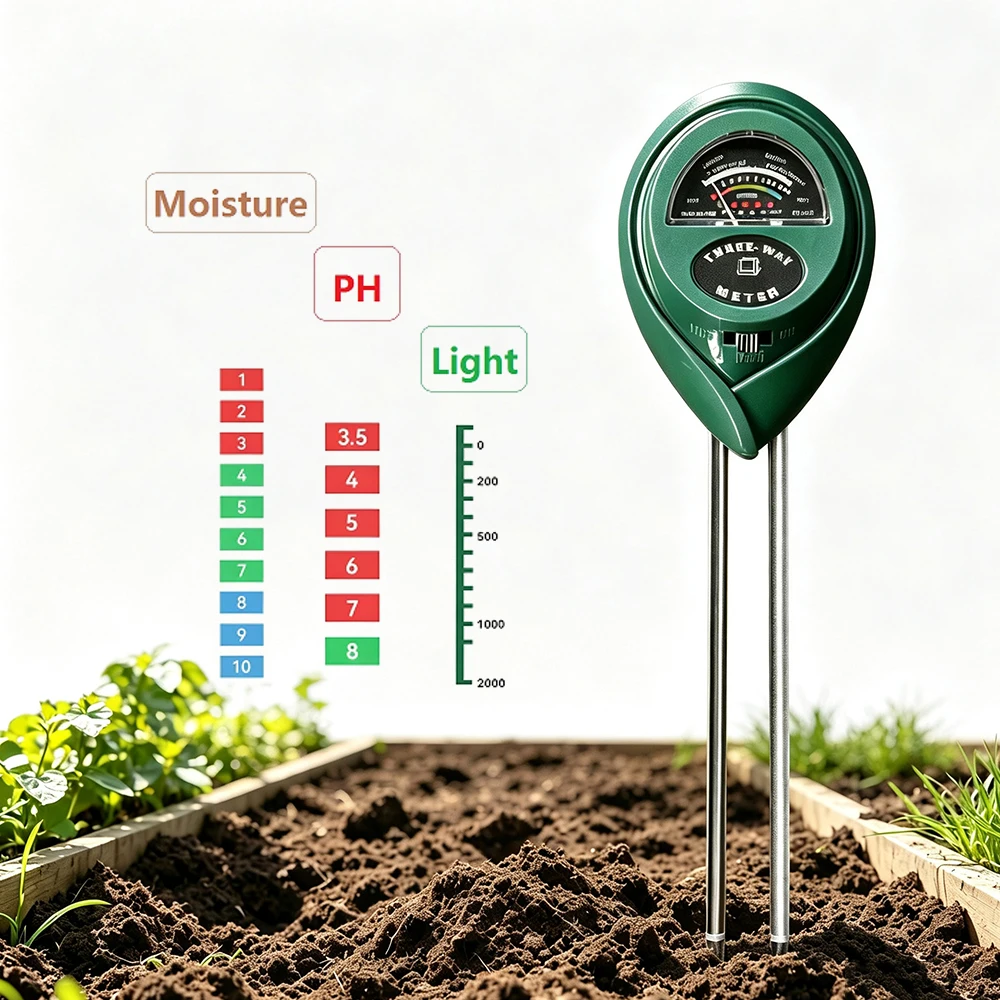
Moisture detection is handled by the dual probes, which measure the electrical conductivity of the soil. A scale from 1 (dry) to 10 (wet) is presented on the analog dial. This range offers clear guidance.
For instance, a reading of 1-3 indicates dry conditions, signaling a need for watering. Conversely, 8-10 suggests excessive wetness, which could lead to root asphyxiation. Understanding these levels is crucial.
This immediate feedback prevents the common gardener's dilemma of over or under-watering, a leading cause of plant demise. It saves plants.
pH measurement is equally vital, operating on a scale of 3.5 (acidic) to 8 (alkaline). The optimal pH range for most plants is between 6.0 and 7.0, which is slightly acidic to neutral. This balance is key.
Soil pH directly impacts nutrient availability. If the soil is too acidic or too alkaline, essential nutrients like iron, phosphorus, or nitrogen can become insoluble, making them inaccessible to plant roots, even if present in abundance. This phenomenon is known as nutrient lockout.
Compared to expensive chemical test kits that require reagents and careful mixing, this meter offers a quick, albeit less precise, indication of soil acidity or alkalinity. It simplifies the process.
Light intensity is measured by a sensor located on the meter's head, providing readings from 0 (low) to 2000 (high). This helps determine if a plant is receiving adequate sunlight. Proper light is essential.
Different plants have varying light requirements; some thrive in full sun (high readings), while others prefer partial shade (medium readings) or low light conditions. Positioning plants correctly based on these readings can dramatically improve their vigor and flowering.
This feature is particularly beneficial for indoor plants or when deciding the best placement for new additions to an outdoor garden. It guides placement decisions.
The device features a robust dual-probe design, typically constructed from metal, which allows for deep and stable insertion into the soil. The probes are the primary interface with the growing medium. Their length is significant.
This design ensures that readings are taken from a representative depth within the root zone, not just the surface. Surface moisture can be misleading. Deeper readings are more accurate.
Unlike single-probe designs which can be less stable and potentially provide skewed readings, the dual-probe configuration offers better contact and stability. This improves reliability.
An analog display is prominently featured on the meter's head, presenting clear, easy-to-read scales for moisture, pH, and light. The needle indicator moves smoothly. No batteries are needed.
The simplicity of the analog display means no complex digital readouts or battery replacements. It is always ready for use. This contributes to its user-friendliness.
This contrasts with digital meters that often require batteries and can sometimes be harder to read in direct sunlight due to screen glare. Analog is straightforward.
Proper usage involves inserting both probes completely into the soil, ensuring the meter head remains above ground. This ensures accurate readings. The depth matters.
For moisture and pH readings, it is recommended to wait approximately 10 minutes after insertion for the needle to stabilize. This allows the electrochemical reaction to settle. Patience is rewarded.
Incorrect insertion, such as only partially embedding the probes or using it in very dry soil, will yield inaccurate or no readings. The meter needs proper contact.
The construction appears durable, with a plastic housing for the meter head and metal probes. This suggests resilience against typical garden conditions. It handles outdoor elements.
However, the probes are susceptible to bending or damage if forced into extremely hard or rocky soil. Gentle insertion is advised. Care extends lifespan.
Regular cleaning of the probes after each use prevents corrosion and ensures consistent performance over time. A simple wipe-down is sufficient. Maintenance is minimal.
This 3-in-1 meter offers significant value by consolidating three essential diagnostic functions into a single, affordable, and battery-free tool. It prevents common gardening mistakes. This saves money.
Consider the cost of replacing plants lost to overwatering or nutrient deficiencies. The meter's initial investment is quickly recouped by preventing such losses. It is an investment in plant health.
Compared to purchasing separate moisture meters, pH testers, and light meters, this integrated device offers a cost-effective solution. It simplifies the toolkit. This is efficient.
This meter allows users to proactively manage their plant's environment, moving beyond reactive problem-solving. It empowers informed decisions. Healthy plants thrive.
Imagine your garden flourishing, your houseplants vibrant, and your vegetable patch yielding bountiful harvests, all because you have the immediate data to provide precisely what each plant needs. Envision healthier, happier plants with less effort. This tool brings that vision to reality, transforming guesswork into confident cultivation and ensuring every green endeavor is a success. The satisfaction of a thriving garden awaits.
Cultivating Optimal Growth Conditions
Effective plant cultivation hinges on understanding the immediate environment. This meter addresses three primary factors: soil moisture, pH balance, and ambient light intensity. Each reading contributes to a holistic view of the plant's health requirements.
Ignoring these elements can lead to significant plant stress. Overwatering causes root rot. Incorrect pH locks out nutrients. Insufficient light stunts growth. This simple device offers a clear path to preventing such common pitfalls.
Unlike relying solely on visual cues or the unreliable 'finger test' for soil moisture, this meter provides a quantifiable reading. It removes the ambiguity.
Decoding Soil Health Metrics
Moisture detection is handled by the dual probes, which measure the electrical conductivity of the soil. A scale from 1 (dry) to 10 (wet) is presented on the analog dial. This range offers clear guidance.
For instance, a reading of 1-3 indicates dry conditions, signaling a need for watering. Conversely, 8-10 suggests excessive wetness, which could lead to root asphyxiation. Understanding these levels is crucial.
This immediate feedback prevents the common gardener's dilemma of over or under-watering, a leading cause of plant demise. It saves plants.
pH measurement is equally vital, operating on a scale of 3.5 (acidic) to 8 (alkaline). The optimal pH range for most plants is between 6.0 and 7.0, which is slightly acidic to neutral. This balance is key.
Soil pH directly impacts nutrient availability. If the soil is too acidic or too alkaline, essential nutrients like iron, phosphorus, or nitrogen can become insoluble, making them inaccessible to plant roots, even if present in abundance. This phenomenon is known as nutrient lockout.
Compared to expensive chemical test kits that require reagents and careful mixing, this meter offers a quick, albeit less precise, indication of soil acidity or alkalinity. It simplifies the process.
Light intensity is measured by a sensor located on the meter's head, providing readings from 0 (low) to 2000 (high). This helps determine if a plant is receiving adequate sunlight. Proper light is essential.
Different plants have varying light requirements; some thrive in full sun (high readings), while others prefer partial shade (medium readings) or low light conditions. Positioning plants correctly based on these readings can dramatically improve their vigor and flowering.
This feature is particularly beneficial for indoor plants or when deciding the best placement for new additions to an outdoor garden. It guides placement decisions.
The Anatomy of a Garden Diagnostic
The device features a robust dual-probe design, typically constructed from metal, which allows for deep and stable insertion into the soil. The probes are the primary interface with the growing medium. Their length is significant.
This design ensures that readings are taken from a representative depth within the root zone, not just the surface. Surface moisture can be misleading. Deeper readings are more accurate.
Unlike single-probe designs which can be less stable and potentially provide skewed readings, the dual-probe configuration offers better contact and stability. This improves reliability.
An analog display is prominently featured on the meter's head, presenting clear, easy-to-read scales for moisture, pH, and light. The needle indicator moves smoothly. No batteries are needed.
The simplicity of the analog display means no complex digital readouts or battery replacements. It is always ready for use. This contributes to its user-friendliness.
This contrasts with digital meters that often require batteries and can sometimes be harder to read in direct sunlight due to screen glare. Analog is straightforward.
Precision in Placement and Reading
Proper usage involves inserting both probes completely into the soil, ensuring the meter head remains above ground. This ensures accurate readings. The depth matters.
For moisture and pH readings, it is recommended to wait approximately 10 minutes after insertion for the needle to stabilize. This allows the electrochemical reaction to settle. Patience is rewarded.
Incorrect insertion, such as only partially embedding the probes or using it in very dry soil, will yield inaccurate or no readings. The meter needs proper contact.
Longevity in the Garden Bed
The construction appears durable, with a plastic housing for the meter head and metal probes. This suggests resilience against typical garden conditions. It handles outdoor elements.
However, the probes are susceptible to bending or damage if forced into extremely hard or rocky soil. Gentle insertion is advised. Care extends lifespan.
Regular cleaning of the probes after each use prevents corrosion and ensures consistent performance over time. A simple wipe-down is sufficient. Maintenance is minimal.
Beyond the Basic Watering Can
This 3-in-1 meter offers significant value by consolidating three essential diagnostic functions into a single, affordable, and battery-free tool. It prevents common gardening mistakes. This saves money.
Consider the cost of replacing plants lost to overwatering or nutrient deficiencies. The meter's initial investment is quickly recouped by preventing such losses. It is an investment in plant health.
Compared to purchasing separate moisture meters, pH testers, and light meters, this integrated device offers a cost-effective solution. It simplifies the toolkit. This is efficient.
This meter allows users to proactively manage their plant's environment, moving beyond reactive problem-solving. It empowers informed decisions. Healthy plants thrive.
Imagine your garden flourishing, your houseplants vibrant, and your vegetable patch yielding bountiful harvests, all because you have the immediate data to provide precisely what each plant needs. Envision healthier, happier plants with less effort. This tool brings that vision to reality, transforming guesswork into confident cultivation and ensuring every green endeavor is a success. The satisfaction of a thriving garden awaits.